




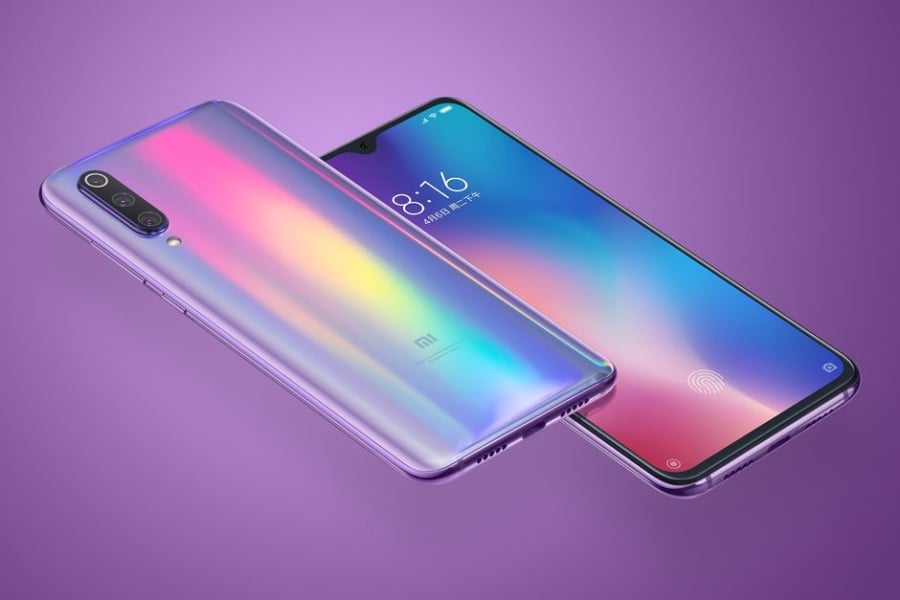
Following the official unveiling of the device a few days ago, Xiaomi has today gone official with the full announcement of its new budget flagship the Mi 9, including its premium ‘Explorer Edition' model, and mid-range Mi 9 SE all offering top-tier 2019 specs at continually agreeable prices.
First off, the $450 Mi 9:
Starting with the display, since you’ll be staring at it a lot if you buy one, the Mi 9 features a 90.7% screen-to-body ratio, 6.4inch, 1080×2340 19.5:9, Samsung AMOLED screen capable of reaching 600 nits of brightness and protected by Corning’s 6th iteration on their Gorilla Glass. It's great to see Xiaomi maintaining AMOLED first seen in 2018's Mi 8.
Under that seemingly beautiful display lies an optical fingerprint scanner, just like the OnePlus 6T and Mate 20 Pro. Unfortunately, this particular technology has faced its fair share of issues; it’s slower than the usual scanners we’re accustomed to, it’s slower than external readers, and it requires the pixels above it to be blasted to full brightness to function – which can ‘blind’ you at night. Nevertheless, it is cool, and perhaps Xiaomi will have been able to improve the tech since it was last featured; one can hope.
Onto the camera, the most competitive area of the market at the moment, and the Mi 8 is absolutely no slouch here, toting an apparent DxOMark score of 107 – only 2 less than the champion Mate20 Pro, and beating essentially all other competitors including the Pixel 3, Samsung S9 and Note 9, and the iPhone XS. The Mi 9 features Sony’s new 48MP IMX586 primary sensor which has previously been seen in the likes of the Honor V20. With 0.8-micron pixels on a larger-than-usual 1/2″ sensor, and at an F/1.75 aperture with laser autofocus, this sensor doesn’t generally output 48MP images, though it can. Instead the IMX586 generally utilises quad-bayer ‘pixel binning’ to output more detailed 12MP images. Backing up this mighty main sensor, Xiaomi has equipped the Mi 9 with two further ones for three total. One is a 16MP, 117degree ultrawide, F/2.2, 1.0 micron pixel, Sony IMX481 shooter, whilst the other is a 12MP, F/2.2, 1.0 micron-pixel, ‘telephoto’ Samsung S5K3M5 sensor for zoom in daylight. And for the Mi 9's ‘selfie' camera it features a 20MP, F/2.0, 0.9micron sensor. Overall this is an incredibly solid camera hardware package which would feel at home on any other flagship and I especially like the addition of the wide-angle lens as it allows for dramatic and/or functional photos you could never have achieved otherwise, though the weak zoom sensor is as dubiously useful as ever.
All of this hardware is housed within a chassis which I must say is rather pretty, if not unique. Combining an optional gradient back with the Apple-inspired vertical camera array, from the rear the phone resembles a Huawei P20/Pro but with a contiguous camera bump. From the front the phone is a step up from the aforementioned device in my opinion though as it gets damn close to eliminating the bezel with a small chin and tiny pimple notch; it is a very ‘aesthetic’ device analogies aside.
Related is connectivity, and unfortunately the Mi 9 lacks a headphone jack as previously discovered, and the device has a USB-C port as you’d expect. Impressively, however, the Mi 9 will support 20W wireless charging and 27W wired charging for its modest 3300mAh battery, BOTH of which are included in the box (while the $1000+ iPhones still ship with 5W ultraslow adapters). That means that the Mi 9 will be able to charge more quickly without cable clutter than most phones can charge at all, with the exception of a few Huawei, Oppo, and OnePlus flagships. For reference the Galaxy S9-series, and all other wirelessly charging phones to my knowledge, cap out at 15W, so 20W is a sizeable jump if not a revolutionary one.
Penultimately, the internal specifications, and the Mi 9 will of course feature Qualcomm’s new Snapdragon 855 SoC, 6 or 8GB of RAM, and 64 or 128GB of ROM.
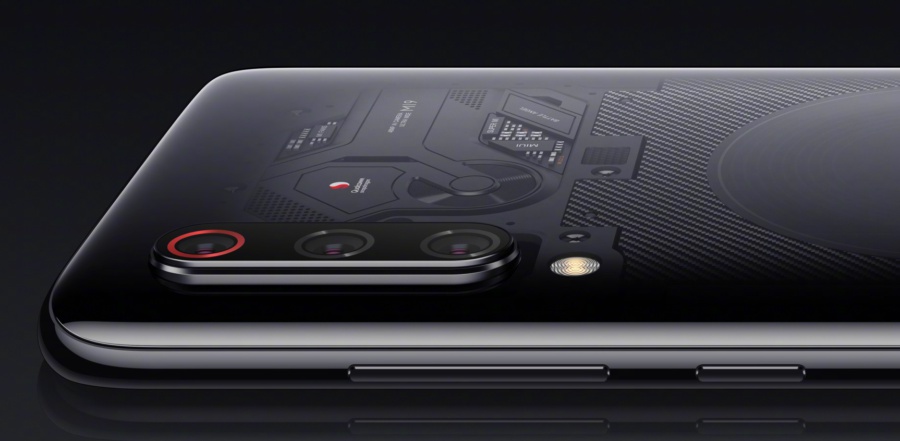
The $600 Mi 9 Explorer Edition is a ‘souped-up' Mi 9 with an as-yet-unseen 12GB of RAM, and 256GB of ROM, as well as a faux-translucent rear glass panel and an even further improved F/1.47 lens on its primary 48MP sensor.
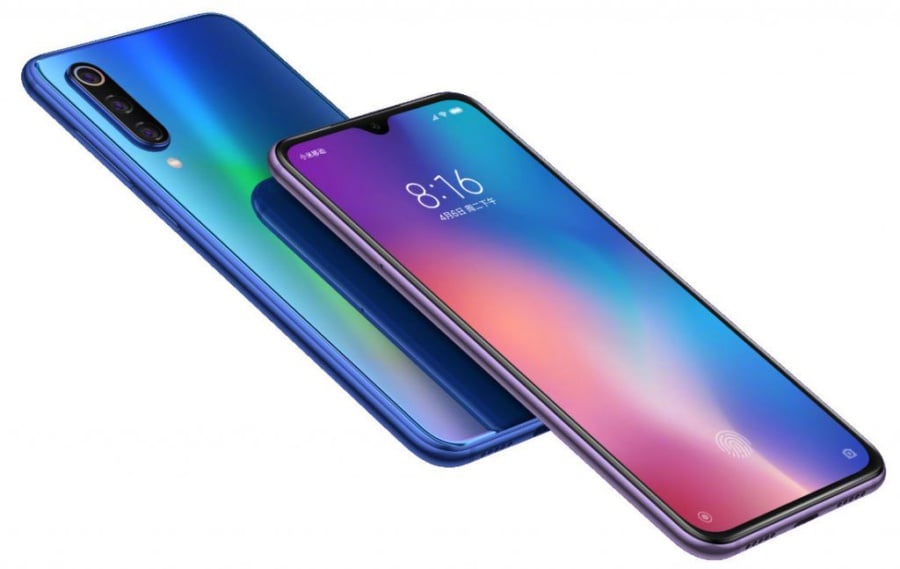
The $300 Mi 9 SE is possibly my favourite device announced today. Take a Mi 9 and tune it down in a few ways and you get a great little budget killer.
Rather than its bigger brother's 6.4inch 1080p+ AMOLED display, the Mi 9 SE features a 6inch 1080p+ AMOLED display coated in Gorilla Glass 5 vs 6, and thus it is a more compact and dare I say useably-sized phone.
Rather than its bigger brother's Snapdragon 855 with 6/8GB of RAM, the Mi 9 SE features the iterative Snapdragon 712 – which is the slightest of upgrades over the already stellar 710 – and the ample 6GB of RAM.
Rather than its bigger brother's super-fast 20W wireless and 27W wired charging, the Mi 9 SE maintains ‘only' a super-fast 20W wired charging.
And rather than its bigger brother's 48/16/12/20MP camera setup, the Mi 9 SE features a very reasonable 48/13/8/20MP setup in the same normal/wide/telephoto/selfie setup.
Otherwise the Mi 9 SE is identical to its bigger brother the Mi 9, which is mighty impressive especially considering it maintains the same primary 48MP Sony camera sensor.
All devices also feature Xiaomi's Android Pie-based MiUI 10 software, and thought it be far from stock Android, it has improved significantly over previous iterations and is not quite the turnoff it once was.
Overall Xiaomi’s Mi 9 lineup is coming in hot with some killer hardware at killer prices, though if it can compete with the new crop of OnePlus, Honor, and other budget flagships – including from within Xiaomi’s own Pocofone and Redmi divisions – will be interesting to see.

