



In recent months, the European Union's Digital Markets Act has caused a lot of shakeups in the tech industry, as the organization aimed to prevent certain companies in the tech space from being “all-powerful” and having an undue advantage. Well, it seems that Apple is about to get similar treatment, but this time, in its home country.
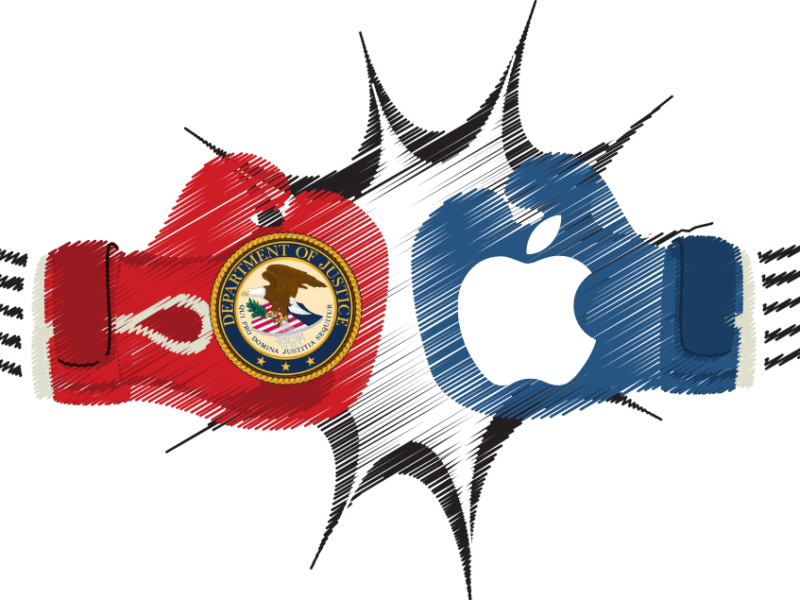
Yep, that's right. The United States Department of Justice is suing Apple for what they claim is an illegal monopoly over the smartphone market in the country. They say Apple finds ways to push up user reliance on their devices, which makes it harder for competition to thrive.
The US Department Of Justice Says Apple Isn't Playing Fair With Users And Developers

Yeah, this is an interesting case, and it is honestly one I couldn't have anticipated coming. However, if you go into it without bias, you'll get where the DOJ comes from. The United States Department of Justice and 16 state/district attorneys general are parties to the case.
Apple exercises its monopoly power to extract more money from consumers, developers, content creators, artists, publishers, small businesses, and merchants, among others.
The United States Department Of Justice
The idea is that Apple locks its users into its ecosystem and makes it very impractical for them to use non-Apple services or products. This also applies to developers, who are given little choice but to abide by Apple's rules for apps on the App Store—the only place for Apple users to download applications.
The Department of Justice listed some direct ways that Apple illegally keeps its monopoly alive, and these include:
- That blue bubble-green bubble discourse? They say Apple intentionally makes messaging between iPhone and Android a lower-quality experience.
- Apps with a broad scope of functions, or super apps, have had their growth disrupted by Apple since they could make switching platforms easier.
- No cloud-streaming services. Do you know services like GeForce NOW that take advantage of the cloud so you can run games/applications more powerfully than your hardware permits? Apple has blocked the development of such services before.
- Cross-platform messaging is worse with Apple. They've made it less secure and functional, messaging iPhones from other platforms and pushing users to stick with the brand.
- They are handicapping the tens of non-Apple smartwatch brands. Other companies making smartwatches have limited functionality when their products are used with iPhones, which keeps Apple Watch users tied to iPhones (and vice versa).
This is undoubtedly a huge mess, but the suit has a lot of merit. Without these barriers and obstacles that make it harder for users to move away from iPhones, one wonders how competitive iPhones would be without the “walled garden” advantage.
Apple And Developers Have Been At It For Years

While it is easier to appreciate how Apple's laws make things more challenging for consumers, we must also appreciate developers' struggles.
There's only one place to market apps on Apple devices: the App Store. Android has the Google Play Store as the biggest option, but the Amazon App Store, Galaxy Store, and Huawei AppGallery, all have app stores that you can choose to publish Android apps on. This means that Apple devs must accept whatever revenue-sharing formula Apple proposes, with no alternatives whatsoever.
Companies like Epic Games and Spotify have been notably vocal about how Apple controls payments for their services.