

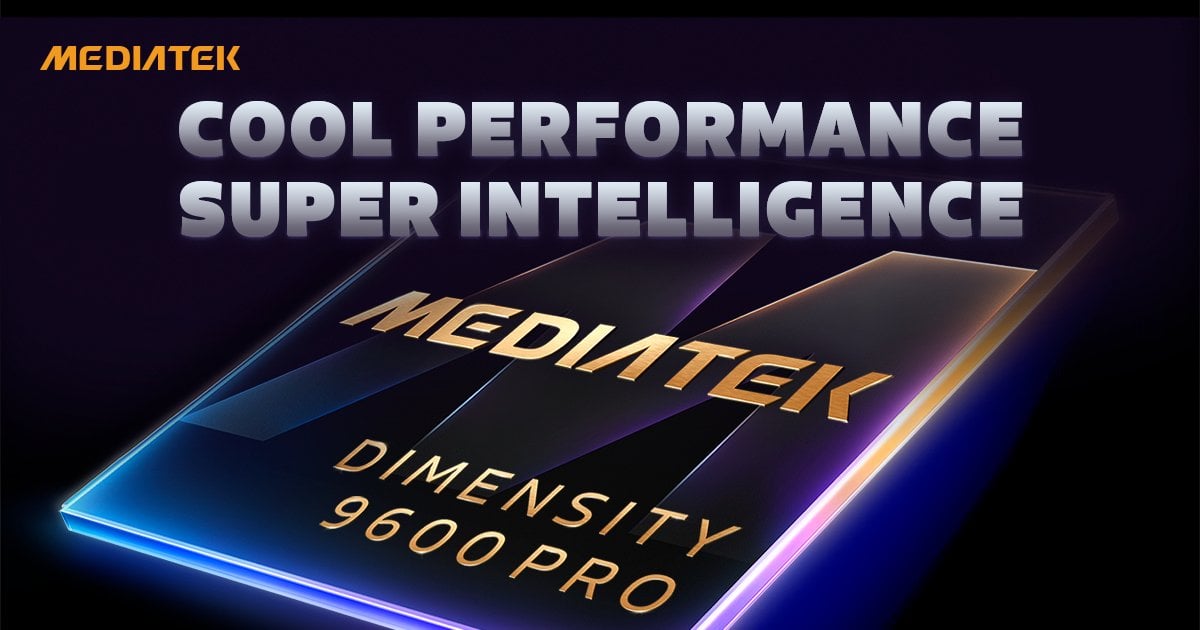
A new 2nm chip is about to power some of next year's biggest Android flagships, starting with the Find X10 Pro Max. MediaTek has confirmed full specs for the Dimensity 9600 Pro, its newest flagship silicon and the first Dimensity chip built on TSMC's advanced N2P process.
What's New
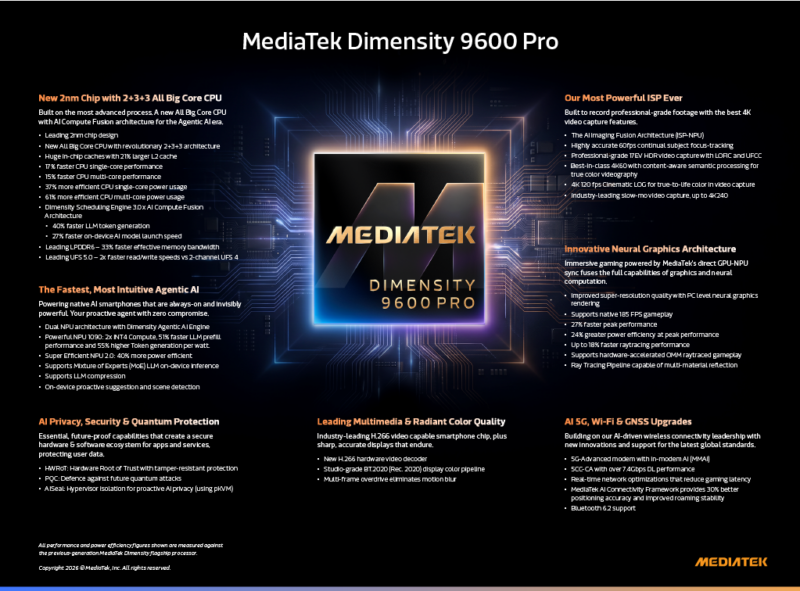
The headline change is the move to 2nm, but the CPU layout is just as significant. MediaTek's 4th-generation All Big Core design now runs a 2+3+3 configuration: two Arm C2-Ultra cores, three Arm C2-Pro cores with 1MB of L2 cache, and three more C2-Pro cores with 512KB of L2 cache, adding up to a 21% larger L2 cache system overall.
Graphics move to a new Arm Mali-G2-Ultra NX GPU with hardware-accelerated ray tracing and neural graphics rendering, MediaTek's term for PC-style super-resolution upscaling done on-chip. On the AI side, the chip splits work across two NPUs: the high-performance NPU 1090 for generative and agentic workloads, and a Super Efficient NPU 2.0 dedicated to background tasks that need to stay on without burning through battery.
Rounding out the platform are first-wave support for UFS 5.0 storage and LPDDR6 memory, a new H.266 hardware video decoder, Wi-Fi 7, Bluetooth 6.2, and a 5G-Advanced modem with in-modem AI for network optimization.
Why It Matters
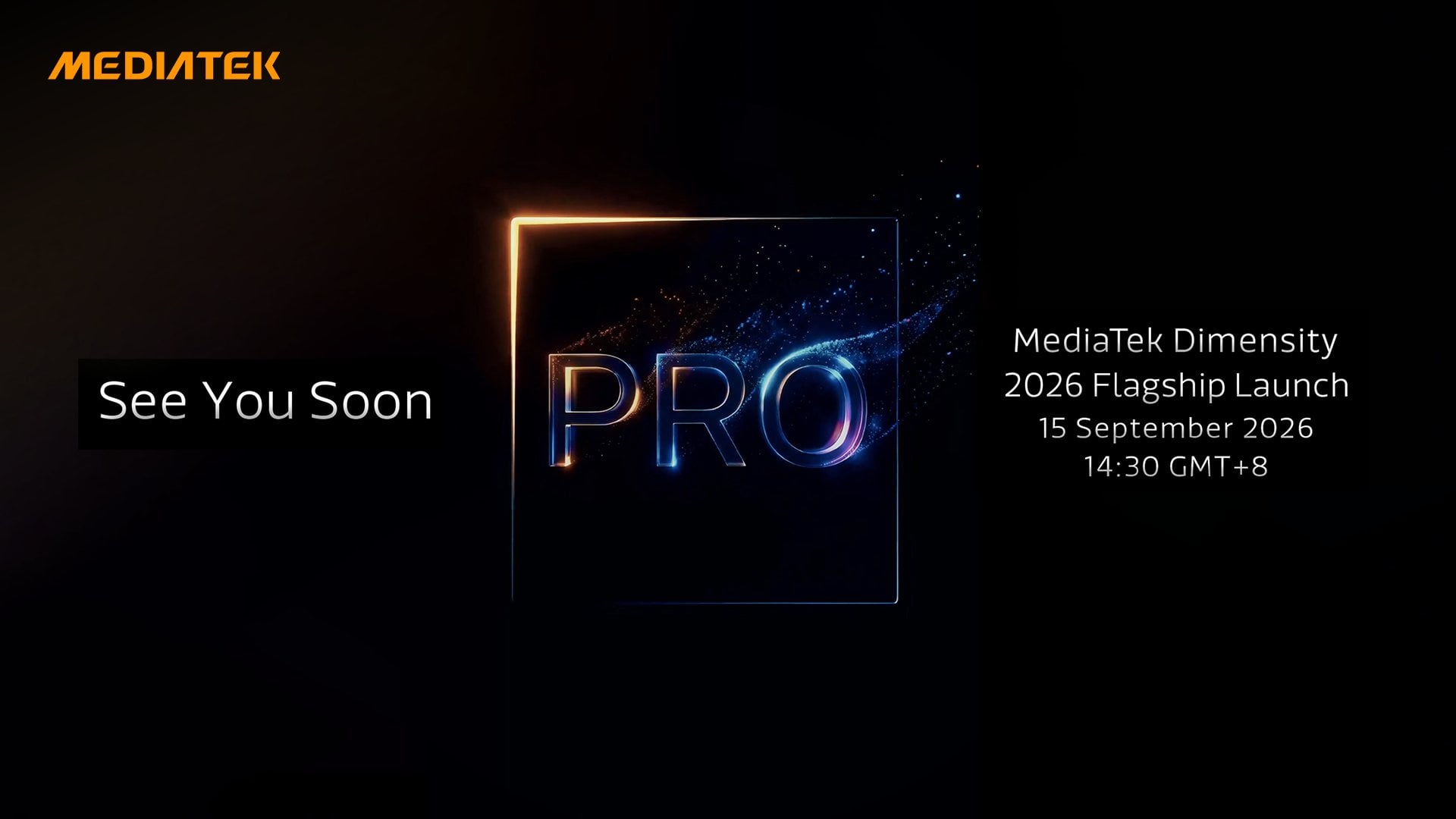
MediaTek is framing this chip around what it calls the agentic era, silicon built to keep an AI assistant running continuously in the background without hammering battery life. The dual-NPU split is the clearest expression of that idea, and it's the kind of architecture decision that matters more for how a phone actually feels to use day to day than for benchmark charts.
The 2nm process itself is worth paying attention to independent of the AI story. Getting a flagship Dimensity chip onto TSMC's newest node puts MediaTek on equal footing with Qualcomm on process technology for the first time in a while, which is a meaningfully different position than MediaTek has typically occupied in the flagship conversation.
Key Details
- Process: TSMC 2nm N2P
- CPU: 4th-gen All Big Core, 2+3+3 layout (2x Arm C2-Ultra + 3x Arm C2-Pro/1MB L2 + 3x Arm C2-Pro/512KB L2), 21% larger L2 cache
- CPU performance: MediaTek says single-core performance is 17% faster and 37% more power efficient; multi-core is 15% faster and 61% more power efficient, versus the previous-generation Dimensity flagship
- GPU: Arm Mali-G2-Ultra NX with hardware ray tracing; MediaTek says peak performance is up 27%, peak power efficiency up 24%, and ray tracing performance up to 18% faster
- NPU: Dual-NPU design pairing the MediaTek NPU 1090 with a Super Efficient NPU 2.0; MediaTek says the NPU 1090 delivers 51% faster LLM prefill performance and 55% higher token generation per watt, with the Super Efficient NPU 2.0 rated 40% more power efficient
- Memory & storage: first-wave support for LPDDR6 (33% more effective bandwidth) and UFS 5.0 (2x the read/write speed of 2-channel UFS 4)
- Display: supports up to WQHD+ at 180Hz, including tri-port MIPI output for tri-fold devices
- Video: new H.266 hardware decoder, 8K60 video decode, 4K120 with EIS, and 4K240 slow motion
- Connectivity: 5G-Advanced modem with 5CC carrier aggregation, Wi-Fi 7, Bluetooth 6.2
- Security: Hardware Root of Trust, post-quantum cryptography defenses, and hypervisor-isolated AI privacy via pKVM
Every comparison figure above is MediaTek's own, measured against its previous-generation flagship chip rather than a competitor.
Takeaway
On paper, the Dimensity 9600 Pro looks like MediaTek's most ambitious flagship chip yet, and pairing a 2nm process with a dedicated always-on NPU is a genuinely interesting direction for on-device AI. Unfortunately, none of these numbers mean much until they're running in an actual phone, and the Find X10 Pro Max is still waiting on its own global launch date. We can't wait to get one in for testing and see how MediaTek's claims translate into real-world battery life and performance.