



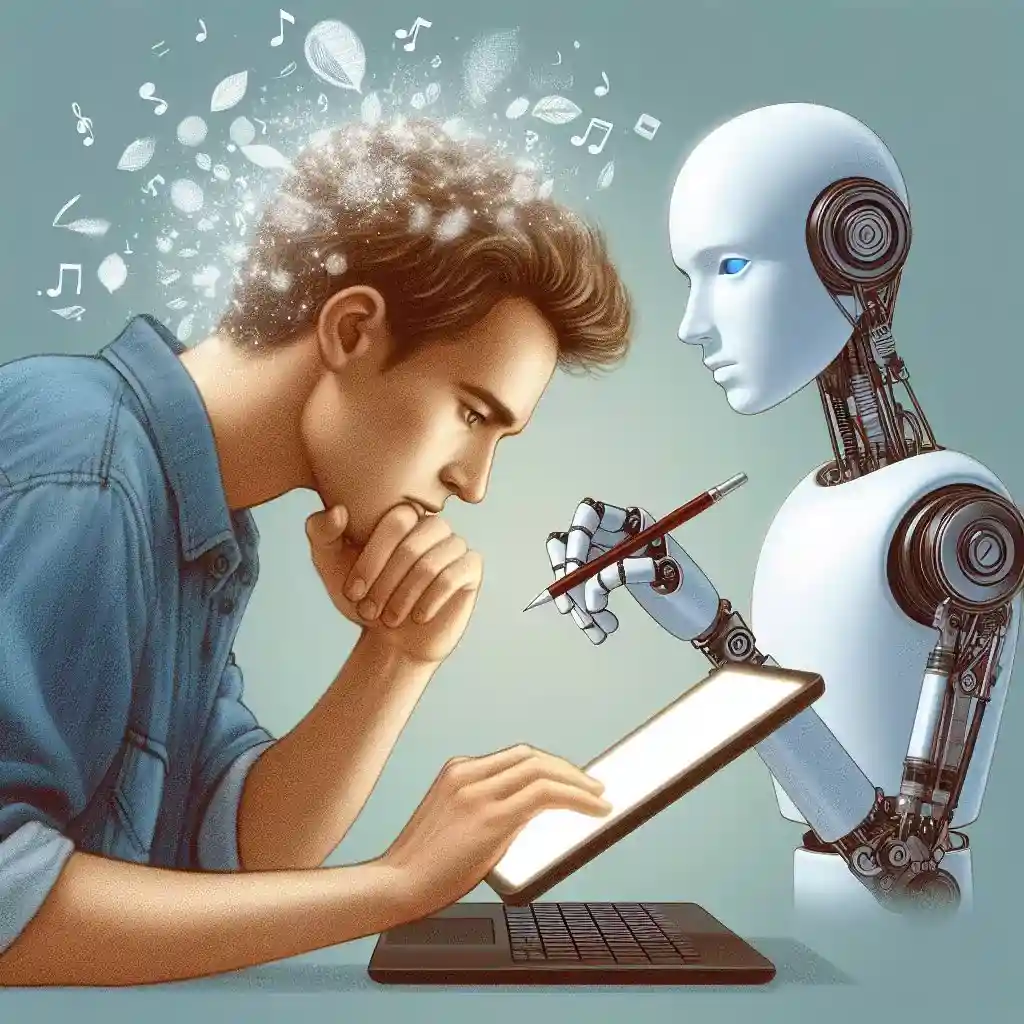
There’s a strange thing happening in writing right now. The tools got faster. The work got heavier. That sounds backwards until you actually live inside it.
A professional writer today isn’t just writing anymore. They are in a debate and doing difficult negotiations with machines that are expert in mimicry of fluency but lack the ability to comprehend past context or consequences that a human can. That is something that is proud about plastic changes that people are knowingly keep underestimating.
Writing didn’t become obsolete. It became layered.
The ToolThe tool didn’t replace the craft. It Complicated It
AI looks like relief at first.
You ask for a draft, you get one. Clean paragraphs. Structured thoughts. No hesitation marks, no messy thinking visible on the surface. For someone rushing, it feels like cheating time itself.
But professional writing was never about producing “something that reads fine.” It was about pressure-testing meaning.
- Does this sentence actually carry weight, or does it just sound like it does?
- Does this paragraph move, or does it just exist in the correct order?
AI doesn’t answer those questions. It just gives you material that looks like an answer. So the writer steps in. Again. And again. That’s where the friction starts.
Editing Became the Real Battlefield
Before AI, writing was mostly linear. You built something from scratch, broke it, rebuilt it, then stopped when it felt alive enough to ship.
Now the process bends.
You generate. You read. You pause longer than expected. You start correcting things that aren’t technically wrong, just… too smooth. Too neutral. Too safe.
And that becomes the pattern:
- fix tone drift
- re-insert personality
- break repetition that wasn’t obvious at first
- undo the “perfect grammar” that somehow killed rhythm
It’s not hard because the machine is bad. It’s harder because the machine is almost right, all the time. That “almost” is exhausting.
Voice is The First Thing That Gets Diluted
Every writer has fingerprints in their language. Even if they don’t notice it.
Some are sharp and clipped. Some drift like long corridors. Some punch. Some hesitate. That inconsistency is what makes writing feel alive.
AI tends to smooth all of that out. Left alone, it produces a kind of neutral English that sits comfortably in the middle of everything. Nothing offensive. Nothing memorable either.
And professional writers can’t afford that flattening. Because clients don’t pay for “correct.” They pay for a recognizable voice. Something that sounds like a specific mind, not a statistical average of thousands.
So you end up doing something ironic:
You use a system that writes for you. Then spend most of your time making it sound less like itself.
The Invisible Second Job: Control
Nobody talks enough about this part. AI doesn’t remove work. It redistributes it. The writing itself becomes less about invention and more about control:
- controlling tone drift
- controlling sentence rhythm
- controlling how “generic” the output feels
- controlling how much of yourself survives the edit
You’re not just producing text anymore. You’re supervising it. And supervision takes attention. A different kind of focus than pure creation.
Everything Starts to Feel Slightly Off
This is the part writers notice but don’t always say out loud. AI-generated drafts don’t feel wrong. They feel slightly hollow in a way that almost works. That “almost” is the problem.
Because if you’re not careful, you start accepting that tone as normal. And once that happens, your own writing starts shifting toward it without you noticing. A kind of quiet contamination.
So writers start overcorrecting. Pulling language back toward imperfection on purpose. Breaking symmetry. Reintroducing uneven rhythm. Letting sentences breathe differently.
Not because perfection is bad. But because perfection now has a smell to it.
Other than writing, AI affects other aspects of content too. AI tools can manipulate images and videos too; making them quite the controversial changes.
About Detection and Suspicion
Somewhere in all of this, another layer appeared: systems that try to detect whether writing is human or machine-generated.
That changes behavior in subtle ways.
Not because writers are trying to “cheat” anything, but because suddenly there’s a second reader in the room. One that doesn’t care about meaning, only patterns.
So content gets reviewed differently now. Not just for clarity, but for texture.
In situations like this towels such as an AI checker are very handy if used properly. practice. But they are not the final authority; they serve as a sanity check. its something to detect and identify structures that are overly uniform before anything is published.
It’s not about gaming systems. It’s about avoiding that overly-polished surface that triggers suspicion or feels artificially constructed.
Speed is Real. So is the Slowdown After It.
AI absolutely speeds up the start of writing. Outlines? Instant. First drafts? Fast. Summaries? Almost too fast. But what happens after that is less discussed.
Editing takes longer than expected. Not shorter. Because the raw output still needs shaping, stripping, re-voicing, and sometimes complete restructuring. The writer ends up doing less initial labor, but more corrective labor.
So the timeline shifts: fast entry, slow middle, and very deliberate exit
The pace doesn’t disappear. It just moves.
Clients Don’t Care About the Tool. They Care About the Result
Nobody hiring a professional writer is thinking about workflow theory.
They care about whether the piece:
- sounds human
- fits the brand voice
- holds attention
- doesn’t feel mass-produced
And the uncomfortable reality is this:
AI use is assumed now. So expectations quietly rise. Faster delivery. Higher volume. Same or better quality. That tension sits on the writer’s desk every day.
The Skillset Quietly Expanded
A professional writer today isn’t just writing.
They’re:
- prompting
- filtering
- rewriting
- diagnosing tone issues
- correcting machine patterns
- and protecting voice
It’s no longer a single craft. It’s a stack of smaller ones layered together. Some writers adapt easily. Others resist. Most do both, depending on the day.
So, Is It Harder?
It is harder but not in such a simple manner as you might think.
Not harder like “this tool is difficult.” Harder like “the job is no longer just writing.”
Because now writing includes managing something that produces language without understanding it. Something fast, consistent, and slightly empty unless shaped carefully.
The irony is obvious:
AI can write. But professionals still have to make it mean something. And meaning that part still refuses to be automated.