



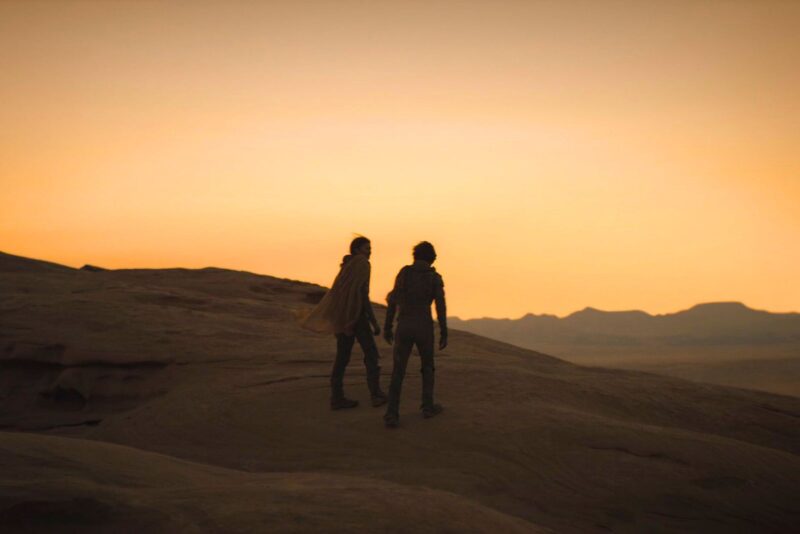
In a year packed with superhero sequels and space adventures, one film soared above the rest—both critically and visually. Dune: Part One, released in 2021, wasn’t just another sci-fi blockbuster. It was a grand cinematic statement, and according to many, the best science fiction film of that year. But unless you’re subscribed to HBO Max, you might’ve missed the spectacle entirely.
A daring adaptation of a sci-fi legend
Directed by visionary filmmaker Denis Villeneuve, Dune: Part One marks the third attempt to bring Frank Herbert’s legendary 1965 novel to the screen—and the first to truly capture its sprawling, otherworldly scope. Set in the distant future, the film follows House Atreides as they are tasked with overseeing Arrakis, a desert planet and the universe’s only source of the powerful substance known as Spice.
What begins as a political assignment quickly unravels into a deadly trap, orchestrated by rival House Harkonnen and the Emperor himself. At the heart of it all is Paul Atreides, played by Timothée Chalamet, a young heir grappling with visions of a destiny he neither wants nor understands. Alongside him is an ensemble cast featuring Rebecca Ferguson, Oscar Isaac, Josh Brolin, and Zendaya.
A technical and cinematic triumph
Visually, Dune is a masterclass. Every frame is dripping with detail, from the minimalist interiors of Caladan to the vast, sun-scorched dunes of Arrakis. The film’s score, composed by Hans Zimmer, is otherworldly in its own right—so much so that Zimmer turned down Christopher Nolan’s Tenet to focus entirely on this project. His efforts didn’t go unnoticed: Dune won the Oscar for Best Original Score, along with five other Academy Awards in technical categories like cinematography, visual effects, and production design.
Editor Joe Walker and Villeneuve worked together to craft a film that is both sweeping and restrained—a slow-burn space opera that’s as much about mood and tension as it is about war and politics.
Mixed release, massive impact
Despite industry concerns, particularly from Villeneuve himself, Dune was released in cinemas and on HBO Max simultaneously in the U.S.—a strategy that divided critics and sparked fears of piracy. Still, the gamble paid off. The film made over $400 million worldwide, outperforming even some Marvel releases during its opening week. In France alone, it pulled in more than 180,000 cinema-goers on its first day.
Critics were just as enthusiastic. On Rotten Tomatoes, the film boasts an 83% approval rating, while French review site Allociné gives it an average of 4 out of 5 stars. Xan Brooks of The Guardian praised the film as “moody, majestic, and strangely beautiful,” calling it the rare blockbuster that bridges the gap between arthouse cinema and mainstream spectacle.
The beginning of a franchise
Thanks to its success, Dune: Part One wasn’t just a standalone achievement—it became the launchpad for a larger cinematic universe. Part Two arrived in 2024, continuing Paul’s journey among the Fremen and deepening the political stakes. And for those already hungry for more, Dune: Part Three is currently slated for a 2026 release, promising to complete the saga.
Dune: Part One isn’t just a movie—it’s an experience, rich with ambition and artistic flair. But if you want to see what all the hype is about, you’ll need to look beyond Netflix. Only HBO Max subscribers have streaming access to one of sci-fi’s most celebrated modern epics. And trust us—it’s worth the trip to Arrakis.