




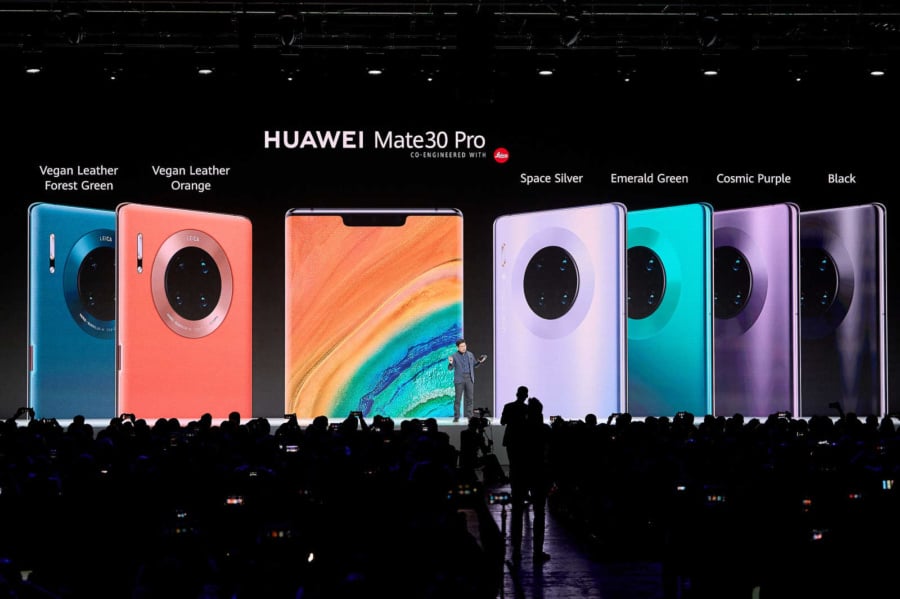
Great hardware, shame about the crippled software, seems to be the overall sentiment regarding Huawei's Mate 30 Pro. The lack of Google apps and services makes it almost impossible to recommend to readers in western markets, although it seems that there could be some good news on the horizon in the form of the US government finally handing out licenses to American companies wishing to deal with the Chinese handset maker. In the meantime, Huawei is trying to bypass the issue of being cut off from GMS (Google Mobile Services) and Google Play Services by developing its own alternative solution, HMS.
GMS is the framework that enables Google Play Services to run on Android handsets, utilizing a set of private API's that aren't included in AOSP Android. This means that many of Google's apps won't run on the Mate 30 Pro, even if sideloaded. The same goes for third-party apps that rely on the GMS framework to pass SafetyNet certification such as banking and content streaming apps. Huawei's HMS is meant to mitigate the loss of GMS as far as possible, enabling popular third-party apps to at least function properly.
Huawei Mobile Services (HMS) and the HMS Core consists of apps to replace the missing Google apps as well as core background services so as to provide a consistent user experience and similar functionality to developers. The HMS Core consists of the following features:
- Account Kit: Aims to replace the Google Sign-in function, giving users the ability to sign in to apps using their Huawei account login.
- Location Kit: Huawei's alternative to Play Service's Fused Location Provider that provides accurate location data to developers to use within the app. Location Kit uses data derived from GPS, WiFi, Bluetooth, and Network Base Stations to calculate the device location.
- Map Kit: Huawei's answer to the Google Maps SDK, aiming to provide developers with a personalized map display with multiple interaction modes.
- Drive Kit: As you might have guessed from the name, Drive Kit is Huawei's alternative to Google's Drive REST API, giving developers the ability to read, write, and synchronize files with Huawei Cloud.
- Game Service: Taking the place of Google Play Games, Game Services tracks player achievements and gives developers the ability to offer in-game rewards to users.
- Push Kit: Takes the place of Google's Firebase Cloud Messaging, allowing developers to send messages to users via the cloud.
- Analytics Kit: Equivalent to Google's Firebase Analytics, it aims to give developers a way to measure various metrics within the app and produce analysis and debugging services.
- In-App Purchases: The equivalent of Google Play In-App Billing, Huawei's version attempts to give developers a way to monetize their apps by way of the following methods: Product Management Service, Subscription Service, Order Service, Sandbox Test Service, and Merchant Management Service
- Ad Kit: This gives developers the option of display ads in their apps, providing another way of gaining monetization, offering device-level identifiers and ad0conversion tracking functions.
The big question is whether HMS will ever become a viable alternative to Google's GMS core, and the short answer is – probably not. At least, not unless you are totally divested of any reliance on Google apps and services. But, with Huawei's huge market share, developers would do well to add support for the HMS core to their apps unless they are willing to write off access to a large section of users.
Source: XDA
Disney+ will have to run ads for Starz to get Star Wars licenses back
Microsoft merges all of their mobile productivity apps into one Office hub
Xiaomi launches the Apple Watch-inspired Mi Watch running a custom Wear OS skin
