



The results of a Microsoft study find Google Assistant and Siri tied in popularity, smart speakers to be very popular, and concerns around both to be significant.
Microsoft has just published the results found in their study covering thousands of participants across two surveys on the use and thoughts on digital assistants, smart speakers, and their security.
Digital Assistants
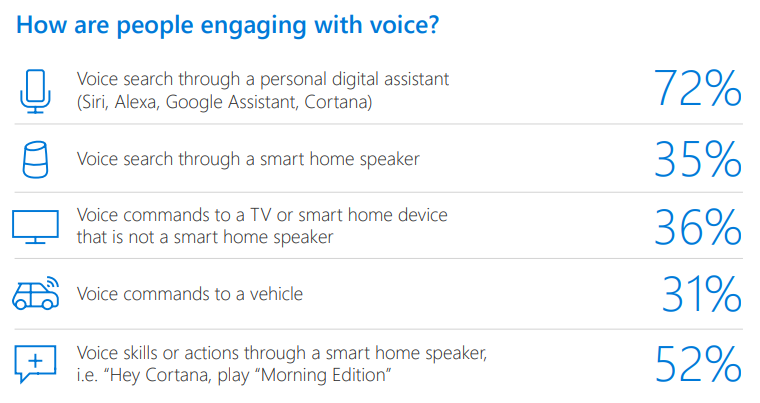
The report begins with its finding that 72% of participants use digital assistants, with further breakdowns on the venue of use.
I find the level of use fairly surprising given it goes against my anecdotal experience, though I would point to the online nature of the survey's conduction as a driver of the high reported usage.
Also, the report covers usage over the last six months, so I also find it similarly likely that many who reported use would not be regular.
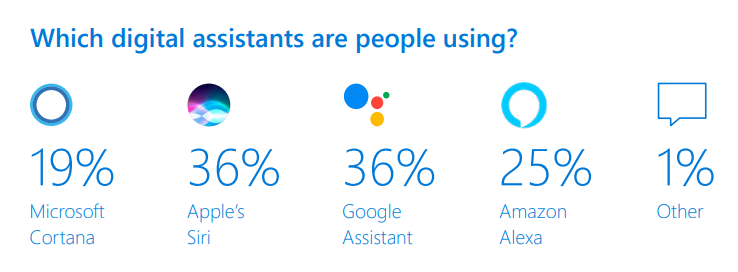
The report then continues in breaking down the most popular digital assistants, with Google Assistant and Siri being tied at 36% each, Amazon's Alexa at 25%, and Cortana at 19%.
These results surprise me greatly primarily due to Cortana being so high; the same thinking applies here though with users completing online surveys being more likely to be technically knowledgable, though regardless I would never have expected Cortana to be so popular.
The fact that the study is by Microsoft makes it likely they would lean into data representing them in a positive light; this is not to say Microsoft has messed with the data, just that they may have conducted the surveys, and/or analysis, in a favourable light.
Of course, it's also possible that Cortana really is just more popular than most would expect.
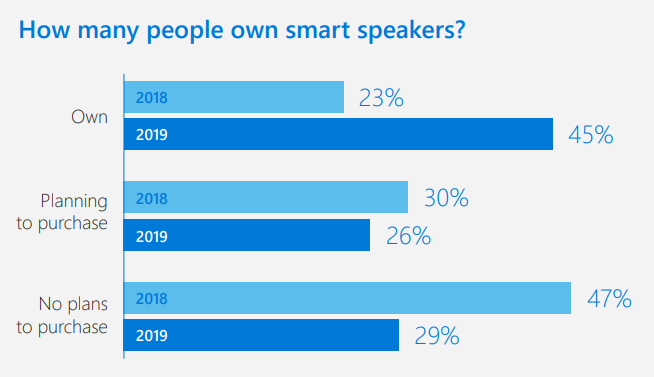
Microsoft also found smart speaker ownership to have nearly doubled year-over-year from 2018-2019, whilst interest also grew; something one would more-or-less expect, especially given the demographic.
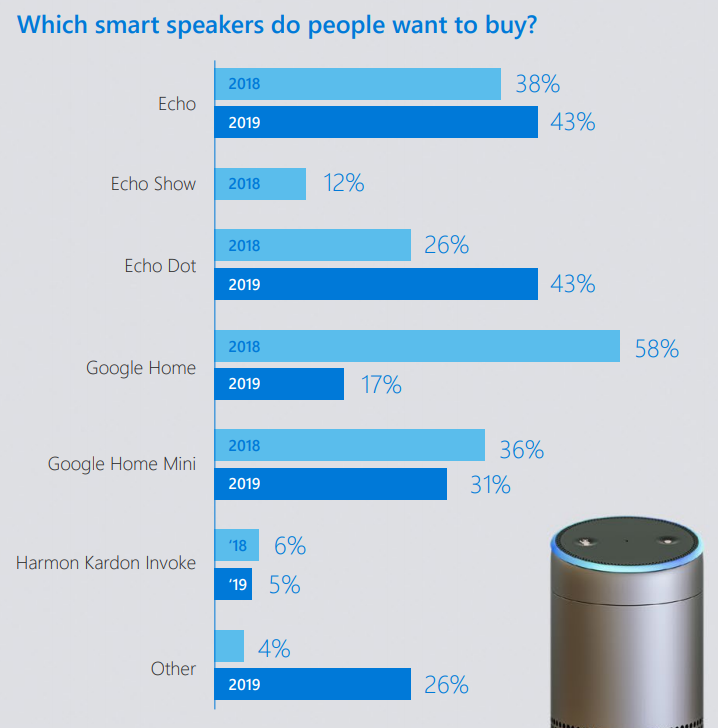
This next data on smart speaker brand popularity surprises me greatly; for Google Home to have ‘thirded' in interest whilst Echo increased is entirely unexpected, I'm also interested in what these ‘other' smart speakers are to have grown so much.
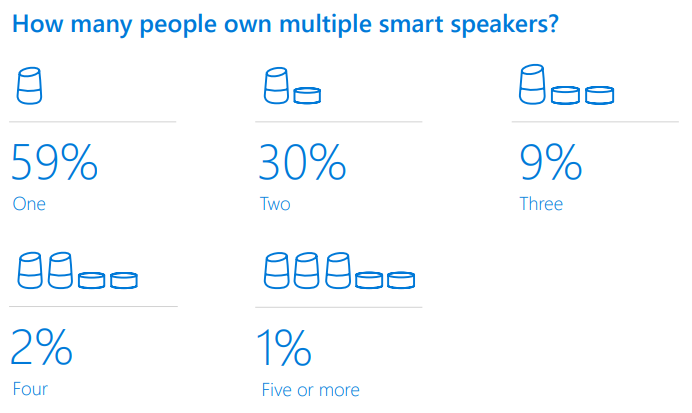
The report also found ownership of multiple smart speakers to be common amongst owners.
Adoption
Moving to adoption and the report next found 80% of digital assistant users to be satisfied with their services whilst only 6% were dissatisfied.
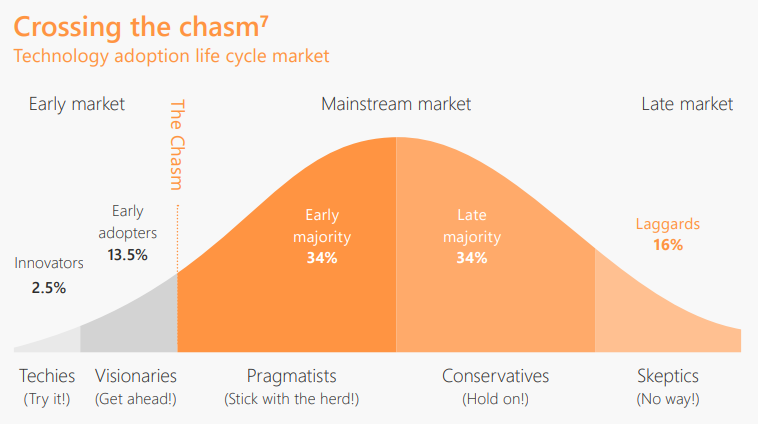
More interestingly though, Microsoft devised a bell-curve theory of technology adoption which covers the range from ‘techies' to ‘skeptics', and their supposed relative populations.
I can't really attest to the accuracy of the percentages, nor the whole idea of ‘scientific' categorising people based on adoption, but the concept is interesting – particularly as it places the current digital assistant adoption squarely in the ‘dying' category, and smart speakers at the half-way mark, if the earlier numbers are accurate.
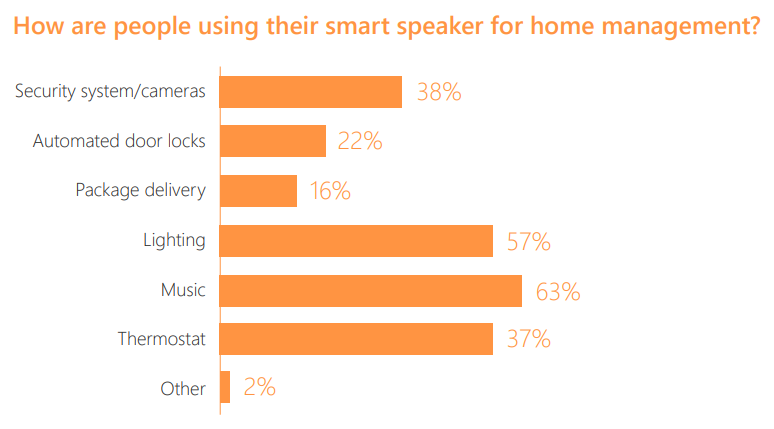
The report then finds that smart speakers are overwhelmingly used for smart home usage, though there appears to be an error in the ‘thermostat' bar, followed by security purposes.
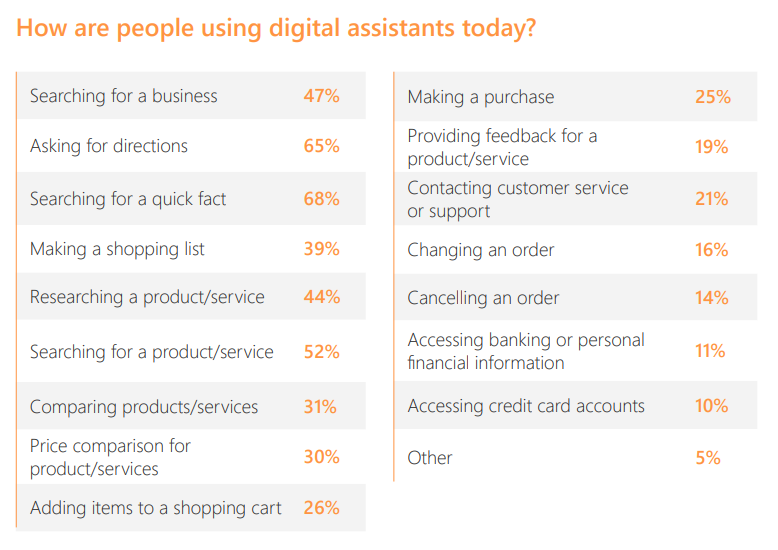
Continuing, the study looked through the most popular uses of digital assistants, with ‘quick facts' and directions being the highest reported.
Trust
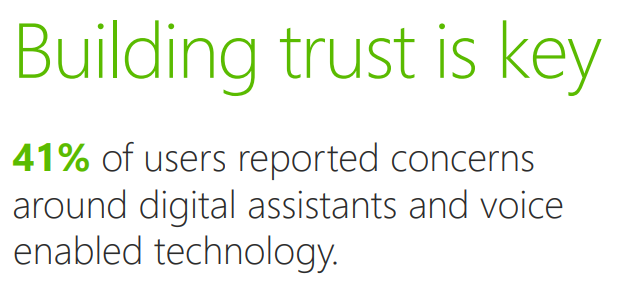
Moving to ‘trust', and as revealed in the thumbnail 41% of respondents were concerned about digital assistants and voice-enabled technology.
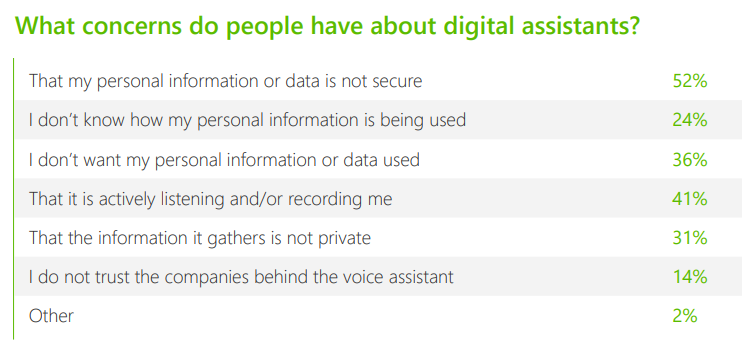
Focusing though and those concerned were most worried about information security and uncontrolled listening, understandable particularly given widely reported issues like spying TVs.
Trust and security certainly is an area of immense scrutiny in the tech world, and is an area where many must improve, and the ease with which companies could use such smart devices to spy on users only ignites debate further.
However, in such a technological future as we are seeing, I believe many norms of society of a few decades ago will need to change as they simply will no longer be feasible.
The report goes on to investigate ‘functionality' – where it really talks up the company's own Cortana assistant – and ‘shopping' where it looks at the effects of digital assistants and smart speakers on shopping; both of which I find to be fairly unimportant, particularly in the light of trust.
The report finally concludes with ‘connection is king' and narrates a very digital future; inevitable.
