


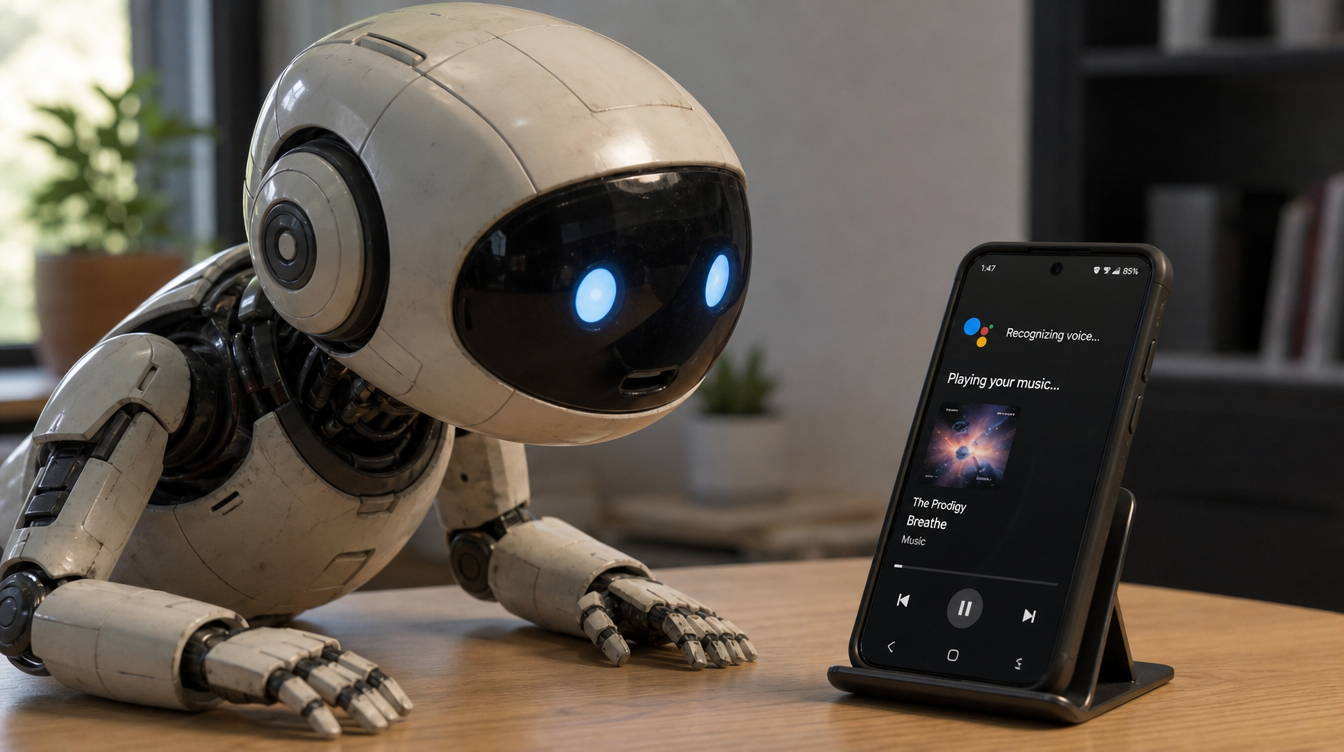
Unlock your Pixel, glance at the lock screen, and there it is — the name of a song that was playing quietly in a café you just walked through. You didn't ask your phone anything. You didn't tap Shazam. The phone simply knew. For most users, that moment registers as a pleasant quirk. What it actually is: a real-time audio fingerprinting system running entirely on the device's processor, matching ambient sound against a locally stored database of tens of thousands of songs, around the clock, without sending a single byte of audio to a server.
That technology belongs to a category called automatic content recognition, and it sits beneath far more of your Android experience than most users realize. Automatic content recognition is the class of technologies that identify media — audio, video, or images — by comparing a captured sample against a reference database, without requiring manual input from the user. The definition sounds abstract until you notice how many places on a modern Android phone it shows up: in the ambient music identification on your lock screen, in the audio-matching layer of TikTok's camera when you start recording, in how Google Assistant identifies a song when you ask “what's playing,” and in how Circle to Search pulls information about something on your screen without you typing a word.
How Now Playing Actually Works
Now Playing launched on the Pixel 2 in 2017 and remains one of the more technically interesting things Google ships in a consumer product. Its architecture differs meaningfully from how Shazam operates. Shazam sends an audio fingerprint to a cloud server and waits for a match. Now Playing does everything locally — recognition works without a network connection and no audio ever leaves the phone.
The process begins at the hardware level. The Pixel's DSP chip — a low-power processor that runs continuously in standby — listens for audio patterns suggesting music is present. When it detects something, it hands off to the main processor, which runs a neural network trained to generate compact audio embeddings. Those embeddings are compared against an on-device database through a two-phase algorithm: a fast first pass narrows the field to likely candidates, and a detailed second pass determines the correct match. The song database is compressed to fit within the phone's storage and updated regularly in the background.
All audio processing is secured within Android's Private Compute Core — an isolated environment introduced in Android 12 that prevents other apps from accessing data processed by system intelligence features. The only exception is manual cloud search: if Now Playing can't find a local match and the user taps the search button, relevant audio is sent to Google for a broader lookup. That step is opt-in and entirely separate from the continuous ambient recognition running by default.
When Apps Use Your Microphone for Recognition
Now Playing operates under Google's privacy architecture. Third-party apps present a different picture — and understanding the difference matters.
When you open TikTok or Instagram and start recording, the app's audio matching layer captures what's playing in the room and compares it against a rights database in real time. This is how the platform identifies whether a background song is licensed, what Sound ID to assign the clip, and how to handle the recording at upload. Unlike Now Playing, this recognition is cloud-based: audio goes to the platform's servers, gets matched, and the result returns to the app. The ACR analytics this generates feed simultaneously into recommendation algorithms, rights management pipelines, and advertiser targeting systems.
Google Assistant handles recognition differently. Saying “Hey Google, what's this song?” triggers a deliberate request that sends audio to Google's Sound Search infrastructure — cloud-based, accurate across a broader catalog than the on-device database, and returning results linked to streaming services. Circle to Search, available on Pixel and Samsung devices running Android 14 and later, extends this to visual content: a long press on the home button activates recognition of whatever is on screen — a product, a location, a piece of text — routing it to Google's image and entity recognition backend.
What Happens to the Data Afterward
The distinction between on-device and cloud-based recognition is primarily a privacy question, and knowing which type each feature uses clarifies what data is generated and retained.
Now Playing produces no cloud data during ambient recognition. The history log of identified songs lives in local device storage and can be cleared through settings. It is not shared with Google for advertising purposes, per Google's documentation of the Private Compute Core architecture.
Cloud-based recognition — through Assistant, Shazam, or social media apps — generates server-side logs that each company handles per its own privacy policy. Google's data practices around Assistant queries are covered by account settings that let users review and delete activity. TikTok and Instagram operate under their own data retention frameworks, governed by their terms of service and applicable privacy laws.
The practical implication: the recognition feature that feels most passive — Now Playing running silently in the background — is also the most private. Features requiring deliberate action, like asking Assistant what's playing or using an app's audio matching during recording, are the ones that send data externally.
The ACR Technology Market Behind What You're Using
The features visible on an Android phone are surface expressions of a commercial infrastructure that has grown substantially. The global automatic content recognition market is valued at approximately $5.45 billion in 2026 and is projected to reach over $15 billion by 2031, growing at nearly 23 percent annually. The companies building core recognition engines — Google's own teams, ACRCloud, Gracenote, Audible Magic — are not selling consumer apps. They are selling infrastructure that platforms and device manufacturers integrate into their own products.
The analytics generated by ACR at scale are what drive the market's value. When a smart TV manufacturer integrates ACR technology to capture viewing data, or when a short-form video platform uses audio matching to identify songs in uploaded content, the recognition step begins a data pipeline that produces audience measurement reports, advertising targeting signals, and rights management intelligence. The technology behind your Pixel's lock screen notification is the same category generating billions of data points across connected televisions, in-car entertainment systems, and streaming platforms every day. The ACR technology market reflects that reach — spanning device manufacturers, platforms, rights organizations, and advertisers simultaneously.
The Privacy Controls Worth Actually Using
Android gives users more control over ACR-adjacent features than most people bother to explore. Now Playing can be turned off entirely through Settings → Sound & vibration → Now Playing, which disables both ambient recognition and the local history log. The cloud search fallback is a separate toggle and can be left off without affecting local recognition.
For third-party apps, microphone permissions live under Settings → Privacy → Permission manager → Microphone. Android 12 introduced the small green dot in the status bar that appears whenever any app accesses the microphone — real-time visibility into which apps are listening. Restricting apps to “Allow only while using the app” prevents background audio access outside active sessions, which is the most practical single change users can make to limit unintended audio capture.
The move toward on-device AI processing, accelerated by Google's Tensor chips, is shifting more recognition tasks away from the cloud. Local embedding generation for music identification, on-device speech recognition, and real-time image recognition without network calls are all part of the same architectural direction. For users who want the convenience of recognition without data-sharing, this is the trajectory worth following across Android updates.
The Phone That Listens for You, Not About You
The gap between “my phone is listening” as vague anxiety and “my phone is listening” as a technical fact worth understanding is more useful to bridge than most people expect. Now Playing is genuinely always listening — but what it does with that input is architecturally specific: look for a music match, find one or not, log it locally, stop. Nothing leaves the device unless the user explicitly requests it.
The cloud-based recognition layers in TikTok, Instagram, and Google Assistant involve external data transmission and are triggered by user actions rather than running passively. Knowing which ACR technology is doing what — and where the data travels — is the difference between using your Android's recognition features deliberately and carrying a suspicion you can't quite locate or resolve.