
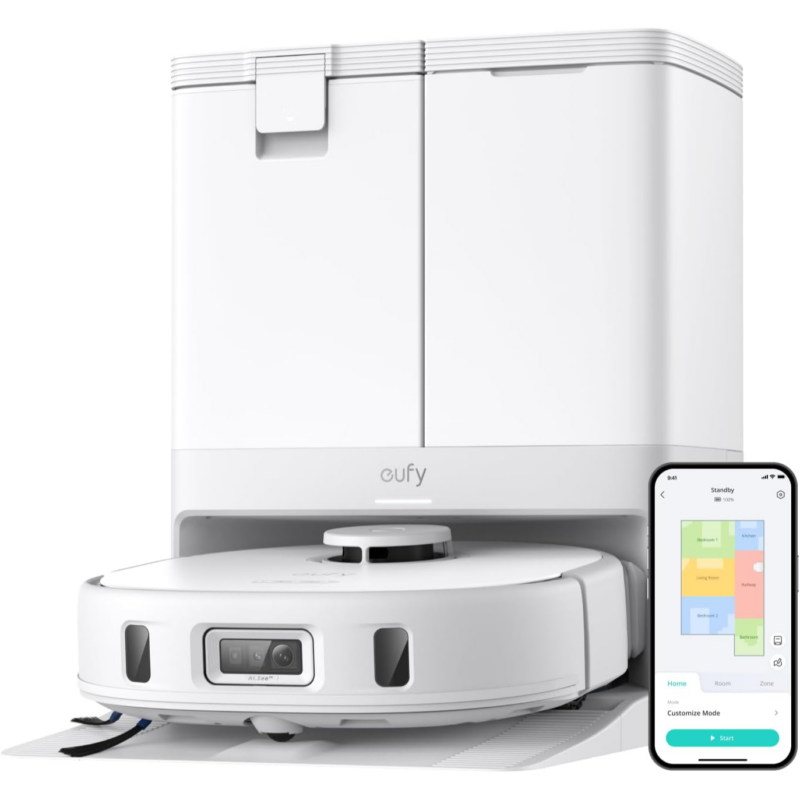
We at TalkAndroid are no strangers to reviewing robot vacuums from the likes of Eufy, Roborock, Narwal, and other brands that have eaten the lunch of the likes of Neato and iRobot in recent years. This momentum may come to a screeching halt though, thanks to the Trump administration's latest technology ban, which sees a ban on all future “advanced robotic devices” manufactured outside of the US.
Update:
Narwal's President of Overseas Business has issued the following statement addressing the FCC's announcement:
“Narwal products already certified and sold in the United States are not affected by the FCC’s action. Our customers’ robots continue to work, remain fully supported, and current models remain available at retail.”
“We are reviewing the announcement and the conditional approval process, and we remain committed to serving our U.S. consumers. The security and privacy of our customers’ homes is foundational to the ethos of the Narwal brand, and we welcome the opportunity to demonstrate that.”
What's Actually Banned

The FCC confirmed the policy this week, adding foreign-made “advanced robotic devices” and connected power inverters to its Covered List, the designation that blocks new device models from getting the authorization they need to legally go on sale in the US. FCC Chairman Brendan Carr framed the move as protecting America's supply chains, pointing to cybersecurity risks and data collection tied to foreign manufacturers.
The definition on paper leans hard into humanoids and quadrupeds, the kind of walking robots dominating Silicon Valley headlines right now. In practice it covers almost any software-controlled robot that moves across the ground, weighs more than 4.4 pounds including its charging dock, can sense its surroundings, and connects wirelessly, which is a description that fits a robot vacuum just as well as it fits a Boston Dynamics prototype.
Why Robot Vacuums Are Caught in the Crossfire
FCC media relations director Katie Gorscak confirmed to The Verge that robot vacuums fit the definition and are covered by the ban. That's a real problem given how few of the major players build anything domestically, since Roborock, Ecovacs, Narwal, and Dreame are all based in China, and even Neato and iRobot's manufacturing has long since moved overseas.
Getting a waiver is not going to be easy either. Even a robot vacuum designed and assembled entirely in the US would need at least 65 percent of its components sourced domestically to qualify, a bar that essentially nobody currently clears. Robot lawnmowers, sidewalk delivery bots, and the warehouse robots doing the heavy lifting at Amazon fulfillment centers all fit the same definition, so this isn't just a robot vacuum problem.
What This Doesn't Affect
None of this touches the robot vacuum already running laps around your living room. Companies can keep importing and selling any device that's already been approved, so models like the Roborock Saros 20, the Narwal Flow 2, and the Ecovacs X11 aren't going anywhere.
The FCC also carved out specific exceptions, including self-driving cars and trains, unmanned aircraft and underwater vehicles, surgical robots, wheelchairs, and fixed robot arms used in industrial and medical settings. Which raises an obvious question: if the robot lawnmower quietly trimming your yard next year doesn't fall into any of those categories, why should it get treated any differently than a humanoid robot walking a factory floor? The FCC's own definition says it doesn't need to look remotely humanoid to count.
The Bigger Pattern
This is not a one-off. The same playbook produced a ban on foreign-made Wi-Fi routers back in March and an earlier ban on foreign-made drones in December, and the robotic device ban is just the latest category pulled into a broader push toward domestic manufacturing. The power inverter portion of this same order could put companies like Anker in an awkward spot too, since a portable battery with an AC outlet and a companion app can arguably fit the same definition.
There's also a wrinkle worth watching. The FCC has already moved to strip approval from some previously authorized drones it believes are rebranded versions of banned hardware, a signal that grandfathering your current robot vacuum might not be a permanent guarantee in every category, even if nobody's coming for your Roomba today.
The Takeaway
Nothing changes for the robot vacuum currently working through your living room today, and that's true whether it's a Roborock, an Ecovacs, or one of the countless other Chinese-built machines TalkAndroid has spent the last few years reviewing. What's far less certain is whether next year's flagship models even make it to a US launch, since 65 percent domestic sourcing is a target this industry has never come close to hitting.