


Lighting the Way: Malaysia's Glow-in-the-Dark Road Experiment
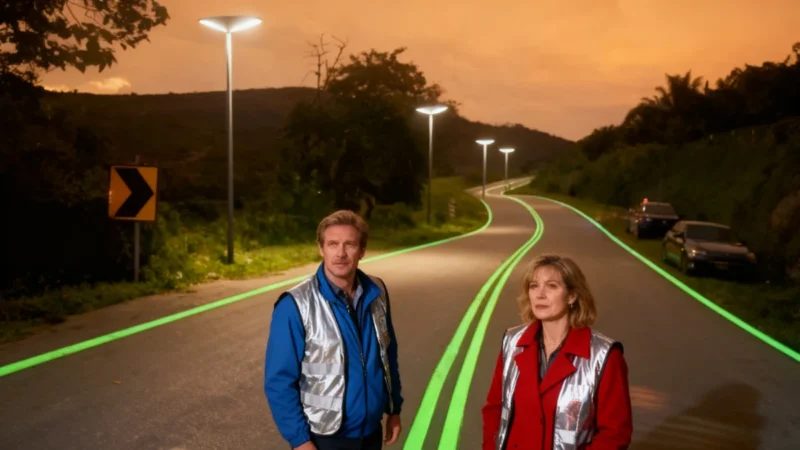
To improve night-time road safety, Malaysia launched an innovative pilot project using phosphorescent, or glow-in-the-dark, paint instead of traditional bulbs or reflective studs. As reported by The Straits Times, the experiment began on a 245-meter stretch (about 800 feet) in Hulu Langat, a district near Kuala Lumpur.
The concept was simple but novel: replace classic road lighting with photoluminescent paint to ensure excellent visibility at night, even in bad weather. Before this project, the roads in question had little to no public lighting, making them difficult—and at times, dangerous—to drive at night.
A Glow with a Price
Malaysia’s then-Minister of Public Works, Alexander Nanta Linggi, said the paint was meant to provide a constant glow, especially on rural routes lacking lighting infrastructure. Motorists reportedly welcomed the change, citing improved road safety and visibility. However, enthusiasm turned to concern when the government faced a major obstacle: cost.
According to figures cited by sources including Paultan, the photoluminescent road paint used in Malaysia cost roughly 749 Malaysian ringgit per square meter (about $160.00 USD per square yard at 2023 rates), while standard markings came to only 40 ringgit per square meter (approximately $8.50 USD per square yard). That means the glowing paint was around 20 times as expensive as the traditional option.
This dramatic cost difference led officials to reconsider rolling out the paint on a wider scale. Despite ongoing trials and strong public support, the government reversed course by the end of last year. The Hulu Langat pilot raised Malaysia's profile in road safety conversations, but ultimately, budget realities took precedence.
Innovation vs. Affordability
Malaysia’s glow-in-the-dark road test highlights a familiar global challenge: balancing innovative infrastructure with financial responsibility. Is enhanced safety worth such steep costs? So far, Malaysian leaders have decided it's not. For now, the country’s glowing roads remain an ambitious experiment that fizzled in the face of hard numbers.