


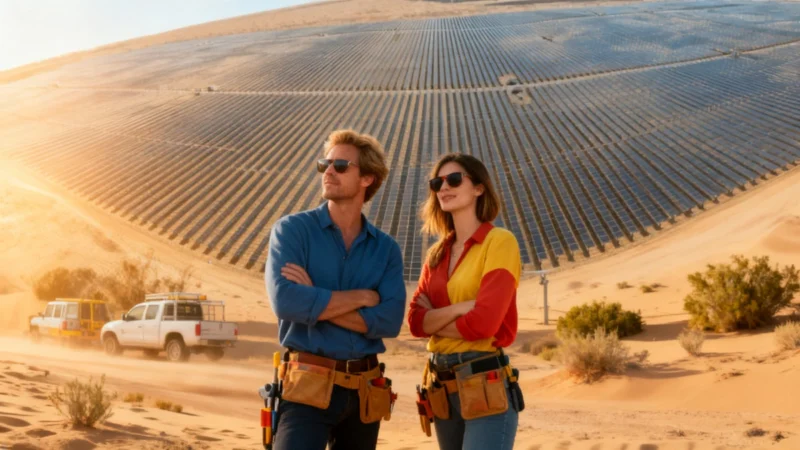
Solar Panels Spark an Unintended Shift
The project’s main goal was simple: bring renewable energy to an arid zone where almost nothing grew. Qinghai’s vast, dry terrain seemed perfect—plenty of space, no nearby communities, and consistent sunshine. No one expected the solar arrays to affect much besides the local electric grid.
But soon after installation, engineers and researchers on site noticed something strange. Where the panels cast their shade, the ground changed. The soil didn’t dry out as fast, surface temperatures stayed lower, and dust storms appeared to calm down near the structures. It wasn’t just about harvesting sunlight anymore.
The Desert Starts to Green
With more moisture held in the shaded dirt, the local conditions began to shift. The sand stabilized, the surface compacted, and gradually, small plants started returning. At first glance, it wasn’t dramatic—but it showed that even a Chinese desert could be more dynamic than previously thought.
Researchers measured the environmental changes between open desert and ground beneath the panels. They reported that shaded soil was more fertile and less stressed by temperature extremes. These patches became a more welcoming home for vegetation, simply because of the indirect protection offered by the panels.
Bigger Implications for Restoration
These surprising results have generated considerable interest, as they go beyond clean energy production. Large solar farms might, under certain conditions, play an unexpected role in ecological restoration. That raises questions for other dry regions around the world: could this effect happen elsewhere?
Similar approaches have already begun in places like Europe, where some farmers combine crops with solar power in shared spaces. However, the Chinese project stands out for its sheer scale—here, it’s about transforming not just one field but the edge of a desert.