



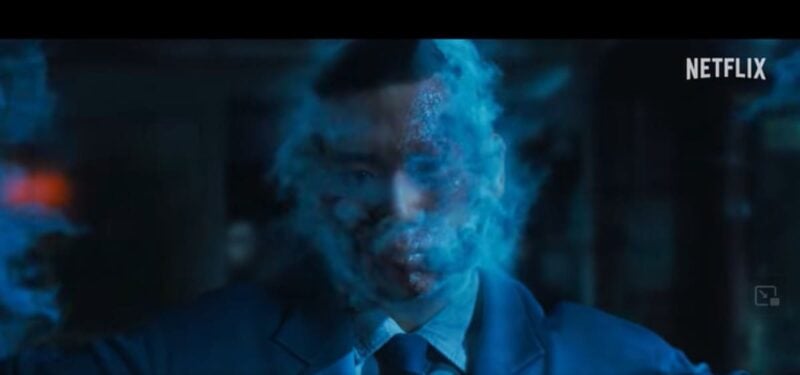
A Bold Blend of Science Fiction and Crime
With Human Vapor, Netflix continued its push into ambitious, international storytelling by partnering with the iconic Toho Studios for this unique coproduction. Inspired by the 1960 film The Human Vapor, the eight-episode miniseries unfolds in a world upended by an extraordinary phenomenon that disrupts reality itself.
From the very first episode, the stakes are set: during a live television broadcast, a scientist is disintegrated before a reporter's eyes in a shocking, inexplicable event. This violent incident kicks off a chain of murders claimed by an entity known as “Human Vapor”—a man able to transform his body into lethal gas, vanishing at will, operating by motives that defy standard investigation. The big question remains: did season one, released July 2, resolve all the mysteries, or is it only the beginning?
Blurred Lines: Between Monster and Victim
The threat of Human Vapor centers on two main characters: Inspector Kenji Okamoto and journalist Kyoko Kono. As the episodes progress, their investigation uncovers a tangled past linking the Human Vapor phenomenon to a catastrophic event, secret experiments, and a transformation that goes beyond human understanding. The deeper they dig, the less clear the border becomes between victim and monster.
The season finale traces the story back to Ren Tsutsumida, once an ordinary man and childhood protector of Kyoko Kono. Ren's fate changed dramatically after exposure to a mysterious meteorite during an operation overseen by the White Center, described as a support facility for vulnerable individuals. This event transformed him into an unstable entity, able to dissolve into deadly vapor. In the final episodes, Kyoko tries to end the violence by luring Ren into an isolated underground location, convinced this is the only way to contain him. Inspector Okamoto arrives too late—a blinding explosion fills the space, and both main characters vanish, leaving no clear trace.
All that remains are scattered belongings: clothing, a shoe, a ring. These fragments hint at an unexplainable disappearance, but the closing sequence lingers on a subtle presence, suggesting the Human Vapor phenomenon may not be entirely gone.
The Cryptic Ending: Room for More?
As of July 2026, neither Netflix nor Toho Studios has officially announced a continuation. Human Vapor was introduced from the outset as a self-contained, eight-episode miniseries. However, the script intentionally leaves the door slightly open. That enigmatic final scene invites speculation, implying unresolved questions about the phenomenon and its fate after the climactic events.
This approach isn’t unusual in modern television: what starts as a miniseries can expand into a larger universe if viewership is strong. For example, 13 Reasons Why adapted Jay Asher’s novel in its first season but ultimately ran for four. With Human Vapor, future seasons could depend on public response—but for now, any sequel is purely speculation.