


A Haunting Story Set in a Crumbling Hospital
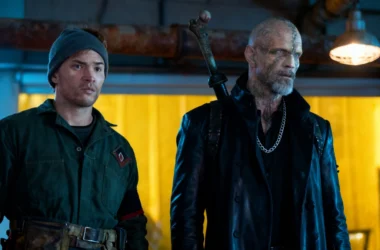
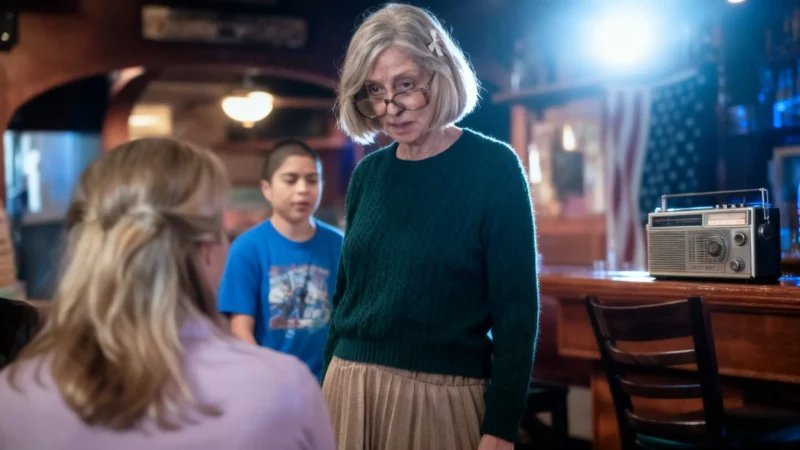
The latest installment of this anthology horror series comes from creators Chris Cantwell and Victor LaValle, adapting LaValle’s 2012 novel, The Devil in Silver. At its center is the fictional New Hyde Psychiatric Hospital, a decaying institution in New York teetering on closure. Inside, staff and patients are on edge—the hospital administrators push for control while a dark secret lurks behind a mysterious silver door.
Two pivotal characters shape the story: Dorry, New Hyde’s longest-residing patient, and Miss Chris, the head nurse. Dorry, played by Judith Light (Poker Face), becomes a cautionary figure for new arrival Pepper, brought to life by Dan Stevens (Legion). Dorry’s years inside the hospital give her unique insight into the lurking evil. Meanwhile, Miss Chris—portrayed with steely resolve by CCH Pounder (NCIS: New Orleans)—maintains discipline, even as she quietly fears the supernatural threat haunting the corridors.
The impressive ensemble also features Aasif Mandvi (Evil), John Benjamin Hickey (Daredevil: Born Again), Stephen Root (Barry), and Chinaza Uche (Silo). The series premiered May 7 and has since drawn rave reviews, currently holding a 94% approval rating from critics on Rotten Tomatoes—matching the highest score for any season of the show.
Horror That Hits Close to Home
Before the show debuted, ScreenRant’s Grant Hermanns spoke with Judith Light and CCH Pounder about the season’s powerful core. Light confessed she hadn’t read LaValle’s novel until joining the project, but once she had, she saw it as “a stunning psychological breakdown of all these people” at New Hyde.
More significantly, Light emphasized, “It’s about a cultural moment in our country and around the world about people with mental health challenges,” referencing Dorry and the other patients. As she put it, “The core of the story is how such people are so often forgotten, taken advantage of, discarded [and] discounted,” underscoring the show’s timely message as well as its entertainment value.
She recalled the collaborative process with LaValle, Cantwell, and director/executive producer Karyn Kusama to ensure Dorry’s struggles were portrayed with dignity, avoiding caricature. Light praised the unified effort of cast and crew in building an authentic, psychologically complex ensemble.
Depth Over Stereotypes
Light reflected on the challenge of representing those with profound mental struggles, clarifying, “And I don't mean crazy in a pejorative way. I mean it in the sense of how people think about other people who have these issues. These are people with profound mental challenges, but they create some kind of family.” She credited LaValle’s original vision and the full team’s commitment to crafting a believable on-screen family.
For CCH Pounder, playing Miss Chris drew on her trademark sense of authority and no-nonsense approach. She joked about her versatility, explaining her ability to “pull up no-nonsense very quickly” made her a natural for the part.
As she shaped the character, Pounder wanted Miss Chris to maintain blinders, focusing on her duties and family: “I get up, I do my job, I get to work, I've got to take care of my kid and my kid's baby, and the pressures of life.” She also imagined the head nurse as an immigrant, living in a cluttered apartment with a close-knit family—a detail that gave the role added dimension.
Facing the Supernatural—and Ourselves
Pounder explained:
CCH Pounder: She's living the life of many, many people. [In-character accent] Don't mess it up. You're not seeing that. Pick up those keys, get medication, non-compliance. She gets it, and she runs with that idea until she can't, until she's forced to. I was asked whether it was something within her that said, ‘This is wrong,' or something supernatural. And I chose that something supernatural happened, because the way we're living now, it's going to take something supernatural to change what we've kind of accepted, we've swallowed, we've cursed, we've mumbled, we've talked about, ‘Why don't they do? Why don't they do?' And here, she comes to a point where it's, ‘Why don't I do?' It's a huge, huge choice for somebody who says, ‘Look, I'm just doing my job.' And that's the Miss Chris that I created.
Pounder admitted she came to the show with fresh eyes, knowing little about The Terror or the novel:
CCH Pounder: I didn't know anything, Grant. I was as ignorant as they come. Literally, I had no idea. I met the writer for the first time, who I was like, ‘LaValle, you're the writer.' Everything was sort of like, ‘Oh! Oh! Oh!' And I kept saying, ‘Oh, but I haven't really done any kind of horrors like that.' And then people would just go, ‘You did Orphan, you did this, you did that.' What's similar is that they're all kind of these psychological, scary things. I kind of went, ‘Whoa, I have been in the genre, hanging out for a bit, and it just reveals itself as different.' You even think of X-Files, that was kind of that weird [tone]. There were so many of them that I have been dipping my toes in all this time. The genre has a lot of layers. I missed the fact that I was doing that, but I've done quite a bit. Now that I say it out loud, all of these things are flashing back. [Chuckles]
Building Chemistry On Screen
Judith Light and Dan Stevens—whose characters share major screen time—developed their dynamic in an intuitive way. As Light described, “He's a really profound human being. That's how I would describe him. He is so intelligent, and a creator of character that he understands in a way. So, without even speaking about it, we were able to bounce off of each other in so many different ways. Also, you have great scripts. When you have great scripts, you're able to do that. But the feeling level between the two of us was what I would say was the most important, and really the top note. So, we weren't saying, ‘Oh, what are you going to do in this beat? I'm going to do this in this beat.' This was all about the level of feeling between the two of us. And that's how those characters got created. And also when you have great guidance by—whenever you have a great director, like Karyn Kusama, she was able to talk us through specific moments, and what we needed to be doing in those moments. So, that's how that came about. Sometimes people want to talk about it and want to say, ‘Oh, I'm doing this and that.' I tend not to go there and neither does Dan.”
She wrapped it up succinctly: “That's the perfect way to describe it, because otherwise, you're in your head. It's about what you feel. It's what you feel when you watch us. You don't watch a show, you feel a show. And all of a sudden, if you're feeling that between these characters, it makes for an entirely different kind of dynamic.”
If you’re after a horror series with brains, heart, and genuine chills, The Terror: The Devil in Silver just might be the one to watch. Those 94% scores on Rotten Tomatoes are well-earned.