



Personalization: Gemini integrates with Google Photos
If you’ve ever wanted AI to understand your visual preferences without needing lengthy descriptions or sifting through your files, Google’s latest announcement brings that vision closer. The company revealed that Gemini, its generative AI, is now able to access users’ Google Photos libraries to generate or modify images. Now, instead of uploading a picture or offering detailed descriptions about your family or style, Gemini can pull these elements directly from the images linked to your Google account.
This update is part of Google’s larger strategy around what it calls personal intelligence. After first connecting Gemini to data like emails and activity from the Google ecosystem, the company has extended this approach to Nano Banana 2 AI model release, the engine behind Gemini’s image generation and editing. The goal: make creations more relevant, faster to produce, and more closely tailored to real life.
How does personal image creation work?
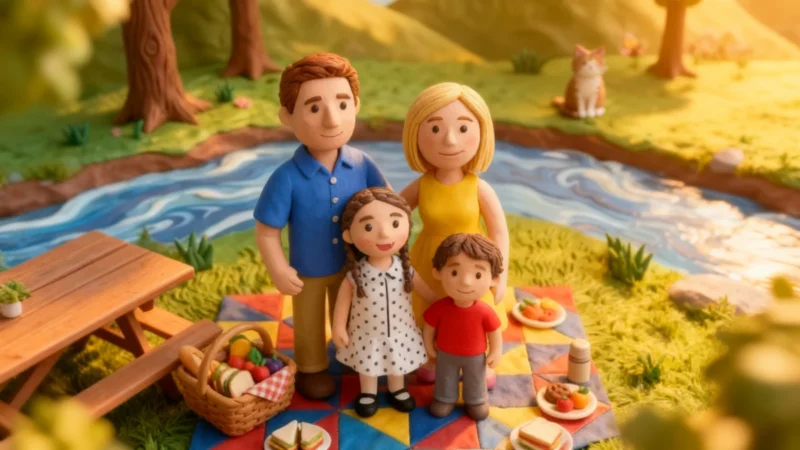
Here’s how it works. Once you activate the option, you can ask Gemini to create an image of your family in a specific style—like claymation—without supplying a reference photo. The system draws on the images sitting in your Google Photos and on tags such as “family” to determine who’s represented and how to compose the scene. Google designed this update for simpler requests—sometimes only a few words are needed for a highly personalized creation.
This approach changes the usual process for AI image generation, which often requires a detailed prompt or an uploaded image to guide results. Gemini’s integration cuts down on that friction. In theory, the AI already understands your tastes, visual habits, or other personal cues, making image generation not just quicker but also more personalized and intimate.
Addressing privacy concerns
Naturally, privacy is a central concern with this kind of feature. According to Google, a “sources” button shows where the context used for your generated image originates. The company states it does not use private Google Photos libraries directly to train its models, but notes it may process limited data—such as requests and system responses—as part of how the service functions.
Rolling out to select US users
As of late April 2026, this feature has been rolling out to some AI Plus, Pro, and Ultra subscribers in the United States, beginning with the Chrome browser for desktop. Google intends to expand access to more users over time. The phased release will likely help gauge public reception and any sensitivities about increased personalization.
With this update, Google is pushing AI forward—not just as a command-driven tool, but as one that understands part of your personal life. It’s a logical technical step, but it also raises new social questions about how much users are willing to let their digital memories fuel their creative assistant.