



Industrial Labs Get a Robotic Inspector
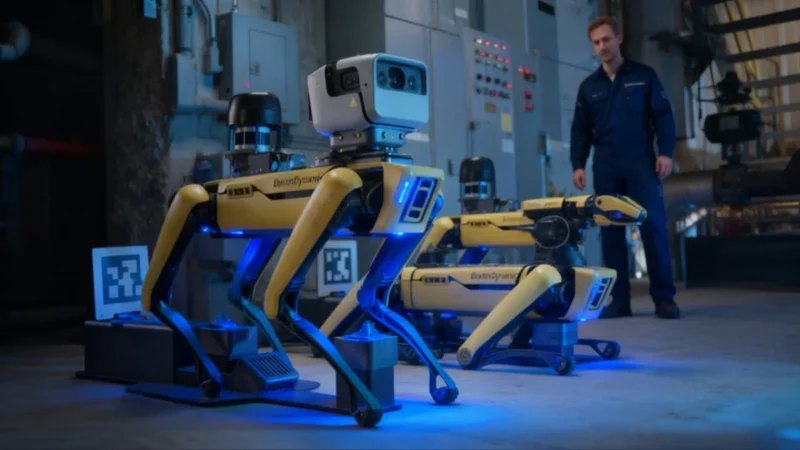
Factories are filled with old equipment and physical dials that are notoriously tough for machines to read, thanks to glare, odd angles, or moving fluids. But with the recent introduction of Google DeepMind’s Gemini Robotics-ER 1.6 model, robots like Spot have reached a new level in visual reasoning. Spot can now pinpoint and measure dial needles precisely, understanding them in the broader context—skills once limited to experienced human inspectors. This innovative approach, known as “agentic vision,” allows Spot to mentally process and manipulate visual data, resulting in sharper, more reliable analysis and helping it avoid mistakes that tripped up earlier systems.
Far Fewer Errors, Near-Human Accuracy
Spot’s testing results are striking: a 98% accuracy rate in reading instruments like pressure gauges and thermometers, compared to just 23% with previous models. Even without the most advanced vision features, accuracy reached 86%, a dramatic improvement. Gone are the days of the robot misidentifying objects—the new system reliably detects scattered tools like hammers or paintbrushes without making up phantom items. On the safety side, Spot’s improved awareness of its physical environment means it better respects boundaries, reducing the risk of mishaps during delicate tasks or when working near people. These advances, demonstrated in real-world trials, have placed the Boston Dynamics-Google DeepMind team at the forefront of reliable robotics.
Already At Work—and Ready for More
Spot is already deployed at Hyundai’s factories, patrolling and scanning equipment while alerting staff to any irregularities it finds. The partnership between Boston Dynamics and Google DeepMind, which was officially announced at CES 2026, is expanding Spot’s arsenal of AI skills—enabling it to detect debris or read liquid levels right on the production floor. The quadruped robot market is booming, reportedly growing from $286 million in 2026 to a projected $759 million by 2034, driven by these kinds of practical applications. For tech enthusiasts, it’s a real step closer to the kind of autonomous companions seen in movies like Blade Runner.
Humans Still in the Loop
Ultimately, robots like Spot aren’t here to replace humans. The goal is to free up workers from the dullest and dirtiest jobs, making way for a more intuitive partnership between people and machines in next-generation factories.