



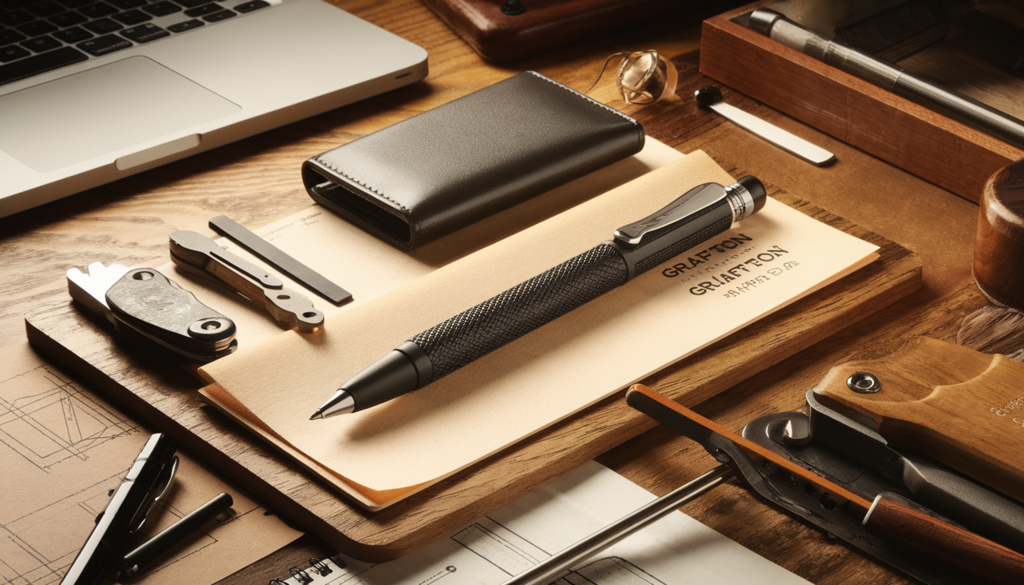
In technical fields where a single misplaced line can derail a project, the tools professionals reach for daily matter more than most realize. While digital tablets and CAD software dominate modern workflows, a surprising number of engineers and designers still keep a mechanical pencil within arm's reach—not out of nostalgia, but because certain tasks demand the tactile precision only analog tools provide.
EDC mechanical pencils—short for Everyday Carry—have evolved far beyond the disposable office supply aisle versions most people remember. Today's models represent a convergence of materials engineering, ergonomic research, and industrial design. Unlike traditional wooden pencils that require constant sharpening and produce inconsistent line weights, mechanical pencils deliver uniform marks through a precisely engineered lead advancement system.
What Makes Mechanical Pencils Essential for Precision Work
The advantages of mechanical pencils become apparent the moment you compare them against alternatives in demanding applications. Engineers working on initial concept sketches and designers refining details by hand consistently cite several functional benefits:
- Consistent Line Thickness: Mechanical pencils maintain uniform line weight throughout use, critical when technical drawings require precise measurements and clear visual hierarchy.
- Uninterrupted Workflow: The elimination of sharpening means fewer breaks in concentration during complex problem-solving sessions.
- Sustainable Design: Refillable lead systems reduce waste compared to disposable wooden pencils, aligning with corporate sustainability initiatives many firms now prioritize.
- Lead Hardness Options: Different lead grades (HB, 2B, 4H) allow users to match the tool to the task, from soft sketching leads to hard drafting grades.
These characteristics explain why mechanical pencils remain standard issue at architecture firms and engineering consultancies, even as digital tools handle final production work.
Selecting an Engineering Pencil That Performs Under Pressure
Not all mechanical pencils meet the demands of professional technical work. The difference between a functional tool and one that becomes an extension of your thinking process comes down to specific design elements:
- Lead Diameter Selection: The 0.5mm size dominates technical fields for good reason—it balances detail capability with lead durability. Finer 0.3mm leads suit intricate work but break easily under pressure, while 0.7mm and 0.9mm options work better for sketching and shading.
- Grip Engineering: Extended drafting sessions reveal poor grip design quickly. Knurled metal grips provide secure control, while rubberized sections reduce fatigue. The grip diameter matters as much as texture—too thin causes cramping, too thick reduces precision.
- Body Construction: Metal bodies offer durability and weight that some users prefer for control, though quality plastics can provide excellent balance at lower weight.
- Lead Advancement Mechanism: Click-advance systems dominate, but the quality varies dramatically. Premium models advance lead in precise 0.5mm increments with satisfying tactile feedback.
- Weight Distribution: Balance point affects control more than total weight. Well-designed pencils place the center of gravity near the grip, reducing the effort required for precise movements.
Testing multiple models remains the only reliable way to find the right match, as hand size and personal preference play significant roles in what feels natural during extended use.
Design-Forward Options That Don't Sacrifice Function
Digital designers often seek tools that reflect the aesthetic sensibility they bring to their work. Several manufacturers have responded with mechanical pencils that function as both precision instruments and design objects:
- Rotating Lead Technology: Advanced mechanisms rotate the lead slightly with each stroke, maintaining a consistent point without manual rotation—a feature that significantly improves line quality in detailed work.
- Material Innovation: Titanium, carbon fiber, and aerospace-grade aluminum have entered the mechanical pencil market, offering strength-to-weight ratios that would have seemed excessive a decade ago but now appeal to users who appreciate engineering for its own sake.
- Modular Grip Systems: Some models allow users to swap grip sections, accommodating different hand sizes or preferences for various tasks.
- Minimalist Aesthetics: Clean lines and reduced visual complexity appeal to designers who view their tools as extensions of their design philosophy. Everyman mechanical pencils, alongside offerings from Rotring and Kaweco, have pursued this direction through machined metal construction and restrained detailing rather than decorative flourishes.
- Sustainable Materials: Recycled metals and responsibly sourced components address environmental concerns without compromising performance.
These features transform mechanical pencils from purely functional tools into objects that inspire the creative process itself—a consideration that matters more than skeptics might assume when you interact with a tool for hours daily.
Ergonomics: Why Comfort Determines Long-Term Usability
The relationship between tool design and user fatigue has become a serious area of study as repetitive strain injuries affect knowledge workers across industries. Mechanical pencils designed with ergonomic principles address several common issues:
- Reduced Grip Pressure: Textured grips allow users to maintain control with less force, decreasing muscle tension in the hand and forearm during extended sessions.
- Neutral Wrist Position: Properly balanced pencils require less wrist deviation to maintain control, reducing strain on tendons and ligaments.
- Cushioned Contact Points: Soft grip materials distribute pressure across a larger surface area, preventing the concentrated pressure points that cause discomfort.
- Appropriate Weight: While preferences vary, most ergonomic research suggests moderate weight (10-20 grams) provides the best balance between control and fatigue prevention.
For professionals who spend significant time sketching or annotating, these differences compound over weeks and months into genuine quality-of-life impacts.
You can also check out these tips on improving your handwriting.
How Precision Tools Enable Precision Thinking
In engineering contexts where tolerances matter and errors cascade, the reliability of your instruments directly affects output quality. Mechanical pencils contribute to precision work in ways that aren't immediately obvious:
- Consistent Line Weight: When reviewing technical sketches, uniform line thickness allows the eye to distinguish intentional emphasis from accidental variation—critical for clear communication.
- Predictable Performance: Knowing exactly how your tool will behave eliminates a variable from complex problem-solving, allowing full attention on the work itself.
- Fine Detail Capability: The 0.3mm to 0.5mm lead range enables notation and detail work at scales where traditional pencils fail.
- Clean Erasability: Modern polymer leads erase more completely than graphite from wooden pencils, allowing iterative refinement without visual clutter from previous attempts.
These factors explain why mechanical pencils remain relevant despite digital alternatives. In early-stage work where ideas flow faster than software can accommodate, or when annotating printed documents during reviews, the immediate tactile feedback and zero latency of analog tools still offer advantages.
Making the Investment in Quality Tools
The mechanical pencil market spans from disposable models under two dollars to precision instruments exceeding two hundred. For professionals who use these tools daily, the investment in quality equipment pays returns in comfort, reliability, and work quality:
- Consistent line quality improves the clarity of technical communication
- Ergonomic design reduces fatigue and potential injury risk during extended use
- Durable construction means fewer replacements and less waste over time
- Refillable systems lower long-term costs compared to disposable alternatives
When selecting an EDC mechanical pencil, consider your specific use cases. Engineers working primarily on technical drawings have different needs than industrial designers sketching concept variations. Lead size, grip style, and weight distribution should match your actual workflow rather than abstract preferences.
The right mechanical pencil becomes nearly invisible in use—an extension of thought rather than an intermediary requiring conscious attention. That seamless integration between tool and user represents the ultimate goal of functional design, whether you're drafting structural details or sketching interface concepts. Testing multiple options and paying attention to how each feels during actual work remains the most reliable path to finding the tool that fits your hand and your process.