




When a sudden power outage hits, the first few minutes can feel like an adventure. But after an hour or two, when the lights stay off and your phone battery dips into the red, that adventure quickly turns into stress.
Whether you live in a big city or a rural part of Canada, unexpected blackouts caused by storms, grid failures, or maintenance are becoming more common. That’s why many households are now investing in backup power solutions to stay connected, safe, and comfortable when the grid goes down.
But not all backup systems are built the same. Before spending thousands of dollars, it’s worth understanding what makes one power solution truly reliable for your home.
1. Assess Your Real Power Needs
Start by listing what you need to keep running during an outage. Do you simply want to keep your phone charged and the Wi-Fi on, or do you also need to power the refrigerator, heating, and medical equipment?
A good way to estimate this is by calculating the wattage requirements of your essential appliances.
- Small devices like phones, routers, and LED lights use less than 100 W.
- Refrigerators and sump pumps often draw 500 – 800 W.
- Space heaters or microwaves can exceed 1,000 W.
Add up these numbers to understand your total continuous power requirement. A reliable backup power system should handle that comfortably, ideally with some extra headroom. If your target is 2,000 W, look for something rated around 2,400 W or higher.
The more precisely you match your needs, the more cost-effective your choice will be — you don’t need to overspend on industrial-grade hardware for household essentials.
2. Choose the Right Energy Source
There are several kinds of home backup systems available today, each with distinct strengths and drawbacks:
• Gasoline or Diesel Generators
These traditional machines are common because they’re inexpensive upfront and deliver high power output. However, they produce fumes, require fuel storage, and can’t safely operate indoors. They’re also noisy — not ideal if you live in a close neighbourhood or want peace of mind during a storm.
• Solar-Battery Systems
Solar panels combined with battery storage are a clean, quiet solution that can keep your home powered indefinitely under the right conditions. They do, however, require installation space and a larger investment upfront.
• Battery-Based Portable Systems
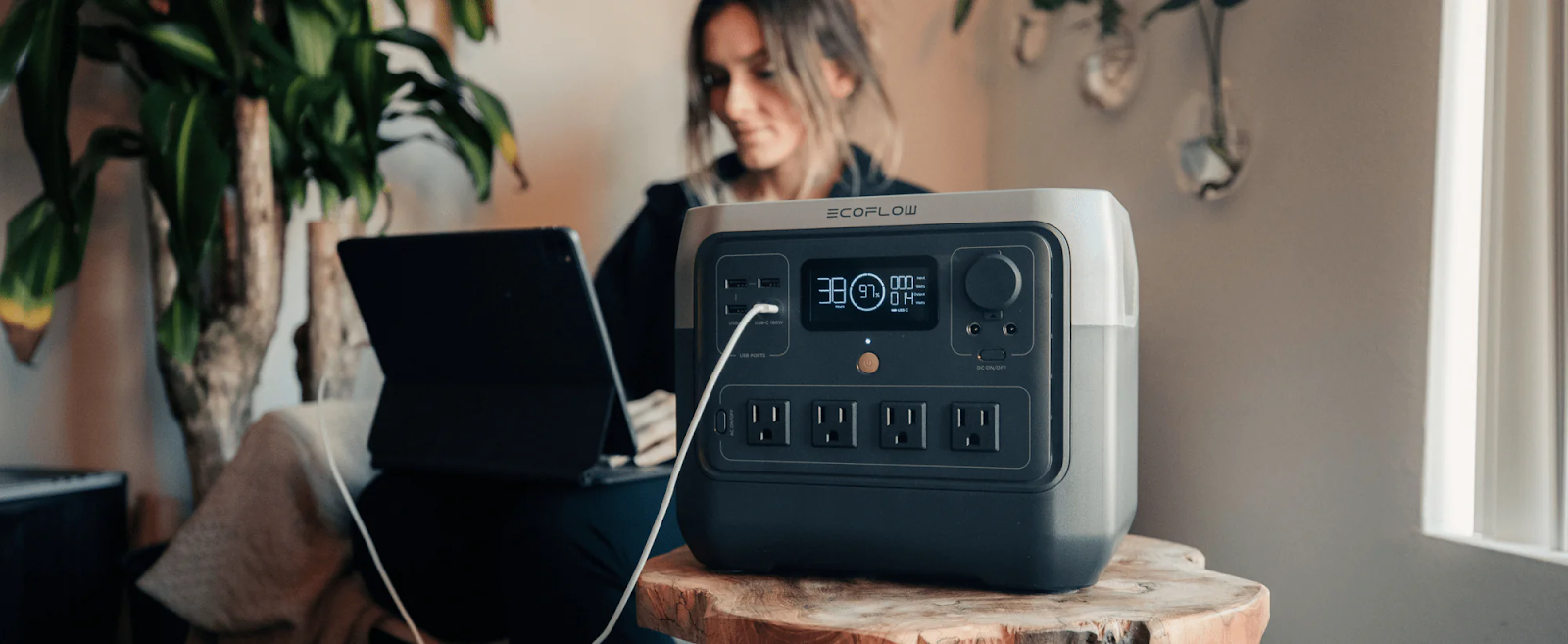
Modern battery solutions have surged in popularity because they’re plug-and-play, maintenance-free, and safe to use indoors. A portable power station—essentially a rechargeable battery with built-in inverters and multiple output ports—can act as your compact home backup unit. It’s silent, efficient, and easily recharged via wall outlets, car chargers, or solar panels.
If you’re seeking a balance between convenience, environmental friendliness, and reliability, battery-based systems are an increasingly smart choice for Canadian households.

3. Look for Sufficient Capacity and Output
A reliable backup power solution must have two things:
- Adequate capacity (measured in watt-hours, Wh) — this tells you how long your system can run.
- Strong output (measured in watts, W) — this determines what you can plug in.
Think of it like a car: the gas tank size is capacity, and the engine horsepower is output.
For short emergencies — keeping phones charged, lights on, and Wi-Fi running — a few hundred watt-hours may be enough. But for extended outages, especially in winter, you’ll want something with several thousand Wh of capacity.
Also, check if the system supports surge power (momentary spikes when devices start up). Appliances like fridges and pumps need that extra burst.
4. Battery Type and Safety Features
Battery technology determines both the lifespan and safety of your backup system.
Lithium-Ion vs. LiFePO₄
- Traditional lithium-ion batteries are lightweight and cost-efficient but degrade faster over repeated charge cycles.
- LiFePO₄ (lithium iron phosphate) batteries are slightly heavier but offer longer lifespans (up to 3,000+ cycles) and improved thermal stability — meaning they handle Canadian winters and summers better without overheating or losing charge capacity.
Built-In Protections
A dependable unit includes smart battery management systems that prevent overcharging, short-circuiting, and overheating. Look for certifications such as UL, CSA, or equivalent Canadian safety marks to ensure compliance with local standards.
5. Recharging Options
In a long outage, how fast and how easily you can recharge matters. The most versatile systems allow for:
- Wall charging (the fastest method when power returns)
- Car charging (for on-the-go or when parked at a campsite)
- Solar panel input (for true independence from the grid)
The ability to switch between these methods ensures you’ll never run out of options. Many newer models include advanced controllers that optimize solar input and shorten charging time significantly — an important advantage in Canada’s short daylight hours during winter.
6. Portability and Flexibility
While whole-home generators stay fixed, modern battery-based systems are mobile. That flexibility means your backup power can double as a travel companion — perfect for camping, tailgating, or powering a shed or cabin.
When choosing, check:
- Weight and handle design — can one person move it safely?
- Wheels or modular batteries — useful for larger units.
- Expandable capacity — some systems allow adding extra battery packs as your needs grow.
A compact, movable setup ensures your investment isn’t locked into one location.
7. Noise Level and Indoor Use
During a power outage, you’ll likely use your backup power indoors. A system that runs silently makes a big difference, especially at night.
Battery-based power stations operate with minimal noise and zero exhaust, unlike gas generators that must stay outdoors.
For families with children or elderly members, this indoor safety and comfort can be invaluable.
8. Smart Monitoring and Connectivity
Modern backup systems now include companion apps or digital displays that let you monitor charge level, output, temperature, and remaining runtime.
Smart connectivity allows you to:
- Receive alerts when power is low,
- Remotely switch outputs on/off,
- Optimize charging during off-peak electricity hours.
While these features aren’t essential, they make managing your home energy much easier and give you confidence in emergencies.
9. Warranty and After-Sales Support
Even the best technology is only as good as the service behind it. Always check:
- Warranty length (ideally 2–5 years for battery systems),
- Availability of replacement parts,
- Customer support in Canada — including return policies and service centres.
Buying from brands that offer clear warranty coverage and responsive support ensures your investment stays protected for years.
10. Real-World Reliability: Tested, Proven, and Practical
Finally, don’t underestimate real-world feedback. Read reviews from Canadian homeowners who have used their systems during winter storms or long outages. Pay attention to details like:
- Did it start easily in freezing temperatures?
- How long did it run a fridge or heater?
- Was the recharge time close to what the manufacturer promised?
Independent performance tests, professional reviews, and user communities can reveal more about reliability than spec sheets ever will.
Bringing It All Together
A reliable home backup power solution isn’t just about capacity or price — it’s about peace of mind.
When the lights go out, your goal is simple: keep your household running safely and comfortably until the grid returns.
To recap:
- Calculate your power needs carefully.
- Choose the right energy source for your lifestyle and location.
- Prioritize safety, flexibility, and ease of use.
- Verify certifications and warranty coverage.
For many Canadians, the sweet spot lies in versatile, battery-based systems that blend clean energy, quiet operation, and reliable backup performance — ensuring that no matter how long the next storm lasts, your home stays bright, connected, and secure.

