




The OnePlus 13 is the company’s full-sized product for 2025, while the Galaxy S25 Edge is among Samsung’s thinnest and most affordable base models in the S25 series. Regardless of this gap in positioning, both phones compete in the same space and attend to buyers looking for a non-foldable Android flagship.
The price gap between them is about $200. While on paper OnePlus clearly wins in most hardware categories, Samsung brings several counterpoints that still make this a meaningful comparison. In this review, I’ll break down the real technical differences between these phones and explain how those differences will impact actual daily use.
Specs overview: Galaxy S25 Edge Vs OnePlus 13
| Images: |  | 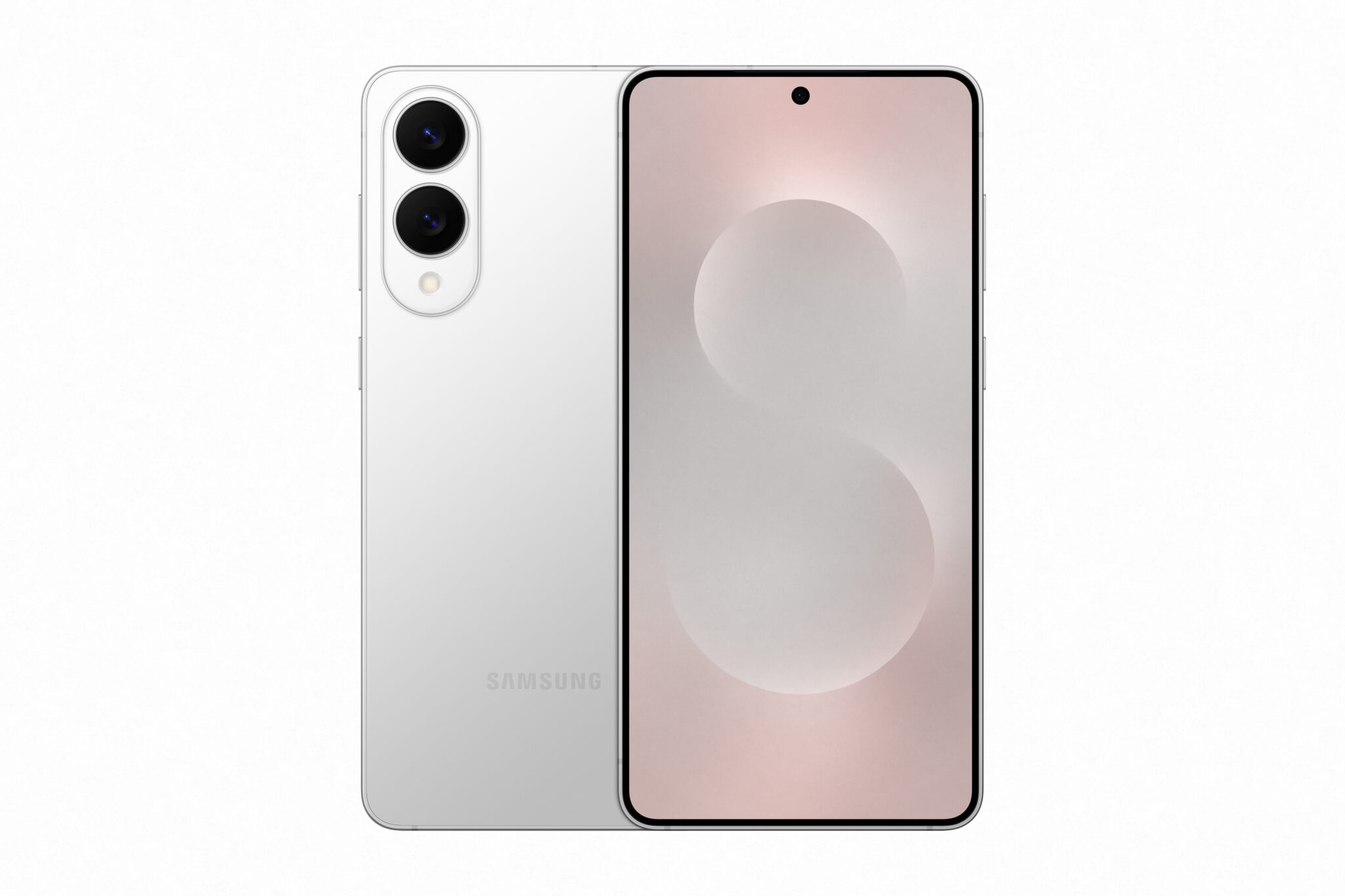 |
|---|---|---|
| Component | OnePlus 13 | Samsung Galaxy S25 Edge |
| Display | 6.82-inch LTPO 4.1 AMOLED, 1440 x 3168 px, 120Hz, 4500 nits | 6.7-inch LTPO AMOLED 2X, 1440 x 3120 px, 120Hz, ~1416 nits (measured) |
| Processor | Snapdragon 8 Elite (3nm), Adreno 830 | Snapdragon 8 Elite (3nm), Adreno 830 |
| RAM | 12GB, 16GB, 24GB LPDDR5X | 12GB LPDDR5X |
| Storage | 256GB, 512GB, 1TB UFS 4.0 | 256GB, 512GB UFS 4.0 |
| Main Camera | 50MP wide (OIS) + 50MP periscope telephoto (3x) + 50MP ultrawide | 200MP wide (OIS) + 12MP ultrawide |
| Front Camera | 32MP | 12MP |
| Battery | 6,000mAh | 3,900mAh |
| Charging | 100W wired, 50W wireless, 10W reverse wireless | 25W wired, 15W wireless (Qi2), 4.5W reverse wireless |
| Water Resistance | IP68 / IP69 | IP68 |
| Software | One UI 7 (Android 15), 7 major OS updates, 7 years of security | One UI 7 (Android 15), seven major OS updates, 7 years of security |
| Build | Aluminum frame, Gorilla Glass Ceramic Guard (front), vegan leather or glass back | Titanium frame, Gorilla Glass Ceramic 2 (front), Gorilla Glass Victus 2 (back) |
| Dimensions | ~162.9 x 76.5 x 8.5–8.9 mm, ~210g | 158.2 x 75.6 x 5.8 mm, 163g |
| Price | Starting from $900 | Starting from $1,100 |
Design
The OnePlus 13 embraces the modern trend of maximizing screen size and battery capacity, even if that gives birth to a larger and heavier phone. It measures 6.82 inches diagonally, weighs approximately 210 grams depending on configuration, and comes in several finishes.
The most attractive of them is the vegan leather-backed variant in navy blue that offers a unique tactile experience with a Ceramic Guard for the front glass. The company claims that it offers superior scratch and drop resistance compared to Gorilla Glass Victus 2, though there is still limited third-party testing to verify that claim conclusively.
The eye-catching element is, of course, the massive circular camera housing done in brushed silver that dominates the top-left of the back. Inside the circular module are four lenses arranged in a perfect square, along with subtle Hasselblad branding stamped near the upper right edge of the ring. The company logo sits in the middle on the back. On the front is a stunning near bezel-less display with a punch-hole camera centered at the top.

The phone’s frame is machined aluminum, with excellent structural rigidity, and the phone is rated IP68/IP69 for water and dust resistance. The IP69 rating, in particular, makes it more resistant to high-pressure water jets than most competitors. It won't really matter to you in practice, unless you're planning to take it to a car wash.
On the other hand, Samsung’s Galaxy S25 Edge is the slimmest flagship phone Samsung has ever made. It's also easily among the thinnest smartphones in the entire Android ecosystem currently. It comes with a 6.7-inch display, an astonishingly thin 5.8mm profile, and a 163-gram weight. You can already imagine that the difference in hand will be dramatic.
At the back, you’ll notice two large camera lenses and a flash stacked vertically inside a polished pill-shaped island. They protrude from the surface at the top left corner. The back panel itself is smooth Gorilla Glass Victus 2 with a satin finish, while the front is Gorilla Glass Ceramic 2 with flat, razor-thin bezels on all sides. The centered punch-hole selfie camera is tiny and blends well into the display. The phone’s titanium frame is almost blade-like when viewed from the edge.

The S25 Edge is IP68 certified, which is perfectly adequate for real-world water and dust protection. Without the added IP69 classification, you won’t get the same resistance to high-pressure water jets. But again, the same car wash logic applies here, too. IP68 will handle any typical scenario just fine. Interestingly, it handles bending at full force well. That's another factor to consider.
Overall, the OnePlus 13’s design will appeal to anyone who wants a bold, immersive device and isn't concerned about size. The S25 Edge will appeal to those who value portability. Though I value portability, I adore the OnePlus's design, so I'm a bit torn here. Its flat, neatly integrated camera housing and matte vegan leather back feel more balanced and satisfying to me.
Display
OnePlus 13 makes one of its most decisive hardware statements in its display. The phone carries a 6.82-inch LTPO 4.1 AMOLED panel with a resolution of 1440 x 3168 pixels (510ppi), a refresh rate of up to 120Hz with full LTPO dynamic adjustment, and a peak brightness of 4,500 nits under HDR conditions.
It's one of the brightest and most capable OLED displays I've seen on any smartphone as of mid-year. It supports a comprehensive HDR stack with Dolby Vision, HDR10+, and HDR Vivid. The LTPO 4.1 technology provides excellent power efficiency through smooth scaling of the refresh rates based on content.

Meanwhile, the Galaxy S25 Edge features a 6.7-inch LTPO AMOLED 2X panel with a 1440 x 3120 resolution (513ppi), 120Hz adaptive refresh, and a measured peak brightness of around 1,416 nits. The panel quality is great, too. After all, this is a Samsung display. If you didn't know, they technically made OnePlus' displays up until the OnePlus 11 series. More recent OnePlus models, including the 13, have shifted to BOE panels.

Here, Samsung's phone has superior color calibration. But the OnePlus panel outclasses it in resolution, brightness, and HDR versatility. You can even see the pixel density when displaying fine text or high-resolution images side by side.
Peak brightness is also notably lower, which does affect usability in extreme outdoor conditions. The S25 Edge does retain Samsung’s best-in-class Always-On Display implementation. It's an area where OxygenOS still lags slightly behind One UI in terms of how flexible and polished it feels. But if display quality is a priority, you should go with the OnePlus phone.
Performance and memory
Both phones use Qualcomm’s Snapdragon 8 Elite platform, based on TSMC’s second-generation 3-nanometer process. This platform features two high-performance Oryon V2 Phoenix L cores, six additional performance cores, and an updated Adreno 830 GPU. In both synthetic benchmarks and real-world use, the phones can handle demanding 3D games, multi-tasking, AI-driven applications, and media editing, and more with ease.
The significant differences are in memory configuration and thermal management. The OnePlus 13 offers RAM options up to a staggering 24GB of LPDDR5X, which is more than enough for any conceivable Android workload and well beyond what the S25 Edge offers, which is limited to 12GB. Storage options also tilt in OnePlus’s favor, where it offers up to 1TB of UFS 4.0 versus a 512GB cap on the Galaxy S25 Edge.

Thermal performance is also worth noting, where the larger chassis of the OnePlus 13 allows for a more aggressive vapor chamber cooling system. In sustained benchmarks and extended gaming sessions, the phone will experience less throttling and more stable performance over time than the more compact S25 Edge. Because of its size and constrained thermal volume, it will heat up faster.
Battery
Battery is arguably the most lopsided category in this comparison, mainly because the OnePlus 13 ships with a massive 6,000mAh cell. It's huge for a mainstream flagship, and that’s already won it a major vote in my book. The Galaxy S25 Edge uses a disappointing 3,900mAh battery.
Samsung’s decision to shrink battery capacity in the S25 Edge this year from their usual 5,000mAh capacity is a clear trade-off for the slim and light profile. I don't know about you, but I'm a heavy phone user, so a high battery capacity is non-negotiable for me.
The OnePlus 13 should give you two full days of average use and easily surpass 8-9 hours of screen-on time in mixed use scenarios. The S25 Edge should typically require a daily charge, and heavy users like me will find themselves needing to top up before evening.
Charging speed further widens the gap as the OnePlus 13 supports 100W wired charging, capable of a full charge in approximately 36 minutes, and 50W wireless charging. The phone also supports reverse wireless charging at 10W.
When I first saw that 50W wireless figure on the OP13 spec sheet, I had to pause. I knew right then I hadn’t used enough phones outside the usual Samsung and Google ecosystem. Samsung, in particular, has blinded me to how far other Asian brands have pushed charging tech. In their world, numbers like 80W or 100W wired, and 40W or 50W wireless are becoming normal, and it's still surprising that Samsung refuses to step outside its comfort zone.
The S25 Edge is comparatively conservative, with 25W wired charging and 15W wireless charging. Arguably, Samsung is focusing on battery management and charging safety profiles. Yet again, the charging speeds indicate what phone you should buy.
Camera
The Galaxy S25 Edge uses a massive 200MP primary wide sensor with multi-directional PDAF and optical image stabilization. Its main advantage here is Samsung’s dual-pixel autofocus system, combined with the highly optimized ProVisual Engine they've been marketing since day one. It supposedly gives you accurate autofocus and well-balanced point-and-shoot images with great HDR and great dynamic range.

But sometimes, megapixels aren't everything. OnePlus counters all of that with a more versatile system. It has a 50MP periscope telephoto lens with true 3x optical zoom and a 50MP ultrawide camera. Meanwhile, the OnePlus 13 opts for a more versatile camera system. They produce more consistent results across zoomed shots and ultrawide. Instead, it relies on digital crop-zoom from its 200MP sensor, which works surprisingly well at 2x or so, but falls behind at higher ranges.

In low light, Samsung holds a slight edge (pun intended) thanks to its mature night mode algorithms and multi-frame processing. Its 200MP primary sensor bins down to excellent 12MP shots in dark conditions with great control over noise. However, OnePlus did make their processing far more competitive this year, and their phone also produces strong low-light results across all lenses.
OnePlus still wins in the selfie camera. The 32MP front camera produces sharper results than Samsung’s 12MP front shooter on the Edge. Overall, Samsung's image processing does produce more natural skin tone results, whereas OnePlus' phone tends to oversaturate shots.
Software
Both phones ship with Android 15 out of the box in different representations. Samsung’s One UI 7 is a feature-rich and polished Android skin, with deep customization options, powerful multitasking features, and Galaxy AI integrations that are among the best on any Android phone.

The S25 Edge also benefits from Samsung’s industry-leading software policy, where you are guaranteed seven whole years of OS updates and security patches. Basically, updates until Android 22 and One UI 14, assuming the current naming system still holds by then. OnePlus’s OxygenOS 15, while much lighter and closer to stock Android, remains a fast and fluid UI.

It lacks some of Samsung’s depth in terms of ecosystem integration and AI features, but it compensates for that with a cleaner experience that many users prefer, myself included. However, the software policy isn't as enviable as it is on the Samsung phone. It's capped at four major Android updates and five years of security patches.
OnePlus 13 has the real numbers you need
The OnePlus 13 delivers what I’d call an aggressively value-driven package for $900 and is the better phone. It has a top-tier display with high brightness, a generous 6,000mAh battery paired with faster charging speeds, an impressive triple-camera system, and memory options that frankly outclass many Ultra phones.
The Galaxy S25 Edge costs too much for what it's offering in comparison. You’re mostly paying a premium for the Samsung ecosystem and the peace of mind that comes with a 7-year update policy. It's more suited for you if you’re using a Galaxy Watch, Galaxy Buds, a Galaxy Tab, or even SmartThings devices at home.
There are many benefits in staying within that ecosystem. Everything syncs and works together in ways OnePlus can’t match yet. It's your choice to make. Which phone speaks to you more?

