


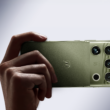


Satellite phones today are hardly ever exciting nowadays. Still very useful for emergencies and remote areas but nonetheless remains painfully slow and finicky to use for its intended application. One UAE-based telecommunications company, however, decided to put a modern twist on this device by introducing an updated smartphone that can effectively function as an advanced satellite phone.
The First D2D Satellite Smartphone

The Skyphone, as it is called, is the brainchild of Thuraya Telecommunications Company, a subsidiary of Al Yah Satellite Communications Company PJSC (Yahsat). This newfangled smartphone integrates satellite connectivity with regular land-based networks. In other words, it maintains the traditional dual-mode communication features of phones like the Inmarsat IsatPhone Pro, while sporting the well-known touchscreen brick form factor, as well as using a modern mobile operating system.
According to its introduction press release, it supports terrestrial 5G, 4G, 3G, and 2G frequency bands for global cellphone coverage, then complemented by Thuraya's universal device-to-device (D2D) satellite coverage across Europe, Asia, Africa, and Australia.
Previously, Thuraya also released the X5-Touch, the direct predecessor to the Skyphone. Unlike its newer counterpart, it started with an Android 7.1.2 OS (upgradeable to Android 9.0), and had specs that were already outdated for a mid-range smartphone of its time, made more ridiculous by its high retail price (almost $1,300).
A Hopeful Successor?

Ali Al Hashemi, Group Chief Executive Officer of Yahsat, highlighted the Skyphone's potential, stating, “The advanced capabilities of the Skyphone for multi-continent use, together with a consumer-friendly design, make it a significant disruptor in the smartphone sector.”
Now, ‘significant disruptor’ may sound a bit too ambitious, but the idea for an updated satellite phone for the modern 5G and WiFi 6E era is at least somewhat sound. Indeed, accessing satellite communication features via a smartphone OS opens new opportunities for “adventure, business travel, and organizations operating in crisis-hit or isolated regions.” Because, in theory, it should be as easy as toggling an on-screen button or tapping into a more intuitive open-design interface.
Skyphone Other Specs

As a regular smartphone, the Skyphone also features the latest Android 14 OS and a relatively functional Qualcomm Octa-core Kryo processor. Like its communication versatility, the device is built to withstand harsh environments, with an IP67 rating and a Gorilla Glass layer for its 6.67-inch AMOLED display.
The retractable satellite antenna remains discreet when not used, extending only when activating satellite services. It has two nano-SIM card slots for the aforementioned terrestrial and satellite connections. Users can also utilize mobile operator SIM cards from Thuraya's 370+ Roaming Partners across over 170 countries worldwide.
The Skyphone features three rear and one front integrated camera, providing fairly high-resolution image and video capturing features.
Is Skyphone the Future?
Despite the developments of technologies that can potentially supersede satellite communication, such as SpaceX’s Starlink system, satellite phones still remain a good rugged option for when nothing else is available. Thus, seamlessly switching between more powerful ground networks and more long-reaching orbital networks remains a way to improve the versatility of a mobile device.
The Skyphone is slated for release through its global distribution partners in September 2024.


