





Considering the timing – only a couple weeks before MWC 2018 opens – we may have a good idea of a few devices Huawei is planning to announce at the conference. Unlike CES 2018 which saw the company focus on their latest smartphone offerings, a new tip from Roland Quandt on Twitter suggests new tablets and their own version of a smart speaker will be on tap. In the case of the tablets, the new devices are believed to be the successors to the Huawei M2 tablets released in 2016.
Three different versions of the Huawei M5 tablet appear to be ready for launch, including:
- Huawei MediaPad M5 8 – codenamed “Schubert” will come with a 4GB/32GB memory configuration for 329 Euro ($410 USD) or 380 Euro ($474 USD) if LTE equipped;
- Huawei MediaPad M5 10 – codenamed “Cameron” will come with a 4GB/32GB memory configuration for 379 Euro ($473 USD) or 420 Euro ($524) with LTE;
- Huawei MediaPad M5 10 Pro – codenamed “Cameron Pro” will come with a 4GB/64GB memory configuration, gets an M-Pen stylus and may only be available with LTE and in a grey color for 520 Euro ($649 USD).
Presumably the 8 and 10 in the product names refer to the screen sizes being 8-inches and 10-inches respectively. No information is available yet on what resolutions those screens may be running at.
Huawei MediaPad M5 8 "Schubert" (SHT-xxx), 4/32GB ~329 Euro (~380 w/ LTE)
Huawei MediaPad M5 10 "Cameron" (CMR-xxx), 4/32GB, ~379 Euro (~420 w/ LTE)
Huawei MediaPad M5 10 Pro "Cameron Pro", 4/64GB, supports M-Pen stylus and comes only with LTE, ~520 Euro
grey color only (?)— Roland Quandt (@rquandt) February 13, 2018
Along with the information on Huawei tablets, Quandt also mentioned a new smart speaker called the Huawei SoundStone is in the works for 40 Euro ($50 USD). Not much is known about this device, although it does have an FCC ID number so that seems to point to a U.S. market release even if the U.S. government may paint it as a way for Huawei to spy on you in your home. One would also guess that the Huawei SoundStone may take advantage of Huawei's efforts to bake AI processing power into their chips, though that remains to be seen.
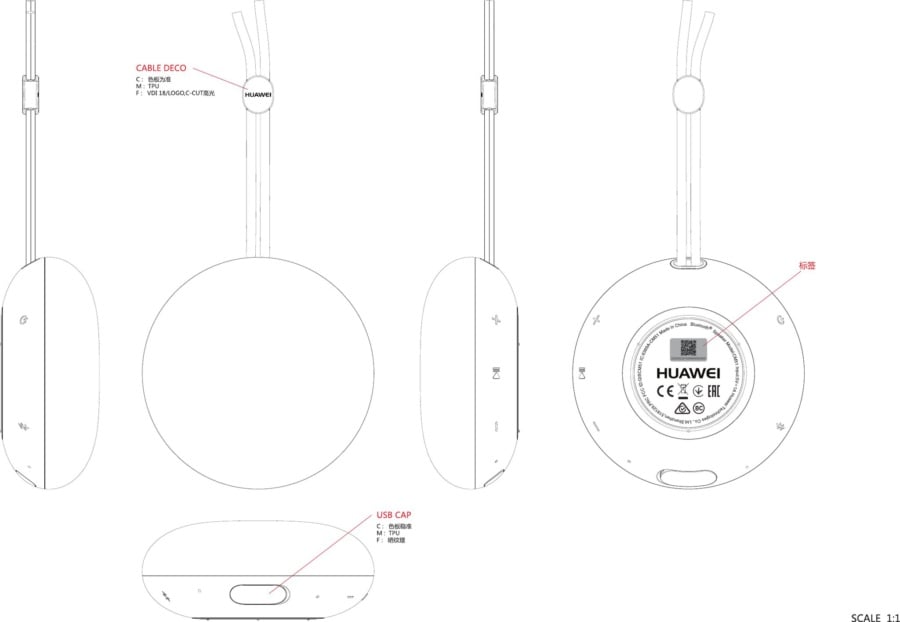
source: Roland Quandt (Twitter)
