




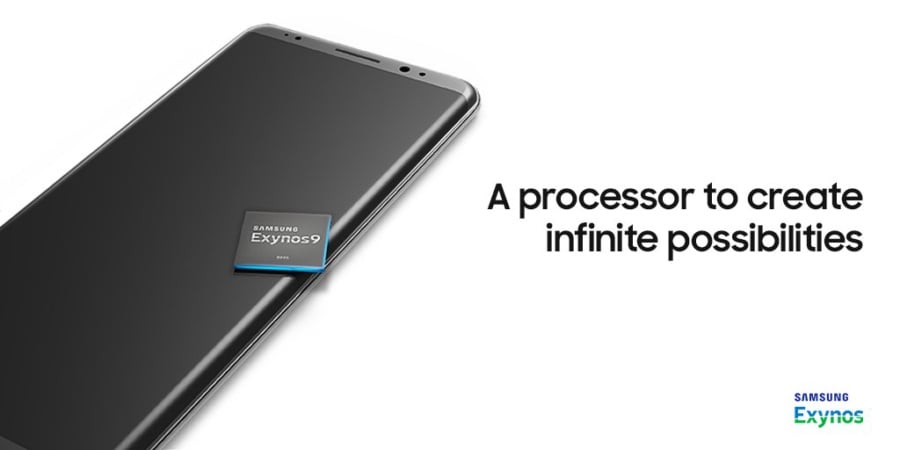
With a little over a month to go until the expected official announcement of the Samsung Galaxy Note 8 on August 23rd, the possibility exists that Samsung's own Exynos processor division may have leaked out an image of the upcoming device. Meanwhile, sources in Korea are projecting the new device will start shipping during September.
The image that was posted by the Samsung Exynos Twitter account was meant to promote the Exynos 8895 processor, marketed as the Exynos9 chip, Samsung's newest 10nm chip. The Exynos 8895 is used in some versions of the Galaxy S8 and Galaxy S8+ along with the Snapdragon 835. Many think Samsung will expand usage of their Exynos chip in the Galaxy Note 8. The Exynos9 chip in the image is shown laying on top of a smartphone – a device that people are guessing is supposed to represent the Galaxy Note 8.
The device shown could be a rendering of the Galaxy Note 8 as it possesses Samsung's Infinity Display with round edges. It differs from the existing Galaxy S8 devices thanks to the presence of what appears to be some additional camera lenses, sensors, or flashes in the small top bezel area. Others have also noted that no buttons are present on the edge of the device. That could have been an oversight on the part of the person who put the render together or Samsung may have moved it, though the latter seems unlikely.
https://twitter.com/SamsungExynos/status/885483958112223232
On the same day the image was released by the Samsung Exynos unit, DigiTimes is reporting that “upstream component makers” are pointing to September 2017 as the earliest launch window for the new Galaxy Note 8 device. In that same article, sources indicate the recent launch of the Galaxy Note FE, refurbished Galaxy Note 7 devices, is really a big market test to gauge interest in the Note line of devices. In the past Samsung has sold 10 to 15 million Note devices annually, but they have not had to deal with fallout from an incident like last year's Note 7 release and subsequent recall.
Sources: Samsung Exynos (Twitter), DigiTimes
