





With every device, Google wants users to have productivity and ease of use. With Android for Work, the company is adding its own layer of security and functionality to enterprise users. The backbone of Android for Work actually came from Samsung and its Knox security platform. The two worked together on this because Android never had a viable enterprise solution. With Android L, users will be able to have separate applications secured for enterprise purposes while continuing to do everything else as usual. While companies can only push content to the devices with Android L from the start, Google is working on adding support all the way back to Android 4.0 Ice Cream Sandwich. HTC, LG, Motorola, and Sony have all agreed to implement Android for Work with its devices.
Click here for our Google I/O 2014 coverage. For more details regarding Google Drive, hit the break.
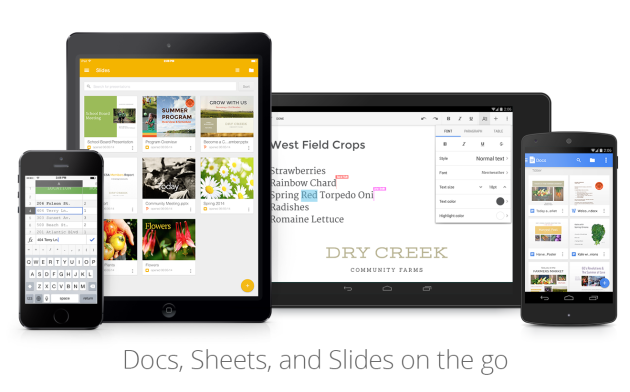
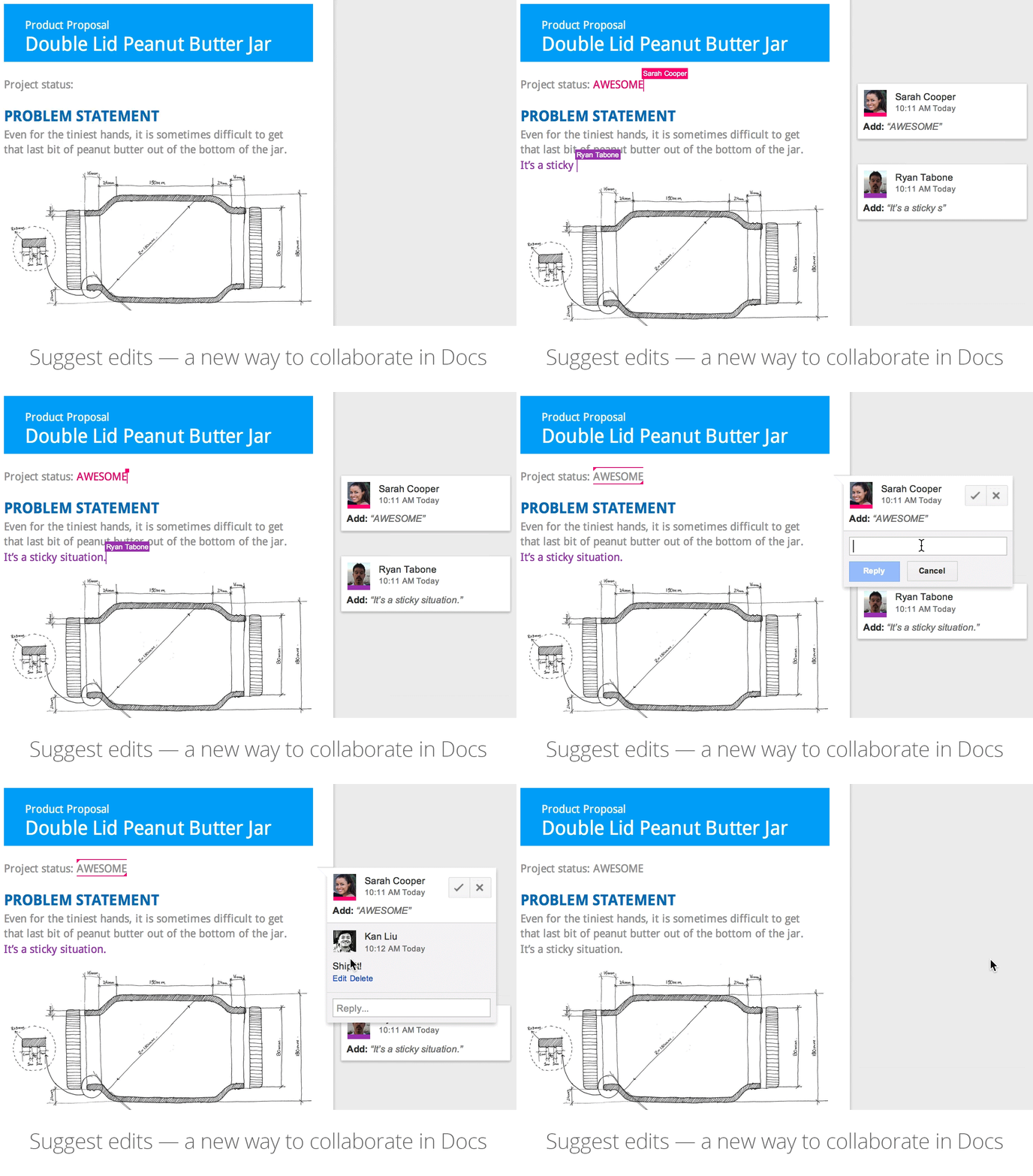
With Google Sheets and Docs both being standalone apps in the Play Store, Google announced that Slides is heading there as well. On the web side of things, though, you can now work with Microsoft Office files without ever actually using office. Drive will keep them as Office files and not change them. In addition to the web side of Drive, the aforementioned standalone apps support this kind of editing. But to continue collaborating with others, you will need to convert the files (as the case has always been). And if you go to the bottom of this page, there is a GIF that contains a demonstration of the new Suggested Edits feature. It allows users to confirm and deny edits made by other collaborators.
Google touted the user base of Drive also. The 30-day active users total is 190 million. And so they announced Drive for Work to include enterprise APIs and full encryption to keep your stuff secure. They announced an unlimited storage option that costs $10 per month per user. Google wanted to send a message to everyone else that productivity is perfectly fine with their set of services. Google said that 58% of Fortune 500 companies and 72% of universities are now ‘going Google' and taking advantage of what they have to offer.
Source: Google Drive Blog
