




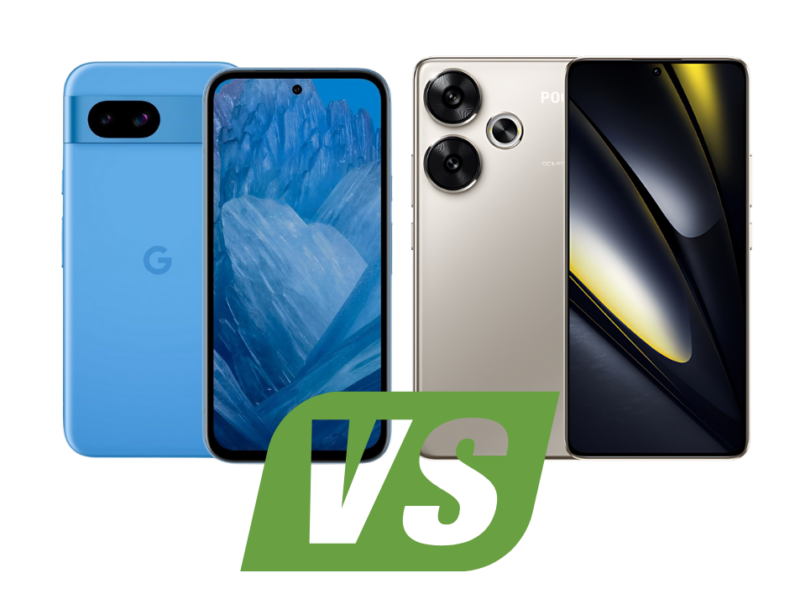
Google’s Pixel 8a and Xiaomi’s Poco F6 phones both came out in May and have remarkable specifications. Besides their release dates, they share similarities in price points and sit comfortably within the reach of budget users. However, Google does have the upper hand in adding AI features.
With the Pixel 8 series, the company introduced incomparable ways to use AI this year. But when sitting beside the Poco F6 phone, does the 8a variant outshine it? Let's find out.
Specs Overview: Google Pixel 8a & Poco F6
| Images: |  |  |
|---|---|---|
| Components | Google Pixel 8a | Xiaomi Poco F6 |
| Processor | Google Tensor G3 | Qualcomm Snapdragon 8s Gen 3 |
| RAM | 8 GB | 8 GB / 12 GB |
| Storage | 128 GB / 256 GB, no card slot | 256 GB / 512 GB, no card slot |
| Display | 6.1 inches, 1080 x 2400 pixels, OLED, 120Hz | 6.67 inches, 1220 x 2712 pixels, AMOLED, 120Hz |
| Cameras | Main: 64 MP (wide), 13 MP (ultrawide); Selfie: 13 MP (ultrawide) | Main: 50 MP (wide), 8 MP (ultrawide); Selfie: 20 MP (wide) |
| Battery | 4492 mAh, PD3.0 wired charging, 7.5W wireless | 5000 mAh, 90W wired charging, PD3.0 |
| Price | $499 (£499) | $420 ($369) |
Display
Xiaomi's Poco F6 uses an AMOLED display with better visuals than Google's latest Pixel 8a. The vivid colors and contrasts make it a good viewing companion for binging Netflix and other streaming apps. It has a wide color gamut of 68 billion colors and supports HDR10+ and Dolby Vision. Both dynamic ranges bring deeper shadows and more detail in image areas, while the Pixel 8a only supports HDR.

Both phones have a high 120Hz refresh rate, but the Poco F6 has a brighter screen at 2400 nits. It's sufficient for indoor use and it won't have you squinting outdoors. Overall, the size is 6.6-inches with 1220 x 2712 pixel resolution and Corning Gorilla Glass Victus protection.
On the other hand the Pixel 8a phone has a smaller 6.1-inch display using OLED technology. The brightness peaks at 2000 nits and the resolution is 1080 x 2400 pixels. It has Corning Gorilla Glass 3 protection.
Design
The Poco F6’s weight falls behind the Pixel 8a at 179g, though it has a larger display. The Pixel 8a has a smaller display and is heavier at 188g. The F6 uses the better Gorilla Glass Victus with a plastic frame and back. The plastic back might not feel as premium as glass, making the phone lighter and less slippery. The Pixel 8a uses Gorilla Glass 3 and an aluminum frame with a plastic back.

The F6 has a fairly standard design, with a centered punch-hole camera cutout on the front and a rectangular camera module on the back. It's available in Black, Green, and Titanium. The Pixel 8a also has a punch-hole selfie camera with dual cameras and a flash on the rear side.
Software
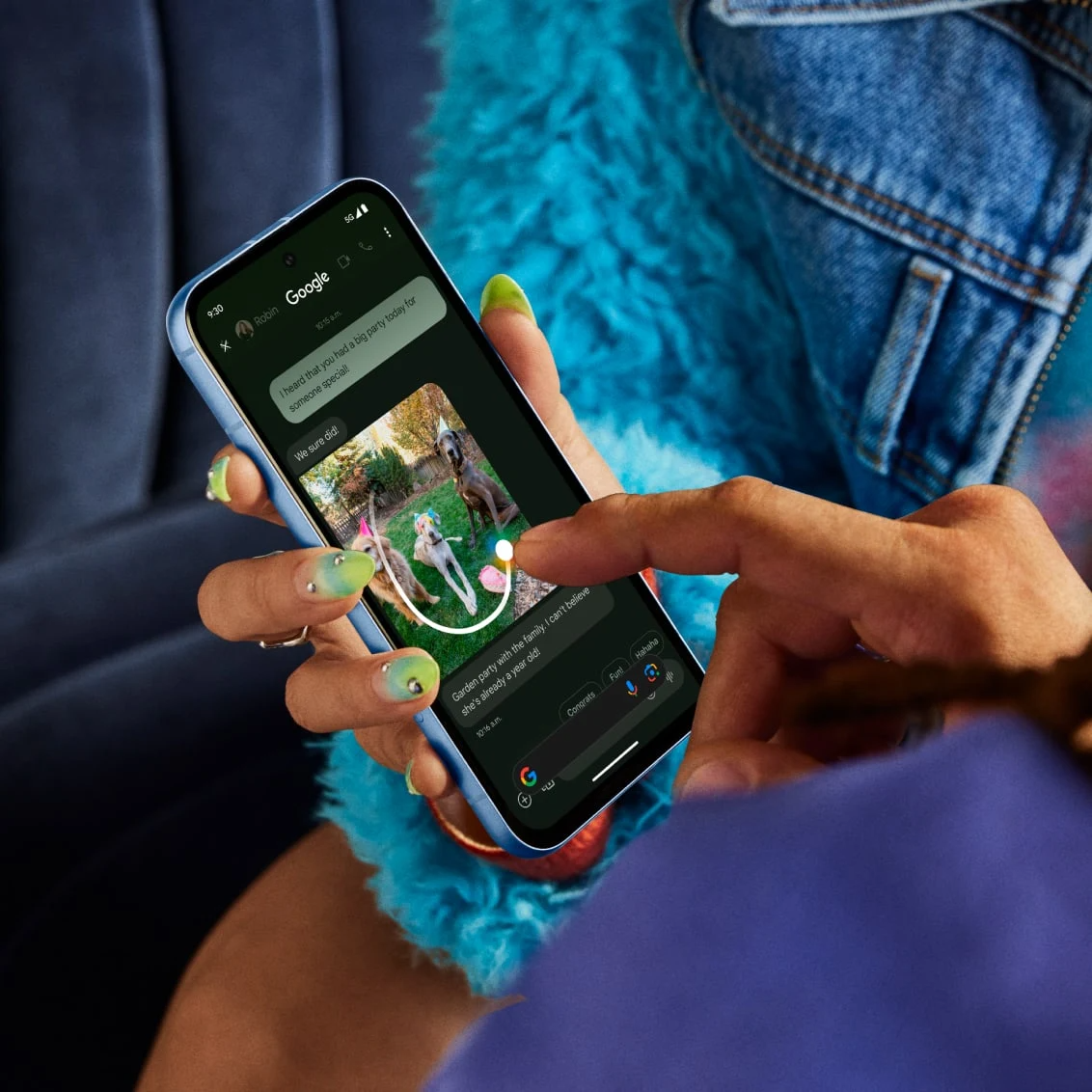
The Pixel 8a runs on Android 14 with a clean software experience. It also promises timely updates directly from Google. It will even get the same seven years of OS support and Feature Drops promised on the original Pixel 8 series.

The Poco F6 also runs Android 14, but it operates on HyperOS, Xiaomi's custom skin. It allows for more customization, but has bloatware and updates take longer to reach it compared to the stock Android. Xiaomi will give you only three years of major Android updates along with four years of security patches.
Camera

The Poco F6’s rear camera system includes a 50MP wide sensor, an 8MP ultrawide sensor, and a 2MP depth sensor. The wide sensor has a large f/1.6 aperture and phase detection autofocus (PDAF) with optical image stabilization (OIS). The ultrawide sensor has a 120-degree field of view, while the depth sensor creates the popular bokeh effects in portrait mode. The selfie camera is a 20MP sensor. It supports HDR and can record 1080p video at 30 or 60 frames per second.
The Pixel 8a is one camera down on the rear. The main sensor is 64MP wide, with the following camera being a 13MP ultrawide sensor. The wide sensor has a large f/1.9 aperture, dual-pixel PDAF, and OIS. The ultrawide sensor has a 120-degree field of view. The 13MP front-facing camera supports Auto-HDR and can record 1080p video.
Performance
The Pixel 8a uses Google's custom Tensor G3 chip, designed on a 4nm process with a unique Nona-core setup. It includes one high-performance Cortex-X3 core, four balanced Cortex-A715 cores, and four efficient Cortex-A510 cores. Google takes pride in its AI and machine learning abilities. They help in image processing, real-time language translation, and voice recognition.
Meanwhile, the Poco F6 uses the Snapdragon 8s Gen 3 processor that is built on a 4nm process. It combines high-performance Cortex-X4 cores, mid-range Cortex-A720 cores, and efficient Cortex-A520 cores. Compared to the Tensor G3's Cortex-X3 core, it's a bit faster.


The Poco F6's battery capacity is 5000mAh, and it has an advantage in charging speed with 90W wired charging. Xiaomi claims it can fully charge in just 35 minutes. If you've used a Pixel phone before, it goes without saying that they don't have impressive charging speeds. But the Pixel 8a has a 4492 mAh battery and can charge wirelessly, unlike the Poco F6.
It is also more resistant to water and dust. With an IP67 rating, the phone can survive heavy dust and 30 minutes of submersion in water. Poco F6 can only handle light rain showers or accidental splashes and should not be put in water.
Memory
The Poco F6 offers two RAM options, 8GB and 12GB, while the Pixel 8a only comes with 8GB. More RAM benefits heavy multitaskers and gamers, so your phone keeps more apps open in the background without slowing down. Both phones benefit from using LPDDR5X memory.
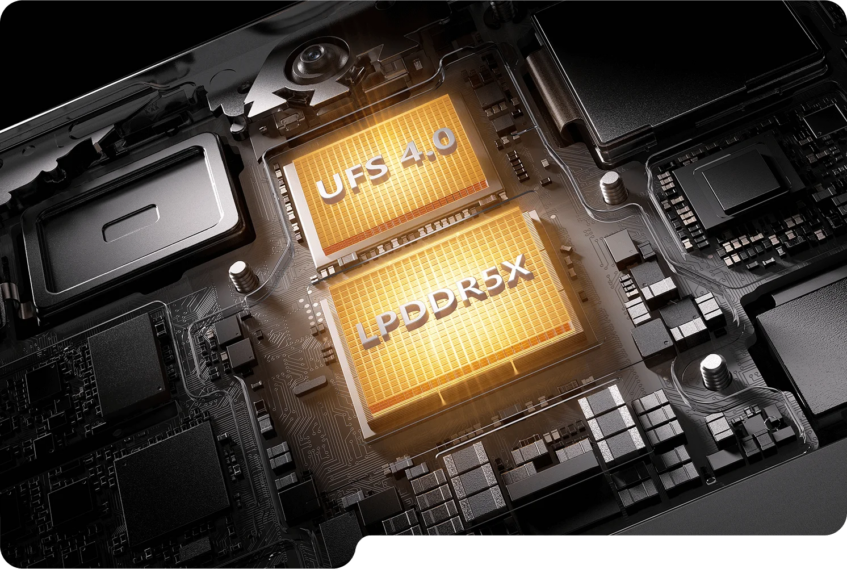
Both phones offer 128GB and 256GB storage options, but the Poco F6 adds the 512GB option for those who need plenty of space. Neither phone allows expandable storage via microSD cards, so you'll need to use cloud storage options and other solutions. Unlike the Pixel 8a, which uses UFS 3.1 storage, the Poco F6 gets a speed boost from using the modern UFS 4.0 storage, which is usually seen in much more expensive handsets such as the Galaxy S24 series.
Both phones handle everyday tasks and multitasking with ease, but the Pixel 8a’s Tensor G3 stands out with superior AI capabilities, making it perfect if you’re into smart features and a seamless Android experience. On the flip side, if you want top-tier gaming performance and don’t mind Xiaomi's HyperOS software, the Poco F6’s Snapdragon 8s Gen 3 is the way to go.

