



You fire up an AI chat on your Android phone, eager to stage a sitcom riff with three wisecracking roommates. The jokes land until the bot forgets who is speaking and the punchline tumbles into mush. Finding the best AI character chat for comedy means more than wordplay; it means tools that remember voices, protect timing, and let you rescue a scene without starting over.
Some apps handle a full cast natively, some let you corral several custom bots into one chat, and others assign a single narrator to juggle every role. The five contenders below all run on Android, through an app or a mobile browser, and each solves the ensemble problem differently.
What Makes an AI Chat Good at Ensemble Comedy
Ensemble comedy is really about control. You need clear name tags so every joke lands in the right mouth, distinct voices so the cast never blurs, and reliable turn-taking so two punchlines do not collide. An app must keep enough context to remember the bit from setup to payoff, yet leave space for you to steer a late-breaking twist without losing momentum.
Repair tools come next: quick edits, retries, or a forced line salvage timing, while lorebooks lock in running gags. Keep an eye on new chat surfaces as well: the recent TalkAndroid report that an AI chatbot is arriving inside WhatsApp hints at even more places where a cast could take the stage.
1. DreamGen
DreamGen treats comedy like live theatre. Open Role-Play Mode and you get a built-in narrator plus several AI cast members in one scenario. You play one role while the platform voices the rest, so each line comes from a named character. A quick direction like “pause for laughter” or “enter the landlord” keeps the momentum crisp and lets the writer guide the bit instead of wrestling with stray dialogue.
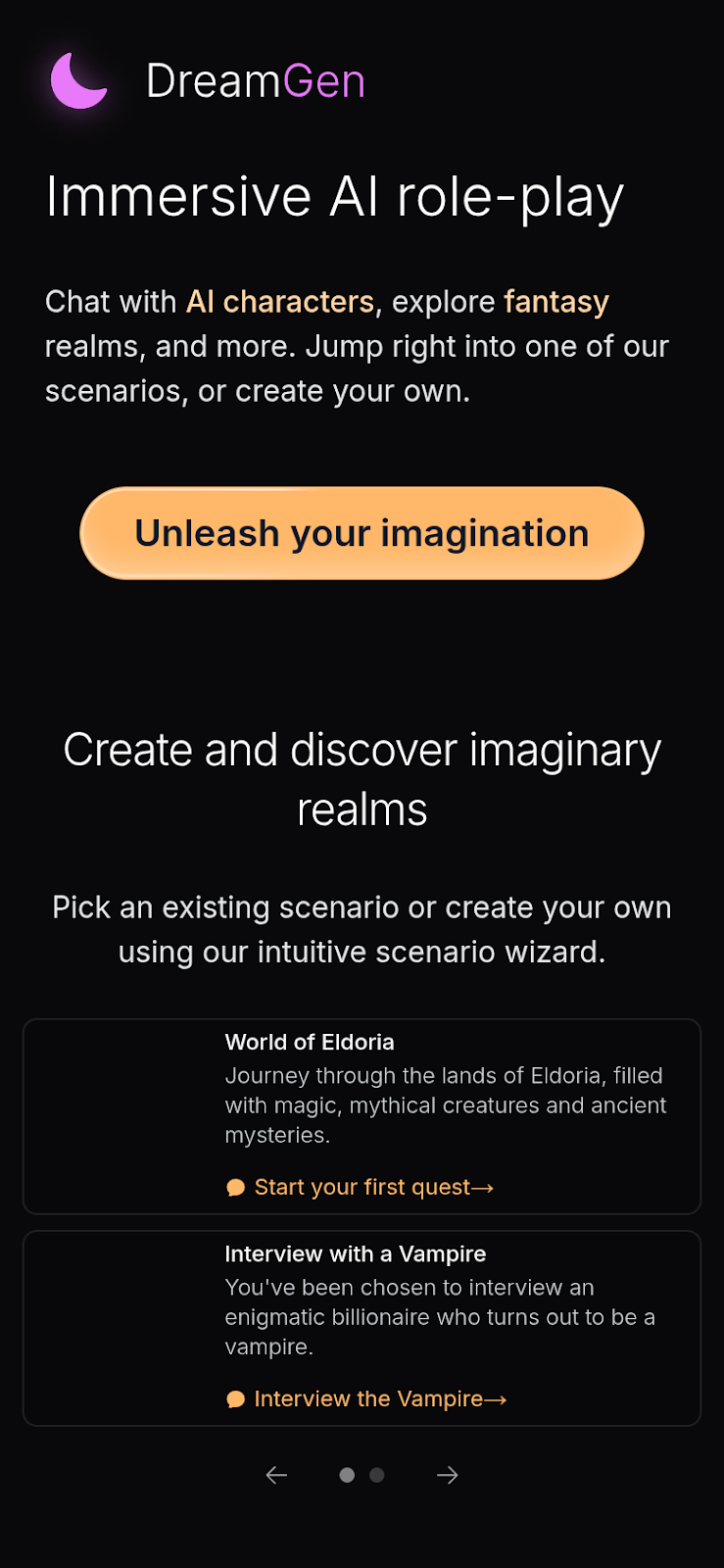
Control runs deeper than simple prompts. Every line, yours or the AI's, can be edited, rewritten, or deleted if it kills the mood. The Scenario Wizard spins up a fresh setting, plot, and character roster, then the Scenario Codex keeps the details: characters, props, plot notes and writing style, so a running gag from minute one still pops in minute ten.
Its Starter, Advanced and Pro plans offer 5,000-, 15,000- and 30,000-token context windows, and Pro adds a 20% discount on credit packs and up to 60% off select third-party models. DreamGen lives in your mobile browser; there is no separate Android app, so performance leans on your connection. Expect a smaller public scenario library and a learning curve while you master the Codex. Still, few tools on this list give a director this much editorial reach inside a single ensemble scene. For a wider view, DreamGen's own guide compares AI roleplay chatbots feature by feature.
2. Poe
Picture a writers' room where every character has their own chair. That is how Poe works. You build each persona as a custom bot, add them to a single thread, and let the banter fly. Each bot answers when it is @-mentioned, so you can call on the host for the setup, cue the straight man for a dry rebuttal, then tag the chaos agent for a wildcard punchline.
Creating those bots is quick. A prompt lays down voice, status, and forbidden habits, while an optional knowledge base built from uploaded files or text stores backstory and running jokes. On Android you get an official Play Store app rated Everyone, so the cast is never more than a thumb-tap away.
Poe's strength is also its catch. It will not direct the scene for you. If a bit needs a narrator, or if two characters start stepping on each other's lines, you are the traffic cop. That makes Poe a fit for writers who want the creative rush of live comedy and do not mind wearing the headset of director, showrunner, and editor at once.
3. AI Dungeon
AI Dungeon feels like an improv stage with one agile storyteller running every prop, cue, and non-player role. Type a line of dialogue and the narrator folds it into a living world, riffing back with NPC banter, slapstick mishaps, or cliffhanger reveals. That single-voice setup keeps pacing tight, because the same narrator controls every side character.
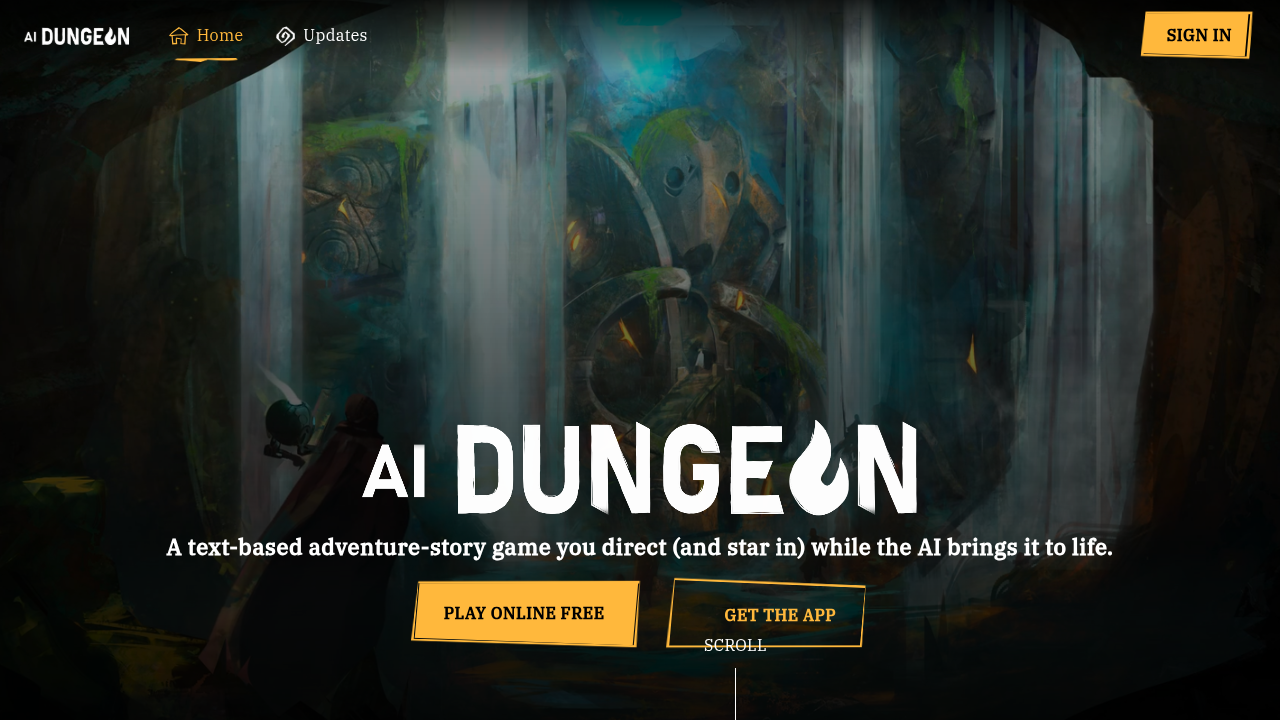
Four inputs keep the scene on rails. Do pushes actions forward, Say delivers spoken lines, Story lets the player write narration directly for a quick aside, and See asks the AI to generate an image to seal the visual joke. If timing flops, Retry rolls a fresh response, Edit patches a fumbled line, and Undo rewinds the last beat before the laugh track deflates.
Multiplayer unlocks bigger chaos. Friends can join the same game from their own devices, and there is no fixed player limit. The AI safety settings offer Safe, Moderate and Mature levels; keeping the dial on Safe keeps the humour workplace-friendly.
The official Android app is rated Teen. Just remember the flip side of the single-narrator approach: if two side characters need wildly different cadences, spell out those quirks in Story Cards or risk them sounding like cousins. For improvised adventures, tavern roasts, or fantasy sitcoms, though, AI Dungeon nails the mix of spontaneity and control that fast-paced comedy demands.
4. SillyTavern
SillyTavern is the control freak's playground. Unlike hosted apps that decide when characters speak, this open-source front end lets the user set the rhythm. Load several character cards into one group chat and you can decide who replies next, how talkative each role is, and whether the shy sidekick speaks at all. The reply orders, Manual, Natural Order, List Order and Pooled Order, act like a stage manager calling cues, so punchlines never overlap and a slow-burn setup gets the breathing room it deserves.
Need a guaranteed laugh line? Force Talk makes one character deliver the payoff. Someone hogging the spotlight? Mute them until the tension rebuilds. A scene veers off topic? The Group Chat Scenario Override brings the entire cast back on script. These levers turn group comedy from a chaotic brainstorm into a precision-timed sketch.
All that finesse comes with homework. SillyTavern is not in the Play Store. One route is to host it on a laptop and open the chat in a phone browser; another is to run it natively on Android through Termux, which the official install guide covers, pointing users to F-Droid or GitHub for Termux. Either way you must connect an LLM backend, a cloud API, a local model or both, and manage your own usage costs.
For writers comfortable tinkering, the payoff is total agency over the engine, the memory and the cadence.
5. Friends & Fables
Friends & Fables is built for party play. Its AI game master juggles scenery, rules, and eccentric NPCs while the group trades quips around a virtual table. Up to six players can join the same campaign, each on their own device, while the game master keeps the story moving. Because the GM owns every side character, the comic-relief goblin can heckle the dwarf without anyone having to play both.
World-building tools sit close at hand. Lore pages and a map builder keep tavern maps, running jokes, and a bard's tragic backstory inside the world for the AI to draw on. Asynchronous play means nobody has to share a time zone: drop a witty line at lunch, and the session moves on when the next player answers. Everything runs in the browser or as an installable progressive web app, so setup is lighter than hauling rulebooks but heavier than a pure chat app.
Two caveats matter. First, Friends & Fables excels at adventure arcs, not tight sitcom banter. If you only need a three-minute roast, its campaign scaffolding may feel like firing up a grill to toast one marshmallow. Second, the studio has put big new Friends & Fables updates on hold until 2027 to focus on its newer platform, Craft, while stating that the game is not going anywhere. That pause is worth noting before you invest hours in a grand saga.
Which AI Character Chat Fits Your Comedy Scene
Start by asking what kind of stage you need. If you crave a built-in narrator and a cast that listens to every cue, DreamGen is the one-stop theatre. Prefer to hand-pick separate personalities and conduct them like a jazz ensemble? Poe gives you the baton. Want a single improv genius who can juggle every goblin and barkeep? AI Dungeon keeps the story rolling while you riff.
SillyTavern rewards tinkerers who enjoy wiring prompts, swapping models, and sculpting timing. Friends & Fables is best when laughter comes from a party's shared quest rather than a quick two-camera setup. Decide which architecture the scene needs first, and the right platform almost picks itself.