



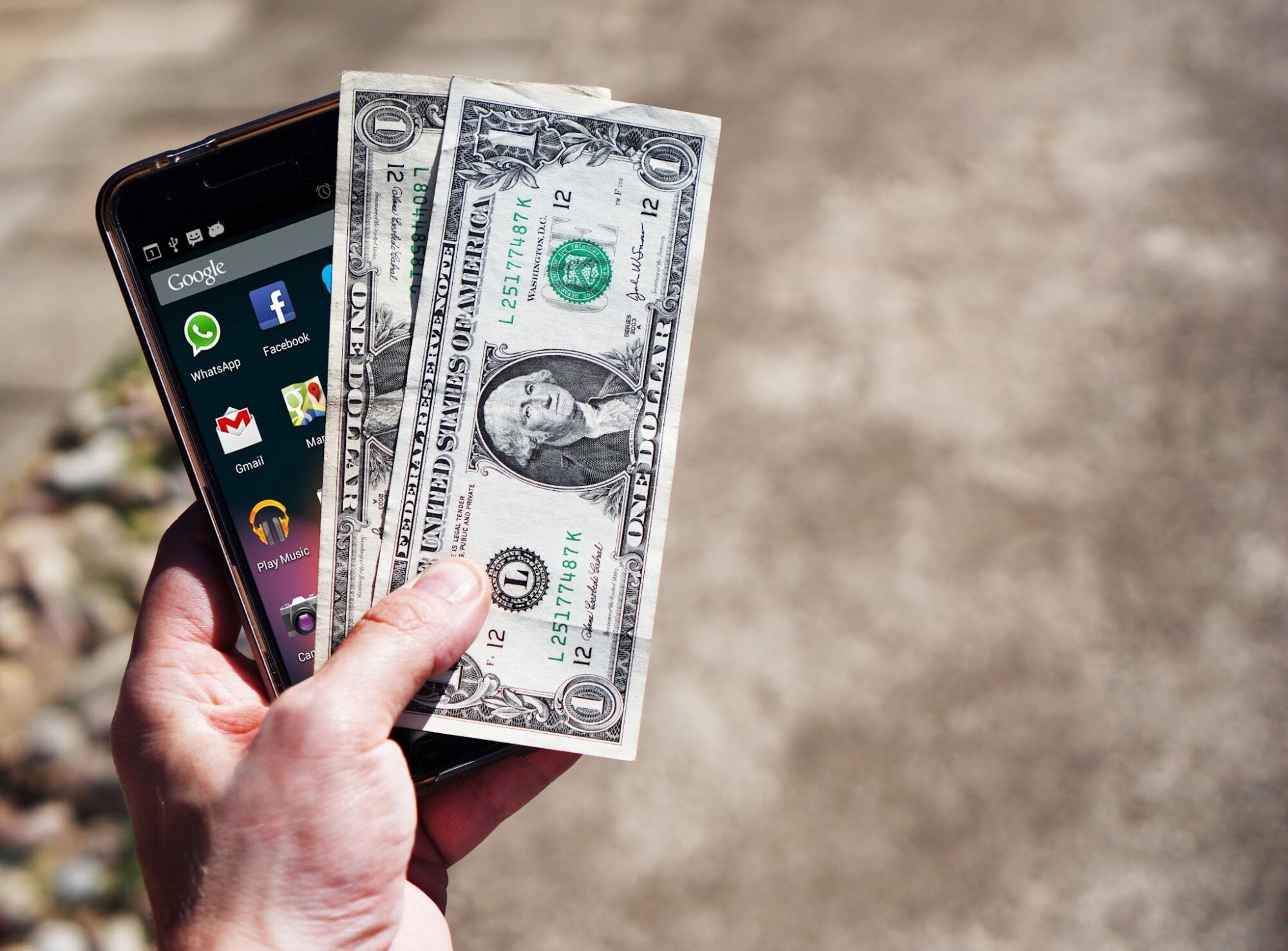
Sending $200 to someone in another country cost an average of 6.5% in 2025, up from 6.4% the year before, according to figures tracked through the World Bank's Remittance Prices Worldwide database. That's thirteen dollars gone, just to move your own money. If you want to check the xlm price usd before we go further, keep it open in another tab; it will make the rest of this comparison land harder.
Now compare that to a single transaction on the Stellar network, which the Stellar Development Foundation puts at roughly $0.0007 on average.
Same goal, wildly different price. That gap is what we're discussing, with a fair look at where a blockchain like Stellar genuinely helps and where the money app already on your android phone still deserves your trust.
The Math Your Bank Hides
Most of us never see what a transfer really costs. The fee isn't printed in bold; it's folded into the exchange rate, so the ‘free' transfer you thought you sent took its cut on the way out.
The numbers make the point. That 6.5% global average sits well above the United Nations Sustainable Development Goal, which aims to bring remittance costs under 3% by 2030. We're still a long way off.
Stellar approaches this from the opposite direction. Its base network fee is 0.00001 XLM per operation, a figure confirmed in Stellar's developer documentation, which works out to fractions of a cent even when the network is busy.
The advantage isn't only the low number; it's that you can see it. When a cost is visible and fixed, you can make a real decision about it. When it's buried in a spread, you're trusting someone else to be fair with your money, and fairness gets expensive at 6.5%.
Faster Than Your Coffee Order
Cost is only half the friction. The other half is time.
A traditional bank wire typically runs $25 to $45 and takes three to five business days to clear. A Stellar transfer settles in about three to five seconds, thanks to the Stellar Consensus Protocol, which reaches agreement through trusted validator nodes rather than mining.
Days versus seconds.
What makes speed useful is what it unlocks: the freedom to send value on a Sunday night, from your phone, without a branch, a business day or a cutoff time. Money that moves at the speed of a text message behaves differently in your life.
This is part of a broader move toward digital settlement. Binance reported that daily stablecoin settlement volume overtook Visa in 2024, with stablecoin wallet holders climbing to around 130 million. When that much value flows through blockchain rails every day, fast, cheap transfers stop being a novelty and start being an ordinary option.
And once you've watched a payment land in seconds, waiting three business days for the same thing feels faintly ridiculous in today's world.
Where Your Old App Wins
None of this means you should delete Venmo tonight. An honest comparison has to name the places where your familiar app is simply the smarter pick, and there are several.
Traditional money apps carry protections that a raw crypto transfer doesn't, and for a lot of everyday situations, those protections are worth more than saving a few cents.
- FDIC-backed balances, so your money is insured up to the legal limit if the institution fails.
- Built-in fraud protection and chargeback options when something goes wrong.
- Formal dispute resolution if a payment is sent in error or to the wrong person.
- No private keys to manage, which means no catastrophic loss if you misplace a recovery phrase.
- A stable balance that's worth the same tomorrow as it is today.
That last point deserves weight. XLM's price moves; it traded around $0.19 in mid-July 2026, and even research that's bullish on Stellar concedes that crypto markets are volatile. A dollar in your bank app is still a dollar next week. A dollar's worth of any cryptocurrency might not be.
If you want a well-known place to buy or hold XLM, Binance lists it for trading and publishes live market data, which makes it a common on-ramp for newcomers. It's also a useful reminder that features change over time. The platform also offered XLM staking back in 2019, then ended it after Stellar disabled inflation in a protocol upgrade, while ordinary trading carried on untouched.
So it isn't necessarily about which of these is better. It's which job you're hiring the tool to do.
The Right Tool For The Right Job
Frame it that way and the whole comparison relaxes. You're not choosing a side in some contest between banks and blockchains; you're matching a tool to a task.
Small, fast, cross-border sends where every cent counts? That's where Stellar's economics shine. Everyday spending, protected balances and money you can't afford to gamble on? Your traditional app still earns its keep.
And Stellar is building toward more than transfers. The network has roughly $460 million in tokenized real-world assets on-chain, working toward a $3 billion target, with partners including Franklin Templeton. Combined with clearer US rules taking shape around stablecoins, the practical use cases are widening, not narrowing.
Binance CEO Richard Teng explained the direction at Blockchain Week Dubai 2025: ‘Cross-border money transfer has always been slow and expensive. Today, crypto and stablecoins allow anyone to send value instantly, at a fraction of the cost, without borders or banking hours. That transformation is only beginning.'
He's describing a future where the workings gets cheaper and faster underneath us, whether or not we notice it happening.