




Every new report about the Trump Phone gets worse as they come. Last month, there was a serious data exposure during the rollout of the T1 phone. Customer records including names, email addresses, home addresses, phone numbers, and order identifiers were reportedly accessible online.
The issue was discovered by a security researcher and later confirmed by independent creators who were able to reproduce it. The company only responded after the situation became public, attributing it to a third-party platform rather than its own systems, and leaving uncertainty around user notification.
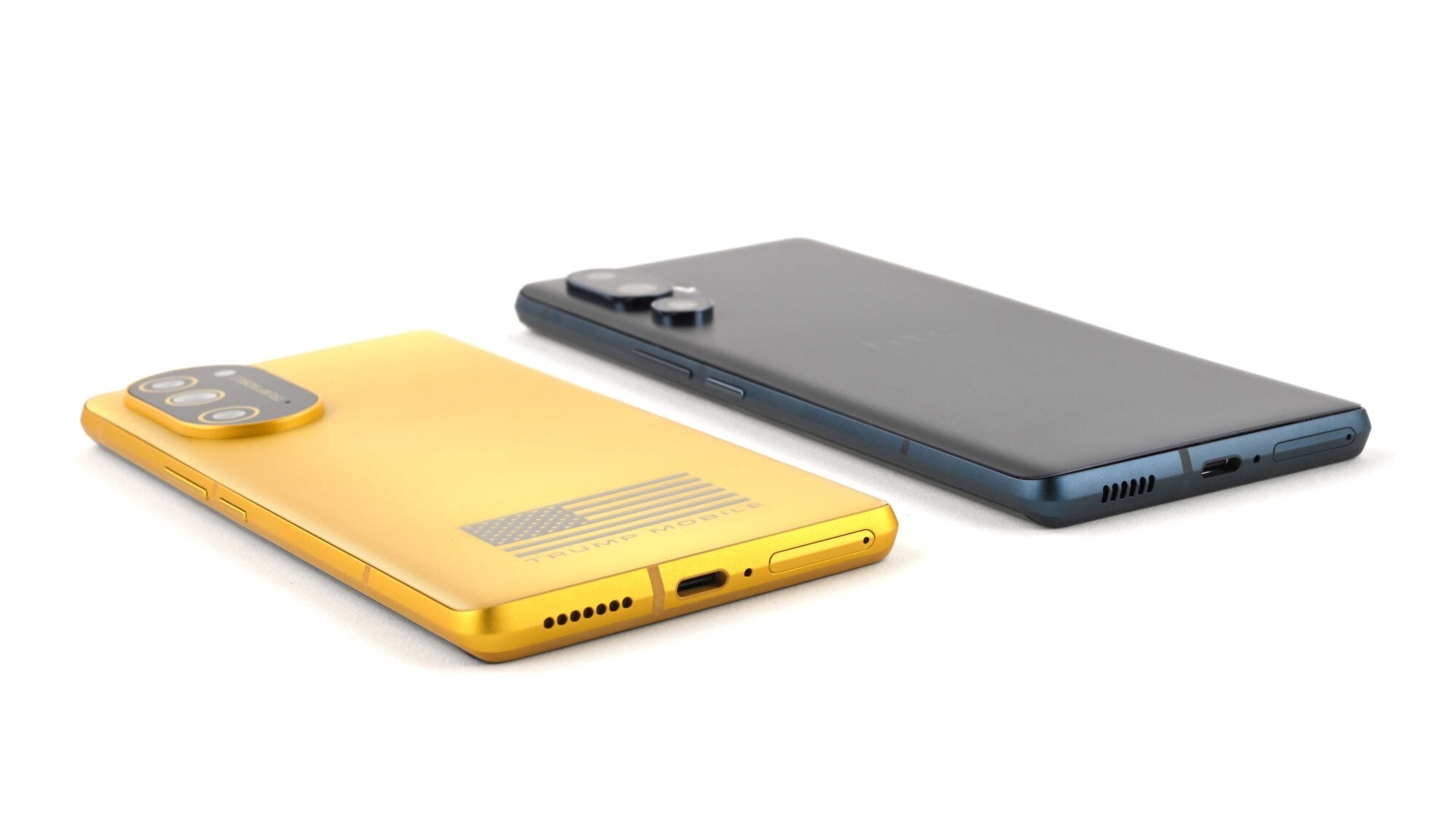
A separate iFixit teardown now sheds light on the hardware, revealing that the T1 is a copycat of the HTC U24 Pro.
iFixit’s teardown of the T1 phone reveals generic design
Independent electronics repair and teardown company iFixit bought a Trump Mobile T1 phone and investigated its hardware recently. They scanned the phone using industrial Lumafield Computed Tomography imaging.

The procedure usually involves placing the sealed device inside the scanner chamber and securing it to prevent movement. The machine then slowly rotates the device while firing X-rays through it from many angles.
As the phone rotates, the scanner captures hundreds or thousands of X-ray slices. Each slice is a thin cross-sectional image showing how dense different materials are inside the phone. The machine's software then reconstructs all slices into a full 3D digital model of its interior.
iFixit also put the T1 phone and HTC U24 Pro displays under a high-resolution digital microscope. They used Evident Microscopy’s DSX2000 system to zoom in far enough to see the individual subpixels inside each OLED panel.
In the end, the internal structures of both phones looked almost identical to the HTC U24 Pro released in 2024. To verify this, they physically disassembled both phones and compared them side by side. The similarities were so extensive that the phones share the same overall internal layout, motherboard design, processor, display technology, component placement, screw locations, and even anti-tamper sticker positions.
Each display revealed Samsung’s Diamond Pixel PenTile arrangement. Instead of each pixel being a neat row of red, green, and blue dots, Samsung arranges them in a diamond-shaped pattern and doesn’t give every pixel a full set of RGB subpixels.
Green subpixels are more numerous because the human eye is most sensitive to green light. Red and blue subpixels are shared or arranged differently rather than being evenly repeated for every pixel.
Even the parts are swappable
The HTC U24 Pro and T1 phone screens revealed Samsung’s Diamond Pixel PenTile arrangement. Instead of each pixel being a neat row of red, green, and blue dots, Samsung arranges them in a diamond-shaped pattern and doesn’t give every pixel a full set of RGB subpixels.
Green subpixels are more numerous because the human eye is most sensitive to green light. Red and blue subpixels are shared or arranged differently rather than being evenly repeated for every pixel.
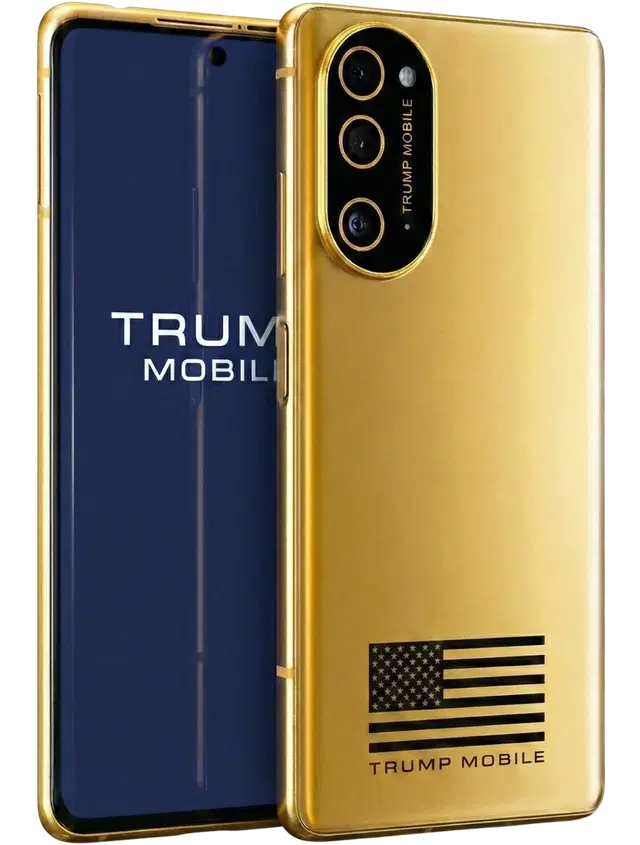
Even removing the motherboard from HTC’s phone and installing it inside the Trump Mobile T1 worked normally. The T1 also uses the same Qualcomm's Snapdragon 7 Gen 3 chip in the HTC U24 Pro.
Trump Mobile merely altered the exterior appearance with a gold finish and slightly changed the speaker grille design. They also repositioned the flash module using a longer cable, and used a different battery supplier. The T1 battery is somewhat larger as it's rated at 19.35 watt-hours, compared with 17.23 watt-hours in the HTC U24 Pro.
It's roughly 5,000 mAh for the T1 battery with a capped charging speed of 30W. The HTC version supports 60W charging and has a 4,600mAh battery. iFixit identified the battery manufacturer as Newlix Mfg Inc. of Philippines.
If you've bought a Trump Mobile T1 handset, how satisfied are you with the device and do you feel it meets the promises made about American manufacture and design? Let us know in the comments below.