




The portable gaming market continues to evolve rapidly, and discussions about Valve's next-generation handheld device dominate gaming forums worldwide. However, the reality of Steam Deck 2 in 2026 differs significantly from widespread speculation. This comprehensive analysis examines the current state of portable gaming, Valve's actual strategy, and what gamers can expect from the market this year.
The Truth About Steam Deck 2 in 2026

Let's address the elephant in the room immediately. Steam Deck 2 has not been released as of February 2026. Valve has made no official announcement regarding this device. The company continues to focus on its current offerings while waiting for meaningful technological advancements that would justify a new generation device.
Many enthusiasts expected Valve to follow the typical annual upgrade cycle common in consumer electronics. However, Valve has explicitly stated its commitment to significant generational leaps rather than incremental improvements. The company seeks architectural changes in chip technology that would deliver transformative performance gains, not merely 20-30% improvements over existing hardware.
Industry analysts now project the most likely release window for Steam Deck 2 falls somewhere between 2027 and 2028. Valve waits patiently for next-generation AMD chips that would maintain similar power consumption and weight while delivering substantially higher performance. This approach prioritizes meaningful innovation over rushing products to market.
Steam Deck OLED: The Current Champion
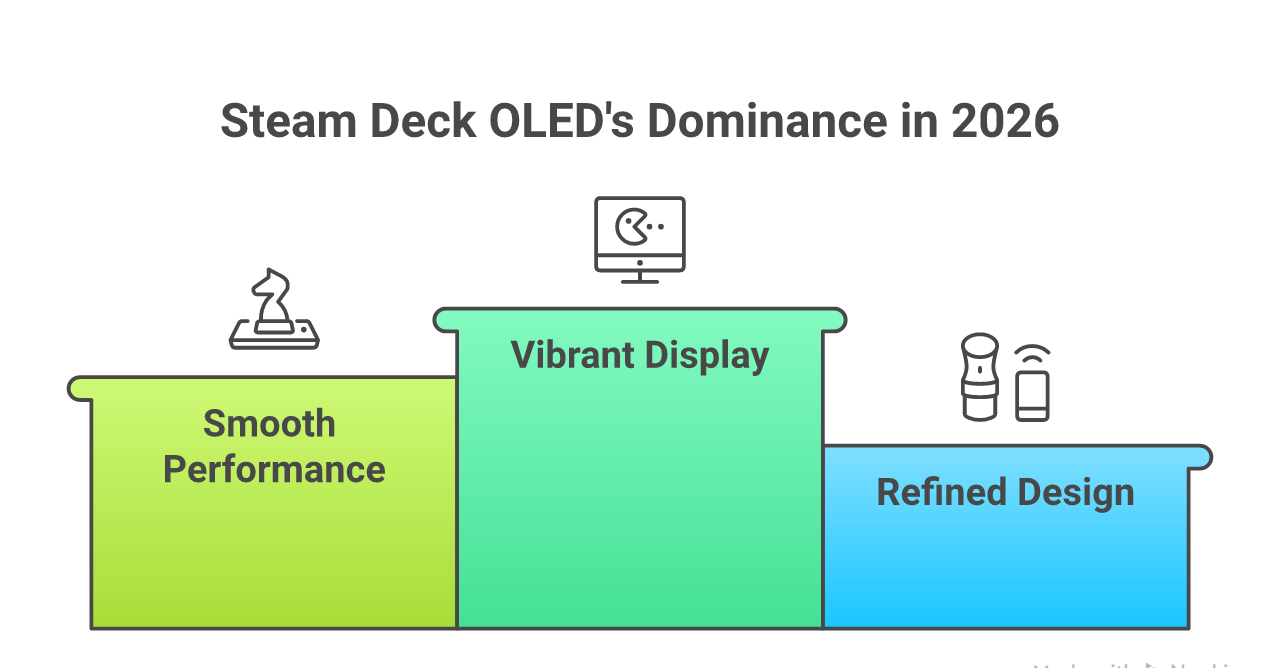
While Steam Deck 2 remains on the horizon, Steam Deck OLED continues dominating the portable gaming landscape in 2026. Valve discontinued the original LCD version at $399, making the OLED model at $549 the new entry point for the platform.
Gaming experts consistently recommend purchasing the Steam Deck OLED rather than waiting indefinitely for unannounced hardware. The device remains highly competitive against all challengers in the portable gaming space. Players gain access to over 15,800 verified games on the platform, ensuring abundant content for every taste.
Market Performance and Statistics
The Steam Deck family demonstrates remarkable market strength heading into 2026. Total sales have reached approximately 4 million units, establishing Valve as a serious player in gaming hardware beyond its dominant software platform.
The following key statistics highlight Steam Deck's impressive market position as of early 2026:
- Total Steam Deck sales have reached approximately 4 million units by early 2026.
- First quarter 2026 sales have already hit 950,000 units, showing strong continued demand.
- Year-over-year growth rate stands at an impressive 22% in Q1 2026.
- The OLED model accounts for 35% of all current sales as of February 2026.
- 42% of Steam Deck owners now use the device as their primary gaming platform.
- Over 25,000 games have been verified for Steam Deck compatibility.
- The base price for Steam Deck OLED remains competitive at $549.
Perhaps most tellingly, 42% of Steam Deck owners report using the device as their primary gaming platform in 2026. This statistic reveals the handheld has transcended its original position as a secondary gaming option for many users. Players increasingly choose portable convenience over traditional desktop setups.
Valve's Strategic Philosophy
Understanding Valve's approach to hardware iterations provides crucial context for the Steam Deck 2 timeline. The company has never embraced rapid product cycles that characterize most consumer electronics manufacturers. Instead, Valve pursues substantial improvements that genuinely advance user experiences.
This philosophy extends beyond Steam Deck to Valve's broader hardware ecosystem. Early 2026 saw the company expanding its Steam Hardware lineup, including refreshed Steam Machine concepts and updated controller options. These moves demonstrate continued commitment to gaming hardware without forcing unnecessary device generations.
Valve's patience regarding Steam Deck 2 reflects lessons learned from the original device launch. The company understands that portable gaming demands specific technological balances. Battery life, thermal management, weight, and performance must harmonize perfectly. Current chip technology apparently fails to meet Valve's standards for the next generation.
The Competitive Landscape Heats Up
While Valve bides its time, competitors prepare ambitious alternatives. The most significant development involves Lenovo Legion Go with SteamOS, announced for June 2026 release. This device represents a fascinating convergence in portable gaming.
Lenovo's offering features impressive specifications including an 8.8-inch 144Hz OLED display and AMD's Ryzen Z2 Extreme processor. The premium positioning reflects in its approximately $1200 price point, more than double the Steam Deck OLED's cost.
The following table compares the key specifications and features of the leading portable gaming devices available in 2026:
| Feature | Steam Deck OLED | Lenovo Legion Go (SteamOS) | Key Difference |
| Price | $549 | ~$1,200 | Legion Go costs 118% more |
| Display | 7.4″ OLED | 8.8″ 144Hz OLED | Legion Go offers larger, higher refresh rate screen |
| Processor | AMD Custom APU | Ryzen Z2 Extreme | Legion Go has newer generation chip |
| Operating System | SteamOS | SteamOS | Both run identical software platform |
| Release Status | Available Now | June 2026 | Steam Deck OLED is proven and established |
The decision to ship with SteamOS rather than Windows marks a watershed moment for Valve's software platform. Previously exclusive to Valve hardware, SteamOS now powers competitor devices. This expansion potentially reshapes market dynamics by separating Valve's software success from hardware sales.
Other manufacturers continue exploring the portable gaming space with varying approaches. Some target Windows-based experiences while others develop proprietary ecosystems. The market fragmentation creates opportunities for consumers seeking specific feature combinations. For example, the entire iGaming market is shifting away from PCs and toward portable platforms, as consumers no longer find the old scenario suitable. IGaming sites offer various promotions, such as no deposit bonus, to attract every player.
Why Steam Deck OLED Remains Relevant
Despite lacking cutting-edge specifications compared to newer competitors, Steam Deck OLED maintains compelling advantages throughout 2026. The $549 price point undercuts premium alternatives significantly while delivering reliable gaming experiences.
Valve's software ecosystem provides unmatched maturity in the portable space. SteamOS continues receiving regular updates that improve compatibility and performance. The extensive verified game library ensures players find their favorites work properly without extensive troubleshooting.
Build quality and design refinement give Steam Deck OLED an established feel that newer devices cannot immediately match. Valve iterated extensively on ergonomics, button placement, and thermal solutions. These refinements create comfortable extended gaming sessions that raw specifications cannot guarantee.
Community support flourishes around Steam Deck, providing accessories, guides, and modifications for every user type. This ecosystem value adds substantially to the ownership experience beyond hardware specifications alone.
What Gamers Should Expect Moving Forward
The portable gaming market enters an exciting phase despite Steam Deck 2's absence. Competition intensifies as multiple manufacturers target enthusiast gamers willing to pay premium prices for cutting-edge experiences.
Valve's strategy creates interesting market dynamics. By allowing SteamOS onto competitor devices, the company potentially sacrifices some hardware sales while strengthening its software platform dominance. Every portable PC running SteamOS likely drives game purchases through Steam regardless of hardware manufacturer.
Manufacturers must differentiate through innovation rather than ecosystem lock-in. Premium devices push technological boundaries while more affordable options democratize portable gaming access.
Those considering portable gaming purchases in 2026 face straightforward decisions. Steam Deck OLED at $549 delivers proven reliability and extensive software support. Premium alternatives like Lenovo Legion Go offer enhanced specifications at substantially higher costs.
The Road to Next Generation
When Steam Deck 2 eventually arrives, expectations run high based on Valve's stated requirements. The company seeks chips manufactured on advanced nodes like N3 or N2 processes. AMD's Strix Halo derivatives represent potential candidates for the next generation device.
The target improvements extend beyond raw processing power. Valve wants dramatic graphics performance gains while maintaining or improving battery life. Current technology apparently cannot achieve these goals within acceptable weight and thermal constraints.
Releasing marginal upgrades would fragment the user base while delivering minimal experiential improvements. Waiting for transformative technology ensures Steam Deck 2 genuinely advances portable gaming possibilities.
Conclusion: Reality Versus Expectations
The notion that Steam Deck 2 leads portable gaming in 2026 reflects wishful thinking rather than market reality. Valve has not released this device and provides no indication of imminent availability. The company's deliberate approach prioritizes meaningful innovation over rapid iteration.
Steam Deck OLED continues representing Valve in the portable gaming market throughout 2026. The device maintains competitive positioning despite its age, supported by excellent software and community ecosystems. Sales figures demonstrate sustained consumer confidence in the platform.
Competition from devices like Lenovo Legion Go with SteamOS creates exciting alternatives for gamers seeking premium experiences. The market diversification benefits consumers through increased choice and innovation pressure.
Those waiting specifically for Steam Deck 2 should prepare for patience extending into 2027 or beyond.