




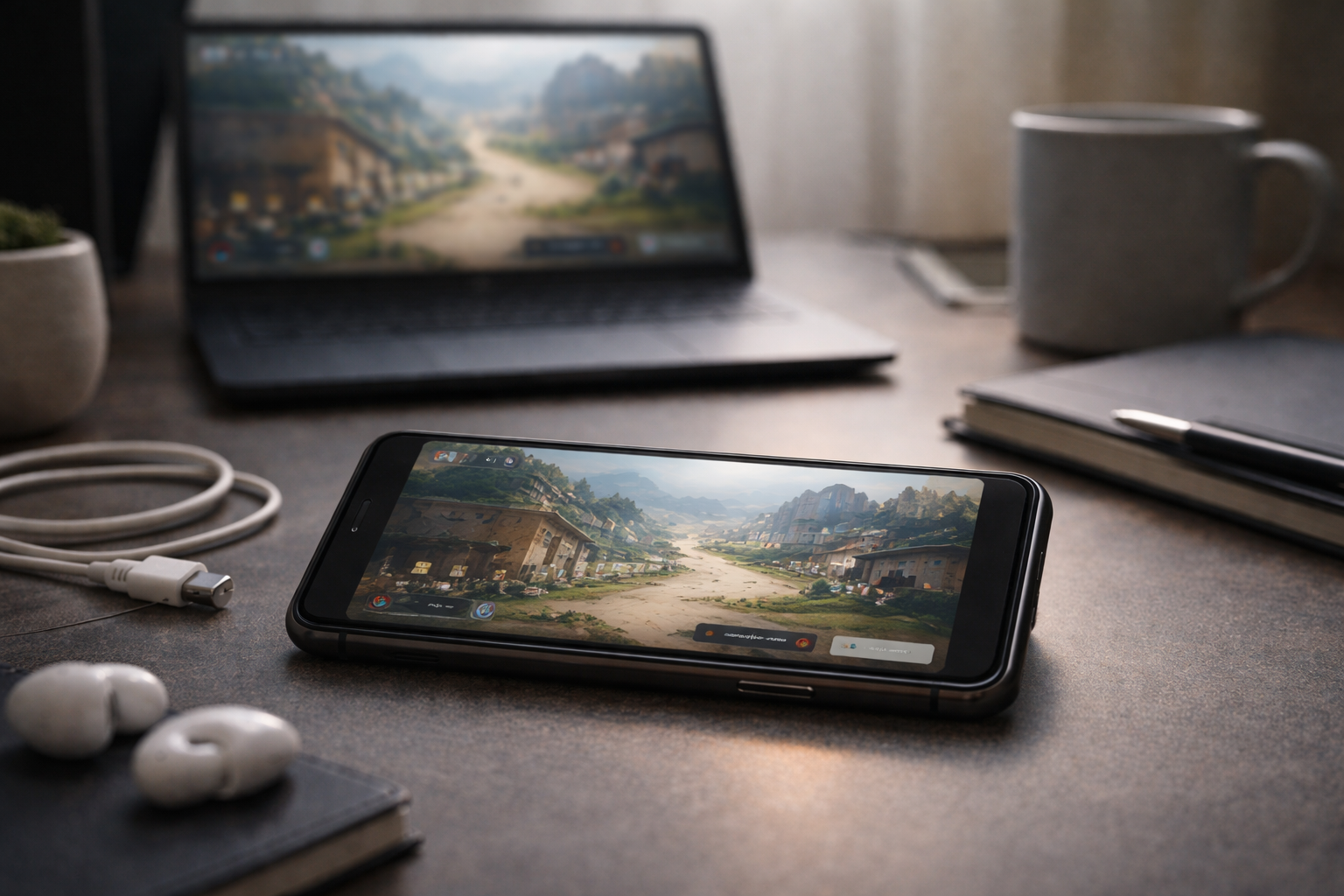
Android gaming in 2026 will feel familiar on the surface, yet the reasons games succeed or fail are quietly changing. Phones already carry long stretches of navigation, messaging, media, and play without much separation, and games exist inside that constant load. As expectations rise and technical limits become harder to ignore, some gaming ideas scale naturally while others fall away. The result is not a dramatic break, but a clearer definition of what works on Android and why certain experiences stay installed while others do not.
Android Hardware Sets the Limits and the Opportunities
It’s a general fact that phone hardware sets boundaries that no amount of design ambition can bypass. Android phones today are expected to handle several demanding app categories at once, often for long periods and under thermal limits that are easy to reach. Many of these apps are not only resource-intensive but also distributed across global networks, with services hosted outside a user’s home market to ensure availability and scale.
That global spread means devices often juggle platforms built under different infrastructure and regulatory assumptions within the same usage session. Navigation apps used for real-time orientation, video streaming services allowing continuous viewing, camera-driven social platforms that support constant communication, and even large game libraries of the best offshore online casinos all depend on hardware performance, not brief peaks measured in benchmarks. When heat builds, and the processor slows to protect the device, every demanding app feels the impact in the same way.
That reality explains why 2026 Android games are still designed and made for typical affordable smartphones. Flagships raise the ceiling for short demonstrations, but the floor that matters sits lower. Microchips must deliver steady output while cooling, and batteries must cope with long use.
Being practical, developers design for the device most people actually hold, because mid-range phones expose performance failures, heat limits, and battery strain sooner, and consistency under that pressure decides whether a game remains playable long after installation.
Android 16 and the New Technical Baseline for Games
As far as developers are concerned, the operating system controls how much help a game gets when things do not run perfectly. In earlier versions of Android, the system often softened problems in the background. Uneven screen updates, delayed work, or slow reactions to touch could be masked enough that players barely noticed.
Android 16 pulls back that safety net. It does less work to hide timing problems or inefficient behavior inside games. When a game updates the screen unevenly, responds late to a touch, or overloads itself during play, the issue shows up directly. Because of that, studios can no longer depend on the system to compensate for weak timing or outdated methods. Games have to manage their own behavior cleanly, or the flaws become visible during normal play.
Why Performance Stability Matters More Than Visual Detail
Performance stability is becoming the main quality measure for Android games, not visual detail. This is because players decide whether a game feels good based on how reliably it reacts over time, especially once the phone has been running for a while. In that context, a sharp image cannot compensate when control starts to feel uncertain, because the experience is shaped by responsiveness, not screenshots.
The reason responsiveness becomes the standard is that heat changes the way a phone behaves during play. As the device warms up, the game may start reacting late. A tap takes longer to show a result, and movement on the screen starts and stops in a way that makes the delay obvious to the player. Users then chase quick fixes, including adjusting touch sensitivity and pointer settings, but those changes only change how input feels. They do not solve the underlying cause when the phone is slowing itself down to manage heat, and when frame delivery becomes uneven.
Games that stay responsive under sustained load keep their credibility next year, while visually ambitious titles that lose control under heat get uninstalled.
Genres That Are Gaining Ground on Android
Android games are most often opened in short, repeatable windows between other phone activities, which places clear limits on how complex, long-form, or interruption-sensitive a game can be and still hold attention.
That usage pattern subtly filters which genres grow and which struggle. Games that respect brief entry and quick reorientation fit naturally, while those that demand long setup or extended focus get forgotten once real life intervenes.
Large-scale RPGs designed for touch and short play windows
RPGs fit Android when progress is built from small, complete steps. Each action moves the story or character forward in a visible way, so advancement feels meaningful without requiring long play time. Titles such as Genshin Impact show how large worlds can exist on phones when progression is broken into clear, self-contained moments. The scale comes from accumulation, not duration.
Competitive multiplayer games built around quick matches
What makes this genre work is fast resolution. A match reaches a clear outcome within minutes, giving players a sense of completion every time they play. Games like Brawl Stars demonstrate how skill, fairness, and result can all be decided inside a short window without sacrificing competitiveness.
Social and creation-driven games that grow through communities
Roblox remains a clear reference point for how community activity sustains momentum beyond individual play sessions. Games like these suit Android because engagement does not depend on long personal play time. Shared creations and ongoing activity from others give the game value even when someone only checks in briefly, which matches how phones are used throughout the day.
Android Gaming Moves Beyond the Phone Screen
Release planning for Android games now assumes more than one screen, because Google is bringing Android games to PCs at a faster pace and treating PC access as a standard part of Android distribution. Mobile titles appear by default unless a developer opts out, carry visible playability badges, and reach wider audiences through Google Play Games, which means many players will first encounter the same game on a larger display instead of a phone.
That expectation changes practical decisions early, as to start with, controls must make sense on a keyboard and mouse as well as on touch. Menus and on-screen elements must stay readable when the game is not confined to a phone-sized view. Longer uninterrupted play on PC also exposes issues that short phone checks can hide, so testing has to cover comfort over time, not only whether the game launches and runs.
Conclusion
Android gaming in 2026 does not reinvent itself, but it becomes more clearly defined. Games succeed less by spectacle and more by how well they behave under real conditions: long device use, rising heat, mixed input, and shifting screens. Hardware limits, operating system behavior, genre fit, and wider distribution now reinforce each other instead of working in isolation. That combination narrows the field and rewards discipline. For players, the result is fewer frustrating experiences and more games that feel reliable wherever they are played. For developers, 2026 brings clarity. Android no longer hides weak decisions. It makes the strong ones visible.

