


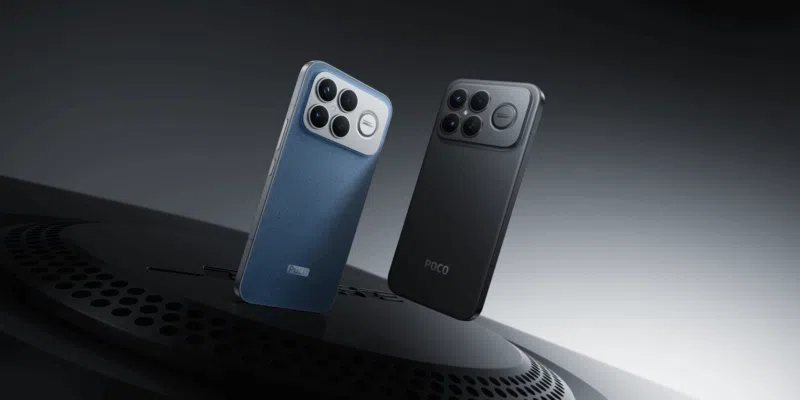
Poco is officially stepping into the premium flagship ring with the debut of the Poco F8 Pro and Poco F8 Ultra, two performance-focused smartphones built to push the brand beyond its “performance-first” roots. Both devices share the new Poco HyperRGB displays, Sound by Bose tuning, and a renewed emphasis on craftsmanship. Still, each approaches the flagship brief differently, offering users two distinct flavours of all-round power.
Design and build
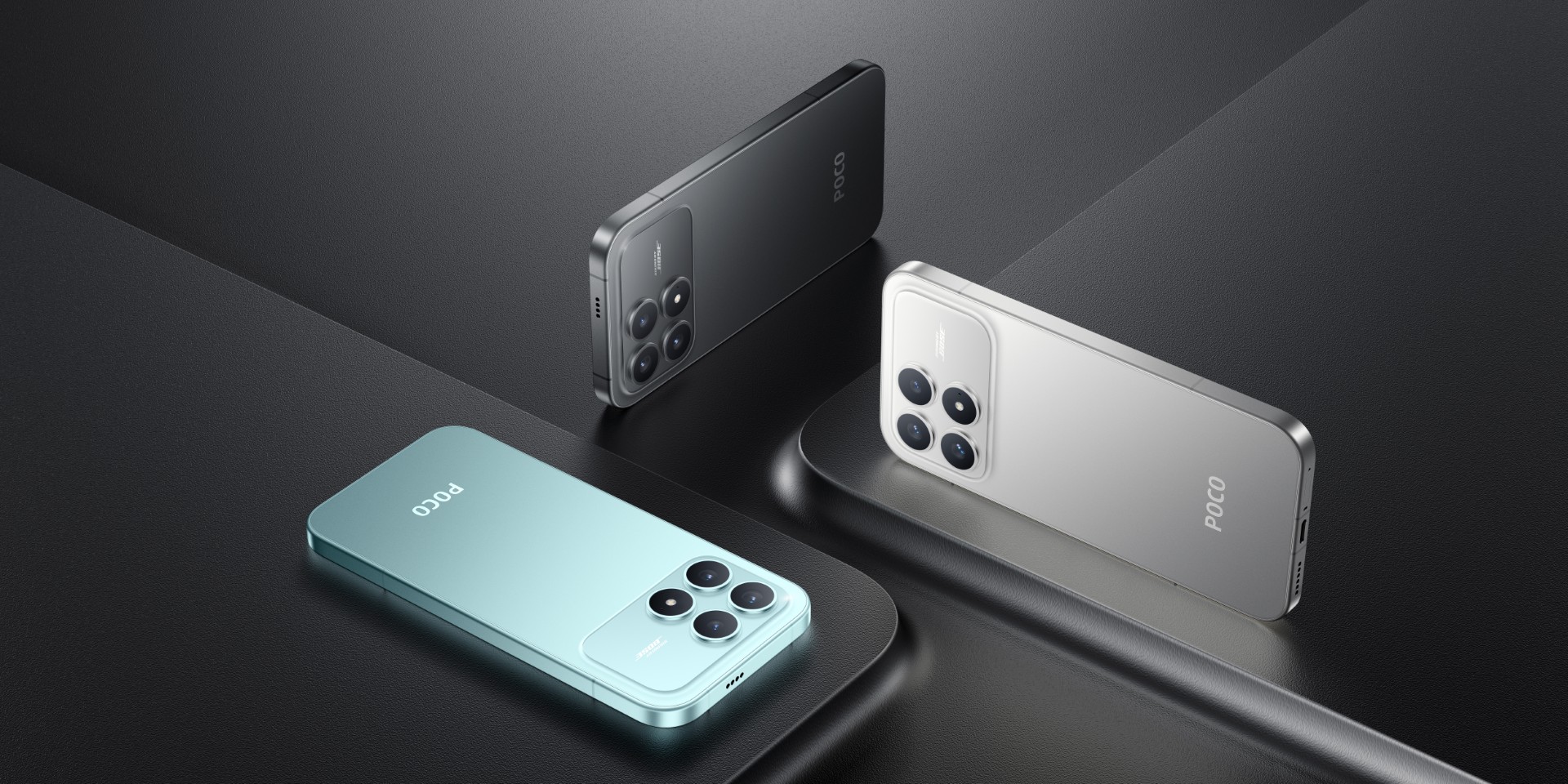
Poco F8 Pro introduces the company’s first one-piece milled glass design, carved from a single 2mm glass block through a CNC cold-carving process with 41 machining steps for a seamless, premium finish. Its frosted-matte back blends into a glossy deco block around the camera array, with a micro-curved aluminium frame offering good in-hand comfort. The phone weighs just 199g and carries an IP68 rating, a first for the Pro line.
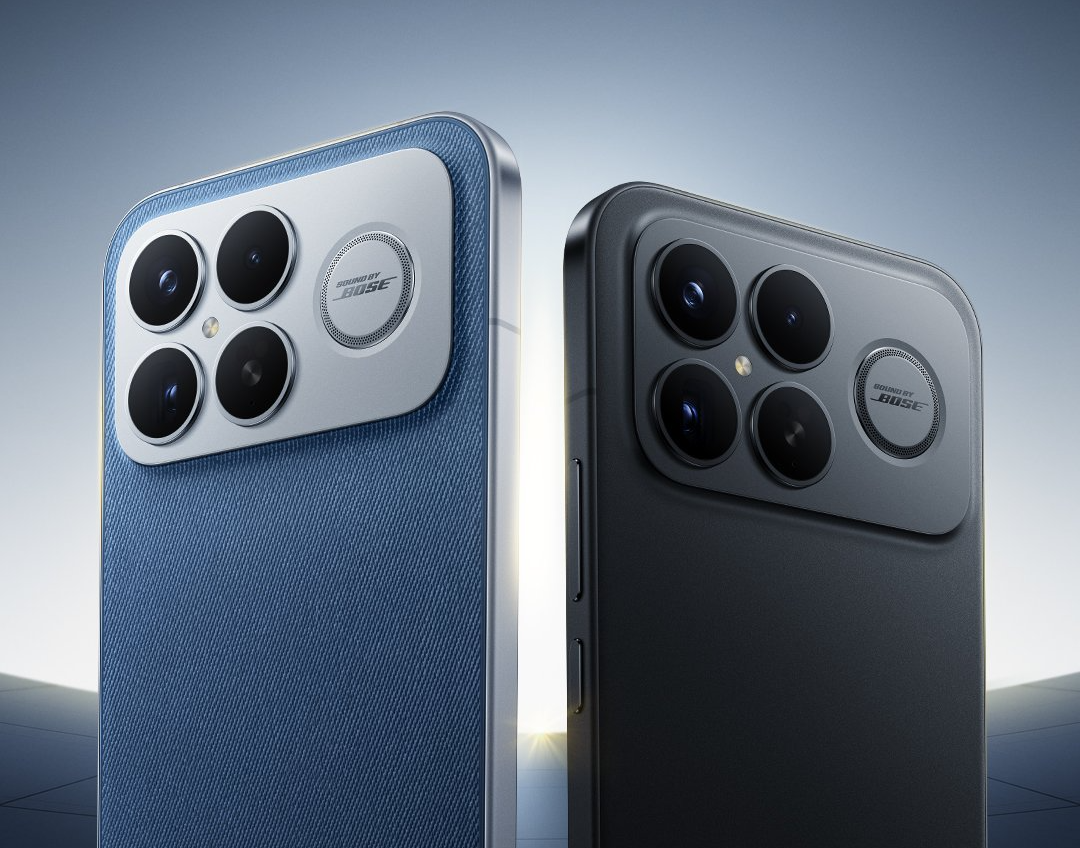
The Poco F8 Ultra takes a more premium spin with a rounded-corner aluminium chassis, textured Denim Blue finish using Poco’s third-generation nano-tech material, and ultra-narrow bezels measuring just 1.5mm on three sides. It also features Poco Shield Glass and the same IP68 resistance.
Display

Both devices debut Poco’s new HyperRGB AMOLED displays, fully utilising RGB subpixels for crisp, 2K-like clarity while reducing power consumption.
Poco F8 Pro features a 6.59-inch 120Hz AMOLED panel capable of up to 3500 nits peak brightness across 25 percent of the display. It supports 12-bit colour, 100 percent DCI-P3 coverage, Gorilla Glass 7i, and all-day DC dimming for low-flicker viewing.
Poco F8 Ultra steps up to a 6.9-inch 120Hz HyperRGB AMOLED with the same 3500-nit peak, 12-bit colour depth, and a large canvas tailored for reading, gaming, and video. The full RGB subpixel layout reduces power consumption by 19.5 percent compared to the F7 Ultra while offering enhanced clarity and colour accuracy.
Performance
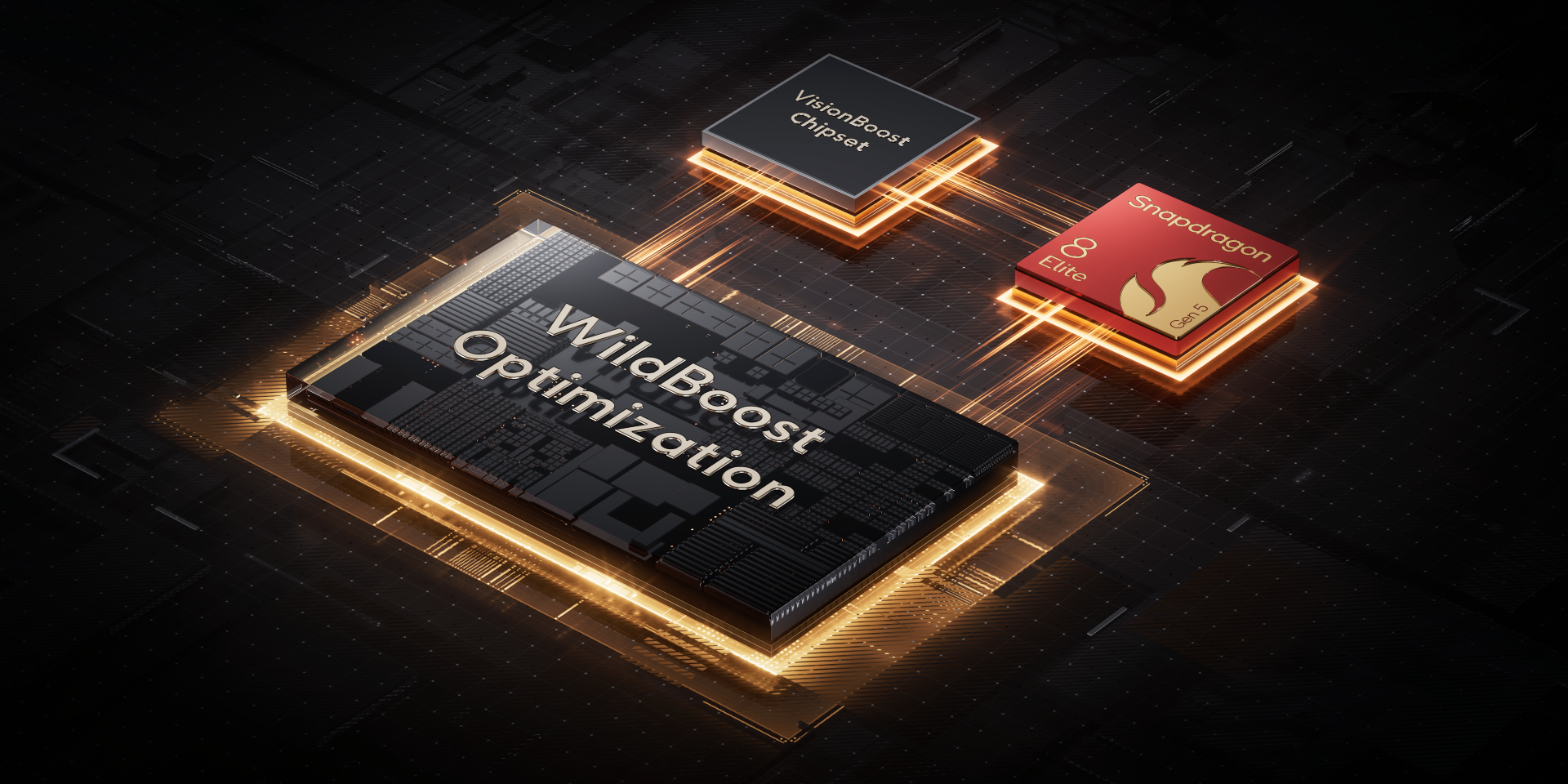
Both models run Qualcomm’s latest silicon.
F8 Pro uses the Snapdragon 8 Elite Mobile Platform with a 3nm process, Oryon CPU cores up to 4.32GHz, WildBoost optimisation, and a triple-layer IceLoop cooling system. AnTuTu scores reach over 3.28 million.
Accompanying the Snapdragon 8 Elite Gen 5 on the Ultra is the new VisionBoost D8 chipset that enables 120FPS gameplay, 1.5K AI Super Resolution, and Game HDR. Its dual-chip architecture pushes AnTuTu past 3.94 million, making it Poco’s most powerful phone to date. A reinforced dual-layer IceLoop system keeps thermals stable during long gaming sessions.
Both feature LPDDR5X and UFS 4.1 storage, plus software-side optimisations through Xiaomi HyperOS 3, Xiaomi HyperAI, Xiaomi HyperConnect, and on-device Gemini AI support for search, writing, and creative tasks.
Cameras

The Pro uses a triple-camera setup led by a 50MP Light Fusion 800 sensor and the series’s first 50MP 60mm telephoto lens. The phone offers 2.5x optical zoom, 5x in-sensor lossless zoom, and OIS on the primary lens. Creative tools include positive and negative film filters and 1440P dynamic shot capture.
As you might have hoped, the Poco F8 Ultra features a flagship triple camera headlined by the Light Fusion 950 sensor, a large 1/1.31-inch module with 43 percent improved light intake. It is coupled with Poco’s first 50MP 5x periscope telephoto, offering 5x optical, 10x in-sensor, and 20x UltraZoom with computational enhancements. Night scenes, sunsets, and portraits benefit from improved dynamic range and lens coatings.
Audio

Poco’s new collaboration with Bose brings Sound by Bose tuning to both models. F8 Pro uses dual 1115F symmetric speakers, while F8 Ultra uses a 2.1-channel triple-speaker system with a dedicated subwoofer. Both include Dynamic and Balanced profiles. You can expect the F8 Ultra's sound to be a hit for impromptu hangouts.
Battery and charging
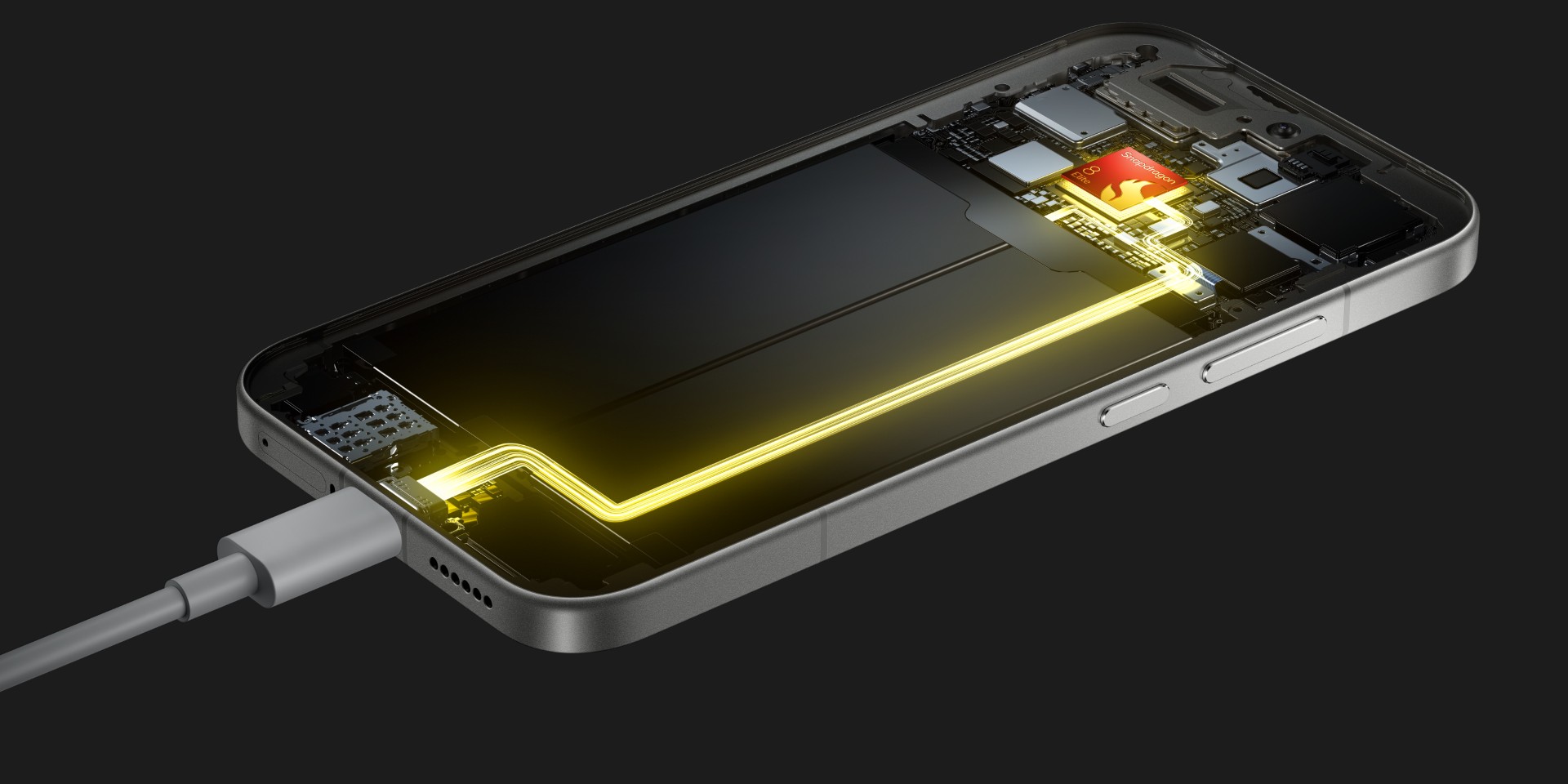
Poco's F8 Pro includes a 6210mAh battery with 100W HyperCharge and up to 22.5W reverse charging. Smart Charging manages thermals for stability.
The F8 Ultra upgrades to a 6500mAh capacity with 100W wired and 50W wireless HyperCharge, the first in the series to support both. It also uses Smart Charging to adjust power flow dynamically.
Haptics
One area we’re still watching closely is haptics. The POCO F7 series delivered huge performance for the price, but its vibration motor felt soft, buzzy, and a step behind the competition — more of an afterthought than a flagship feature. With the F8 Pro and F8 Ultra pushing so aggressively into premium territory, this is the moment for POCO to tighten things up: sharper feedback, stronger clicks, and a more refined tactile response that matches the rest of the hardware uplift. If POCO really wants to stand shoulder-to-shoulder with the big players, clean, precise haptics would be the next big upgrade we’re hoping to see.
Configurations and availability
Poco's F8 Ultra is available in 12GB+256GB and 16GB+512GB configurations in Denim Blue and Black. The F8 Pro is available in 12GB+256GB and 12GB+512GB in Titanium Silver, Blue, and Black.
Pricing
| USD | POCO F8 Ultra | POCO F8 Pro | ||
| Storage | 12GB+256GB | 16GB+512GB | 12GB+256GB | 12GB+512GB |
| RRP | $ 729 | $ 799 | $ 579 | $ 629 |
| Early Bird | $ 679 | $ 729 | $ 529 | $ 579 |
| UK | POCO F8 Ultra | POCO F8 Pro | ||
| Storage | 12GB+256GB | 16GB+512GB | 12GB+256GB | 12GB+512GB |
| RRP | £ 749 | £ 799 | £ 549 | £ 599 |
| Early Bird | £ 599 | £ 649 | £ 449 | £ 499 |
With the F8 Pro and F8 Ultra, POCO is no longer merely pushing the “value flagship” narrative — it’s crossing firmly into premium-tier territory. Between Bose-tuned audio, the debut of POCO HyperRGB displays, redesigned cooling systems, and a noticeable lift in material quality, the F8 Series feels more mature and more ambitious than anything the brand has shipped to date. Both phones still focus heavily on performance-driven users, but now wrap that power in cleaner hardware, better optimisation, and deeper AI integration through HyperOS and Gemini.
Verdict
The POCO F8 Pro and F8 Ultra mark POCO’s strongest flagship statement yet — the Pro is the new all-rounder sweet spot, while the Ultra is a full-fat performance powerhouse built for gamers and camera enthusiasts who want more than just speed. Together, they push the brand confidently into premium territory without losing the value-first identity that made POCO popular.