
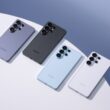



Samsung will launch its first tri-folding phone by December 2025. Roh Tae Moon, President of Samsung's Device Experience division, made this groundbreaking announcement following the July Galaxy Unpacked event, positioning the company to revolutionize the foldable device market once again, while industry experts urge a measured approach to expectations.
Samsung's Historic Tri-Fold Announcement
The confirmation is official. CEO Roh Tae Moon announced Samsung's inaugural tri-folding phone for release by December 2025, marking a pivotal moment in mobile technology evolution. The announcement emerged from the July Galaxy Unpacked event, where Samsung reinforced its commitment to leading foldable innovation.
While the Galaxy Z Fold 7 and Flip 7 dominated the event spotlight, the tri-fold represents Samsung's next evolutionary leap in mobile computing. The device remains unnamed, but Samsung plans a limited initial launch targeting key markets including South Korea and China, suggesting a cautious yet confident approach to this ambitious new form factor.

What Makes Tri-Folding Phones Revolutionary
Two hinges. Three display segments. This is what separates tri-fold phones from their bi-fold predecessors, enabling transformation from a standard smartphone into an expansive 10-inch class tablet.
When fully opened, users gain unprecedented screen real estate perfect for multitasking, professional work, immersive gaming, and enhanced entertainment experiences. The innovation pushes boundaries far beyond current bi-folds, offering seamless mode transitions and promising to consolidate smartphone and tablet functionality into one revolutionary device that adapts to user needs throughout the day.

A Decade of Foldable Innovation at Samsung
Samsung's foldable journey began in 2019. The original, if somewhat problematic, Galaxy Fold launched Samsung into uncharted territory, followed by annual Z Fold and Z Flip model updates that consistently improved display technology, hinge durability, and software optimization.
Each iteration brought refinements based on user feedback and engineering breakthroughs. The tri-fold design represents the culmination of a decade's worth of engineering refinement, ambitious vision, and market leadership. This new form factor signals Samsung's continued willingness to experiment, learn from past launches, and pioneer rapidly evolving market segments that competitors struggle to match.

Rumors and Technical Expectations
Recent reports suggest revolutionary G-shaped inward folding hinge technology. This design protects the display better compared to outward folding rivals, addressing durability concerns that have plagued previous foldable generations.
Under the hood, expectations point to Qualcomm's Snapdragon 8 Elite processor powering a nearly 10-inch OLED display optimized for productivity and media consumption. Early leaks hint at battery constraints compared to traditional tablets, and premium pricing is likely around or above three thousand dollars. This positions the tri-fold as an exclusive option for early adopters and tech enthusiasts willing to invest in cutting-edge innovation.
Foldables Future: A Market on the Edge of Transformation
Industry analysts urge cautious optimism. Excitement runs high, but tri-folds face significant engineering challenges, including complex multi-hinge mechanisms, increased device thickness, and sophisticated software adaptation for seamless multitasking across three display segments.
Yet success could be transformative. If Samsung delivers a reliable, user-friendly experience, the tri-fold could accelerate broader adoption of multi-form factor devices, potentially reshaping Android hardware and software ecosystems for years to come while establishing new benchmarks for mobile computing capabilities.
Samsung's confirmation of its tri-folding phone solidifies its position as the Android foldable trailblazer. Success hinges on overcoming industry-leading hardware and software challenges while exciting buyers in a cautious, premium market segment. As details emerge, this device's performance could redefine expectations not just for foldables, but for the entire future of mobile computing and user interaction paradigms.
I, for one, cannot wait. After seeing Huawei's tri-fold launch earlier this year in China, I'm intrigued by the format, which bridges the line between phone and tablet with hopefully minimal compromise.


