





Over the last few years, one of the trends we saw were attempts to expand the number of WiFi hotspots accessible by general consumers. Much of this was driven by a concern over limited support for the growing number of wireless devices. For consumers, it was a way to preserve their pot of data available each month. At the same time, T-Mobile was out there trying to get more people to use their wireless network by offering unlimited data plans. With their success, last year the biggest carriers – Verizon and AT&T – joined T-Mobile and Sprint with unlimited plans. Since then OpenSignal has taken a look at how the re-introduction of unlimited plans has impacted consumers and their use of WiFi.
OpenSignal started collected data on December 1, 2017 for a 90-day period. During that time, they noted that WiFi usage had dropped for three of the four major carriers with only Sprint customers remaining static. The big drops occurred at both Verizon and AT&T who both saw WiFi usage fall be 3 percent. Surprisingly, T-Mobile customers also shifted to using less WiFi by a couple percentage points. Except for T-Mobile users who are closer to seeing only 40% of their connections on WiFi, the other carriers are all clustered around 50 percent as users pretty evenly split their time between wireless network connections and WiFi.
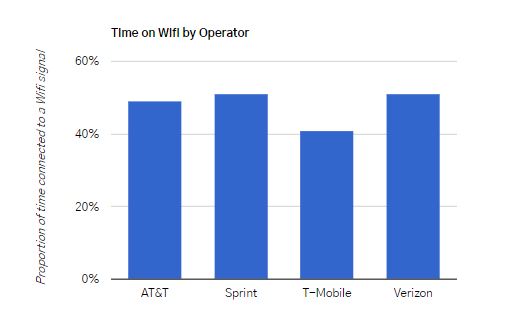
OpenSignal indicates the results were not a surprise to them as they suspected the shift to unlimited plans would result in consumers not worrying so much about their data usage and trying to minimize it. Another item that may have factored into the change is the fact that Verizon and AT&T seem to have both stabilized their wireless networks. Right after they introduced new unlimited plans last year, OpenSignal detected drops in speed of connections on those networks as more people started using them. With little drop off in speed, the pressure to connect to faster WiFi is reduced.
If you switched to an unlimited plan last year, do you think it impacted your use of WiFi?
source: OpenSignal
