



Lithium-ion batteries are now commonplace—from powering electric cars and smartphones to keeping cargo bikes rolling through city streets. In recent years, improvements in this technology have come largely from the booming auto market. Today, these batteries have taken a leap far beyond consumer electronics: they have entered the world of European naval defense. Saft, a French battery manufacturer entirely owned by TotalEnergies, secured a contract to supply lithium-ion energy storage systems for Naval Group’s latest generation of submarines. This marks a major step for a technology that’s proven its maturity and versatility far beyond its automotive roots.
Why Submarines Need Lithium-Ion Batteries
Many people might wonder: if nuclear submarines have powerful onboard reactors, why worry about batteries at all? The answer lies in how submarines operate. Although a nuclear reactor can produce an immense amount of energy, it doesn’t directly drive the propellers. Instead, it generates heat through nuclear fission, a process that boils water into steam to run turbines and produce electricity. This electricity then powers everything from the sub’s propulsion system to its onboard electronics—the reactor serving as a compact floating power plant.
Yet modern submarines need more than just raw power. They often operate in absolute silence, react at lightning speed to sudden power demands, or sustain essential systems during a reactor shutdown. Massive battery banks have always been part of their architecture for precisely these reasons. Until recently, these submarines still relied on heavy, bulky lead-acid batteries, a legacy of Cold War engineering. While reliable, these batteries are neither space-efficient nor lightweight by today’s standards.
The Lithium-Ion Leap
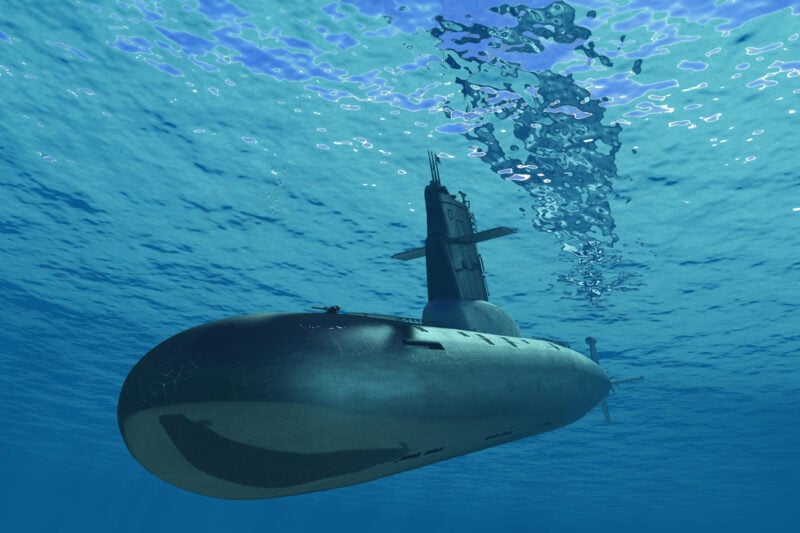
Naval Group, a leading French naval defense company, confirmed it has installed Saft’s lithium-ion battery systems on its Barracuda and Scorpène submarine classes. This upgrade delivers several key advantages compared to the old lead-acid batteries: improved energy density, safer and more reliable performance, faster response when powering vital systems, and significantly reduced weight and volume—an essential benefit in the tight confines of a submarine.
Cédric Duclos, CEO of Saft, put it plainly: “This technology sets a new standard for energy density, safety, and reliability, putting Saft at the heart of next-generation naval defense programs. It’s also a clear step toward European technological sovereignty.” Behind the business language lies a substantial technical advance.
How Car Battery Tech is Changing the Seas
This defense contract highlights a broader trend: advances in lithium-ion battery technology for automotive use are now benefiting fields as diverse as civil aviation, marine shipping, stationary renewable power storage, and submarine defense. Massive R&D efforts to improve lithium-ion cell cost and performance have found new applications well beyond roads and highways.
Submarine fleets outside Europe have begun this transition, too. Japan’s Taigei-class submarines are a recent example, and Sweden’s renowned Gotland-class—revolutionary in its day for introducing air-independent propulsion with advanced batteries—set benchmarks decades ago. South Korea is also following a similar path. In Europe, ThyssenKrupp Marine Systems has entered the field, though reportedly with some industrial challenges. Naval Group’s majority government ownership allows for relatively swift decision-making in these strategic projects.
Strategic Industry Moves and The Road Ahead
Saft’s position as a full subsidiary of TotalEnergies gives this contract an added dimension. For TotalEnergies, expanding into strategic defense markets via their battery arm aligns with their ambitions for advanced energy storage. The company has pointed to increasing demand for its battery technology in marine contexts, an area not previously highlighted in their wider public messaging.
Meanwhile, laboratory research is making headway on lithium-sulfur battery chemistry—a technology that could potentially double the energy density of today’s cells. The next decade might bring even greater breakthroughs for submarines, but for now, the shift to lithium-ion already marks a sharp departure from five decades of technological stasis beneath the waves. And, in a real sense, every electric vehicle recharged onshore feeds the industrial ecosystem making such innovations possible.
As an electric car buying guide expert, I’m passionate about new technology and a committed supporter of embracing electric propulsion and sustainable mobility—whether on land or under the sea.