



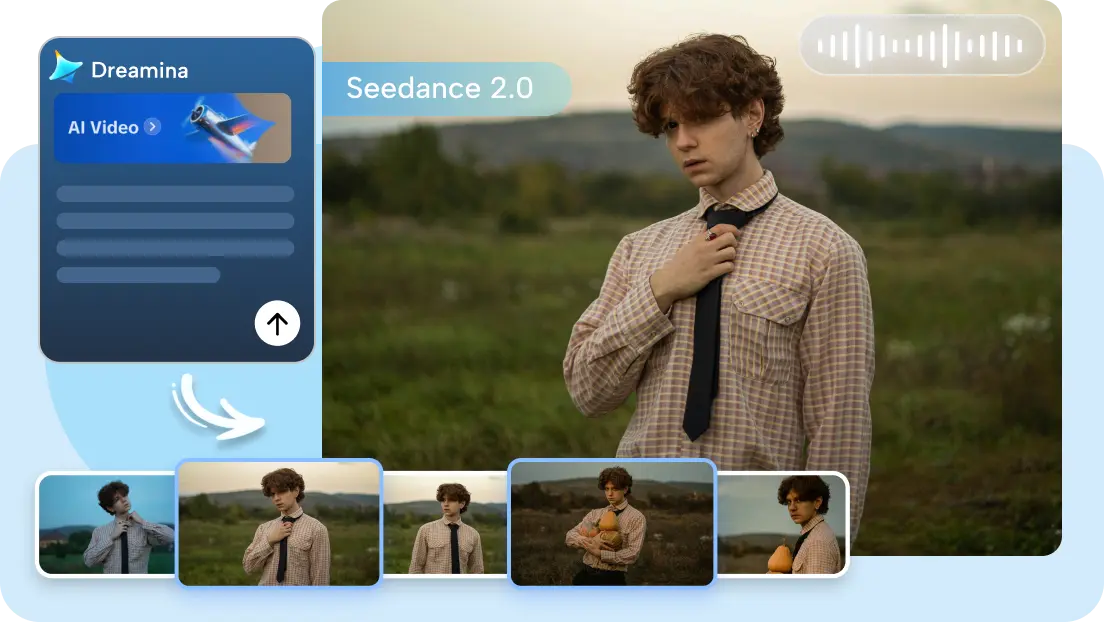
There is a subtle but powerful shift happening across the digital creative landscape—one that doesn’t rely on noise, trends, or aggressive disruption, but instead quietly redefines how work gets done. At the center of this transformation are Seedance 2.0 and Seedance 2.5, two evolving systems that are not simply improving workflows but reshaping the very foundation of creative execution. Unlike traditional tools that demand constant input and correction, these systems introduce a new kind of intelligence—one that understands intent, adapts to patterns, and delivers results with an almost intuitive precision. This shift becomes even more visible when experienced through platforms like Dreamina, where the interaction between user and system feels less mechanical and more like a natural extension of thought.
From Execution to Interpretation
What sets Seedance 2.0 apart is not just its capability to perform tasks, but its ability to interpret direction. It marks the beginning of a transition from command-based systems to responsive creative frameworks. With Seedance 2.5, this evolution reaches a more refined stage, where outputs are not only accurate but context-aware. The system begins to recognize nuance—tone, structure, pacing—and integrates these elements into the final result without requiring repeated adjustments. This reduces the friction that traditionally exists between idea and execution, allowing creators to operate at a higher level of focus. When integrated into environments this capability transforms the entire workflow into something fluid, where technical barriers gradually disappear and creative intent takes the lead.
Precision at Scale
Speed has always been a defining factor in digital production, but without consistency, speed becomes unreliable. Seedance 2.0 introduced the idea of controlled acceleration, while Seedance 2.5 refines it into a system of precision at scale. This means that outputs are not only generated quickly, but they maintain structural integrity, tonal consistency, and quality across multiple iterations. For professionals working in high-demand environments—agencies, content studios, digital teams—this balance is critical. The ability to produce high-quality work under pressure is no longer a competitive advantage; it is a requirement. By leveraging systems like Seedance 2.5 through platforms creators gain access to workflows where performance and reliability coexist without compromise.
Redefining the Role of the Creator
As these systems evolve, they are also reshaping the role of the human behind them. The traditional creative process often involved a significant amount of manual effort—editing, refining, correcting, and iterating through multiple cycles before reaching a final output. Seedance 2.0 began reducing this burden, but Seedance 2.5 takes it a step further by minimizing the need for constant intervention. This allows creators to shift their focus from execution to strategy. Instead of being caught in the mechanics of production, they can concentrate on conceptual thinking, storytelling, and brand alignment. Within platforms this transition feels seamless, as the system supports a more strategic approach to creativity rather than forcing users into repetitive workflows.
Consistency as a Competitive Advantage
In large-scale content production, consistency often defines professionalism. A single high-quality output is valuable, but the ability to replicate that quality across multiple projects is what truly sets professionals apart. Seedance 2.5 addresses this need with a level of stability that ensures outputs remain aligned in tone, structure, and style. This is particularly important for brands and organizations that rely on a unified identity across different channels. When used this consistency becomes easier to manage, as the system maintains coherence without limiting flexibility. The result is a production environment where creativity can expand without losing direction.
Where This Is All Leading
The progression from Seedance 2.0 to Seedance 2.5 is not just an upgrade—it is a signal of where creative technology is heading. We are moving toward systems that anticipate needs, adapt in real time, and collaborate with users rather than simply responding to commands. This future is not about replacing human creativity but enhancing it—removing inefficiencies so that ideas can move faster and with greater clarity. Platforms are already aligning with this direction, offering creators a space where advanced systems are accessible without being overwhelming.
Conclusion: The Power of Quiet Innovation
Not every innovation announces itself loudly. Some changes happen gradually, improving processes so naturally that they become invisible. That is exactly what Seedance 2.0 and Seedance 2.5 represent. They are not just tools or updates; they are part of a broader shift toward intelligent, adaptive creative systems that prioritize efficiency, consistency, and strategic thinking. As more creators begin to adopt these technologies through this quiet transformation will continue to grow—until what once felt advanced becomes the new standard of creative work.