



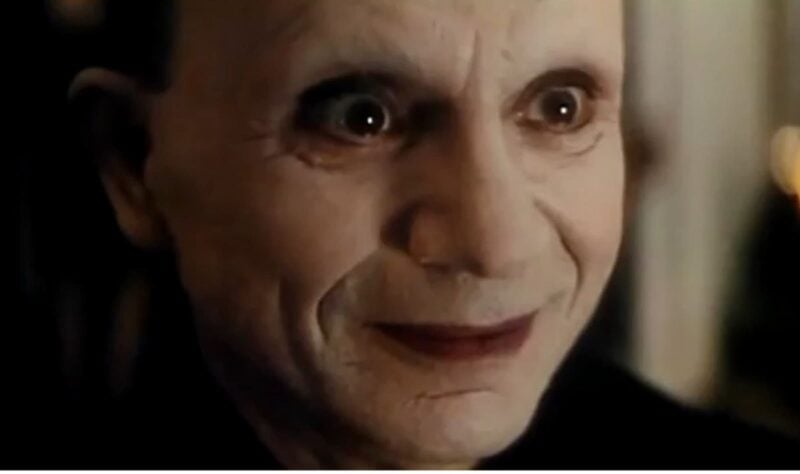
Nolan's Unexpected Obsession with Lost Highway
Christopher Nolan, known for his deep appreciation of cinema, reflected on Lost Highway during a recent visit to the Criterion Closet. He admitted,
“When I first saw it, I cannot say that I enjoyed the film… I found it quite laborious to sit through. I thought it was quite heavy going, quite hard.”
When Lost Highway debuted in 1997, critics largely panned it—Entertainment Weekly described it as “a clunky collision.”
The Movie That Wouldn’t Leave Nolan’s Mind
Despite his initial reaction, Nolan couldn’t shake the film from his thoughts:
“I found myself thinking about it weeks afterwards,” he told Criterion, “and remembering it like I was remembering one of my own dreams, which just speaks to the way that Lynch figured out how to take dream logic and the experience of dreaming and make a sort of cinematic proxy for that for the audience.”
Lost Highway centers on Fred (Bill Pullman), a saxophonist convicted of killing his wife (Patricia Arquette) after receiving mysterious VHS tapes. In typical Lynch fashion, the plot twists: another man (Balthazar Getty) turns up in Fred’s jail cell, and on his release, begins an affair with a woman who looks just like Fred’s late wife.
How Lost Highway Inspired Memento
The lingering effect of Lynch’s film helped inspire Nolan’s own breakout feature, 2001’s Memento. That psychological thriller follows Leonard (Guy Pearce), a man with anterograde amnesia who uses notes, photos, and tattoos to track his wife’s alleged killer. According to Nolan, he watched Lost Highway on VHS while writing the screenplay for Memento, which was based on Jonathan Nolan’s short story “Memento Mori.”
Reflecting on Lynch’s influence, Nolan said in 2025:
“I realized that Lynch had created the shape of a film that would project a shadow in my memory, assuming the shape of a dream. It’s like a hypercube—the shadow of a four-dimensional object in our three-dimensional world… That’s the ultimate aspiration of what you want to try and do with the form of a movie. You want to try and create something that isn’t just film running through the projector.”
Lost Highway’s Critical Makeover
Nolan isn’t the only viewer to wrestle with Lost Highway initially, only to later appreciate its impact. The film, once dismissed by critics, has been reassessed as a cult classic in recent years. It is now seen as a pivotal part of Lynch’s Los Angeles trilogy, along with Mulholland Drive (2001) and Inland Empire (2006).
If a movie leaves you puzzled or uneasy, you might not be alone—sometimes, the films that trouble us most are the ones that quietly reshape the future of cinema.