



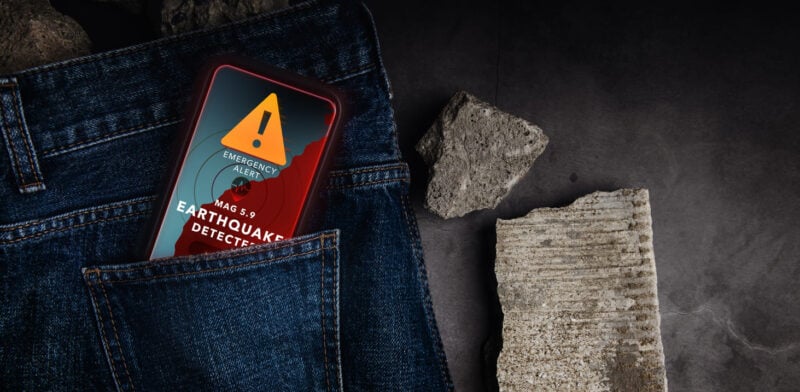
How Smartphones Became Earthquake Detectors
Since Venezuela lacks its own earthquake warning network, Google stepped in with an innovative workaround: using the accelerometers inside Android phones. These are the same sensors that tell your phone when to switch between portrait and landscape mode. When idle phones detect the initial, fastest seismic waves (P-waves), they send data—including an approximate location—to Google’s servers.
The system then cross-checks the data from multiple devices to confirm an earthquake is underway, estimate its location and magnitude, and decide which area to alert. The aim is to send warnings before the slower, more damaging S-waves arrive. It all happens in a matter of seconds. That might not sound like much, but it can be enough time to move away from something unstable, get under a table, or step off a ladder.
Seconds Matter: The 2026 Venezuela Earthquakes
During the recent Venezuelan quakes, Google says Android phones picked up the first waves in just three seconds. Six seconds later, the first alerts were sent. The technology kept refining its response, since there were actually two tremors: first a magnitude 7.2, then a 7.5. According to Google, the second one was the strongest earthquake recorded in Venezuela since 1900.
In all, 11.4 million people received alerts on their Android phones. Nearly 10% of them got the highest alert level, labeled “Take Action.” This type of alert takes over the screen and blasts a loud sound, instructing people to protect themselves immediately. Others received less urgent notifications, just letting them know a tremor might be felt.
Who Gets the Alert?
The farther from the epicenter you are, the more likely you are to get a warning before the shaking begins. People closest to the epicenter might get the alert right as the tremors start. It’s also worth noting this system isn’t automatic for everyone. You need an Android phone, an active data or Wi-Fi connection, location turned on, and the earthquake alert feature enabled. Users can opt out any time—but given recent events, many may reconsider disabling it.