


Corporate Cyberpunk: The Virtual CEO
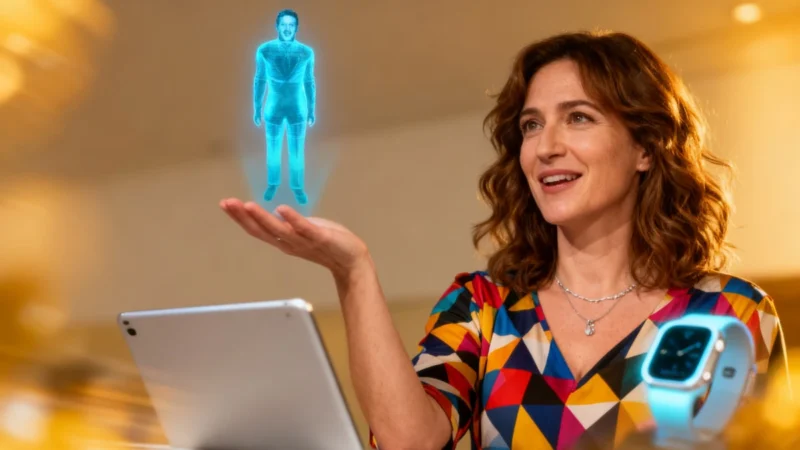
To manage 79,000 employees, Mark Zuckerberg has turned to a digital clone powered by artificial intelligence. This development puts Meta at the cutting edge—some might say the unsettling edge—of workplace technology, making the boss omnipresent through a virtual AI twin.
“It honestly feels like an episode of Black Mirror.” This remark, heard around Meta, captures the mood as Zuckerberg—founder and CEO of the Silicon Valley giant—takes steps to become algorithmically accessible to his entire workforce.
To address requests and questions from every staff member, Zuckerberg has been developing an AI-based version of himself that can respond, give advice, and represent his leadership style. The stated ambition: allow any employee, regardless of status, to interact with the digital boss. This AI twin is trained on his facial expressions, voice, and linguistic habits, making interactions feel strikingly authentic.
Even further, the AI uses all of Zuckerberg’s public statements, strategic thinking, and internal memos, so the responses align closely with how he’d likely answer himself. According to The Guardian, this initiative was designed to narrow the distance between Meta’s vast workforce and its chief executive, often seen as remote in such a large organization.
Reports indicate that the introduction of realistic, AI-generated video and voice has sharply increased employee engagement and retention. People are more responsive when instructions come from a familiar face or voice—pixelated or not.
AI Avatars: From Memes to Photorealism
In 2022, Zuckerberg’s Metaverse avatar faced widespread ridicule for its dated, video game-like graphics. Meta appears to have learned from the mockery. The new project uses more advanced language models and photorealistic 3D rendering, moving away from the cartoonish past. This virtual double is part of a broader push toward automating internal operations. Zuckerberg already relies on a personalized AI agent that helps him synthesize corporate information rapidly.
This change signals a deep shift in Meta’s culture. Zuckerberg has said he wants Meta to be leaner, faster, and more profitable. Integrating AI everywhere is about reducing costs and accelerating productivity. In this vision, the AI clone is positioned as the ultimate management tool. Why communicate through multiple managers when you can ask the virtual CEO directly?
The pursuit of efficiency is also clear in Muse Spark, Meta’s recently launched model that reportedly can plan vacations or analyze meals for calories in a flash. While Meta continues to face legal challenges—especially regarding Instagram and youth addiction—Zuckerberg seems invested in a future where humans and AI systems jointly drive business.
Legal Questions: Who Answers for the AI?
Serious legal questions now follow. What is the legal standing of such an AI, and who is responsible for its decisions? If a Meta employee ignores or follows a directive from the AI double, could that affect their employment? Is the AI’s direction binding, or is it merely an advisory tool?
The experience of French trader Jérôme Kerviel—who faced trial after his bank distanced itself from decisions that led to multi-million-dollar losses—shows the complexity. Should an employee act on an AI-issued instruction that later causes issues with a client or a loss for the company, who is accountable? Is it the employee, the AI system, or the corporation itself?
It’s likely that future lawsuits will have to grapple with these questions. How courts will resolve questions of AI-driven corporate accountability remains to be seen.