
A Chilling Disappearance That Shook Chile
This is a story that, unless you lived in Chile, likely never made your local news in 1999. But in Chile, it grabbed headlines. The setting: Concepción, about 310 miles (500 kilometers) south of Santiago. On November 20, 1999, teenager Julio Montoya (as he's called in the show) went out to the Cucaracha nightclub and never came home. Of the roughly 300 people at the club, no one reported seeing or hearing anything suspicious. Described as having a “hypnotic” presence, Julio disappeared without a trace.
“There must be people hiding the truth,”
cried Julio's mother, Vanessa, anguished before media descending on the tragedy.
Genaro Montero, a weary veteran officer, is assigned to investigate what becomes a kidnapping case, despite no ransom ever being demanded. Just one episode into the eight-part miniseries (episodes run between 32 and 44 minutes), it's clear viewers are up against a wall. While Julio's determined mother combs for any clue, Montero's investigation repeatedly stalls. Yet it's revealed that someone “knows”—a priest who hears the confessing kidnapper, but due to the seal of confession, cannot say a word.
Layers of Deceit, Society's Silence
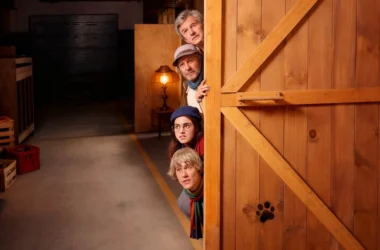
Besides its central characters, the series introduces a dubious medium, a young cop willing to risk everything for the truth, a professor with a suspect fondness for hitchhikers, and dozens of young clubgoers eager to shield each other and muddy the waters. The plot weaves through emotional blackmail, fierce tension between faith and law, and, above all, the societal silence that keeps the case unsolved. It's a story of emotional manipulation, constant clashes over morality and justice, and a thick wall of communal quiet.
“This case knocks me out,”
says the enigmatic Montero, a character whose colleagues say “throws out lines like a Hollywood detective.”
A True Crime Reimagined
“Someone Must Know” avoids Hollywood formulas, instead gripping viewers with a tangled plot and characters shaped—and silenced—by hardship. The series unfolds as urban noir and family tragedy, never letting the pacing drag even as the investigation stalls. The inspiration: a true Chilean cold case. But the series (originally titled “Alguien tiene que saber” in Spanish) takes significant dramatic liberties.
On November 20, 1999, 23-year-old Jorge Matute Johns—portrayed as Julio Montoya—vanished under strikingly similar circumstances to the show. The Cucaracha nightclub and the 300 witnesses were real, but the case was handled by a police team, not a single gruff detective as shown. The priest, central to the show's secrets, was not a real-life figure but created to explore the themes of faith, guilt, and silence. Unlike the timeline in the series, the victim's body wasn't recovered a few months later by a river: it was found five years after the disappearance, in 2004.
The Real Case: Still Unsolved
The actual investigation—like its on-screen counterpart—was criticized for its slow progress and strange twists. In 2007, a former nightclub employee confessed but later recanted. Several young suspects were arrested in 2014 but released for lack of evidence. Toxicology on the exhumed remains found pentobarbital, a barbiturate, confirming poisoning and ruling out accidental drowning.
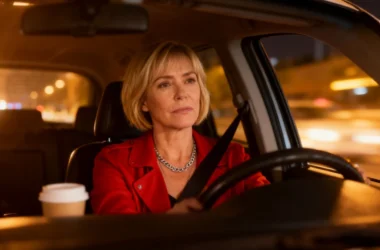
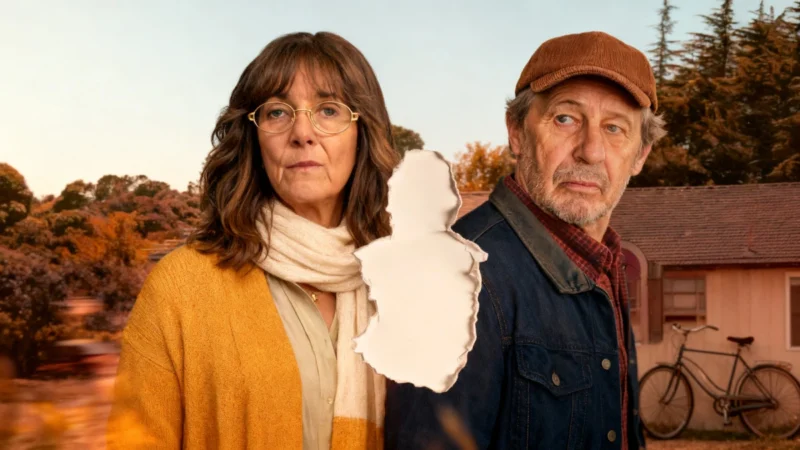
Today, the mystery still looms large in Chilean memory, enough for Netflix to dramatize the events with some of Chile's most respected actors, including Alfredo Castro (sometimes likened to Al Pacino) as Inspector Montero, and acclaimed actress, director, and playwright Paulina García as Julio’s mother.
The family of the real victim, Jorge Matute Johns, initially opposed the series but later consented—on the condition that fiction would clearly diverge from fact. Still, in an April 2026 interview with Chile's Sala de Prensa, Jorge’s mother described the production as “violent towards my family,” and insisted,
“I never wanted this series to be made.”
Will the truth behind “Someone Must Know”—and the unresolved real crime that inspired it—ever be revealed? For now, both audiences and a nation are left awaiting answers.