



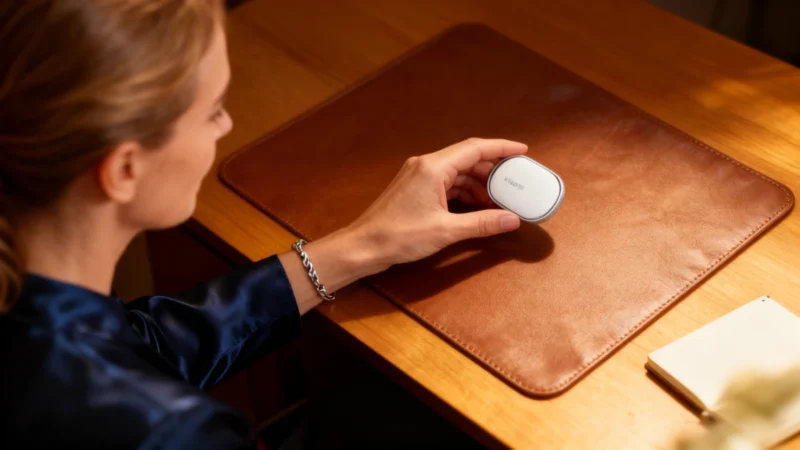
Looking for a smart tracker that doesn’t tie you exclusively to Apple or Android—and costs much less than the usual suspects? Xiaomi may have delivered exactly what you need.
Xiaomi Tag: Bridging the Gap Between iPhone and Android
It's not common to see a tracker challenge both Apple's AirTag and Samsung's Galaxy SmartTag 2 at once. That's what Xiaomi did with its new Xiaomi Tag, which debuted around the Mobile World Congress. Its standout feature is compatibility: the tag can work with both Apple's Find My network and Google's Find My Device (Find Hub) network, allowing users to track belongings whether they're on iPhone or Android. This is something its main rivals can't offer.
Specs That Matter (Without Unnecessary Extras)
Despite being compact—measuring about 1.83 x 1.22 x 0.28 inches (46.5 x 31 x 7.2 mm) and weighing just 0.35 ounces (10 grams)—the Xiaomi Tag includes features users expect. It’s powered by a replaceable CR2032 battery, offering roughly a year of use before swapping. The tracker is rated IP67 for dust protection and temporary water immersion, making it a safe pick for everyday accidents.
The Tag uses Bluetooth 5.4 for close-range tracking, with NFC for triggering “lost mode” (at least through Apple's network). If you misplace your item, an integrated piezoelectric buzzer can make the tag ring when you're nearby.
One Tag—But You Pick Your Network
Trackers are usually limited by ecosystem, but Xiaomi is taking an open approach. The Tag can operate with iPhone via Apple’s Find My or with Android devices through Google Find Hub. No extra apps are needed. However, only one network can be used at a time; you select your preferred system during setup.
When you activate “lost mode,” you can attach your contact info. For Android users, someone who finds your lost tag nearby will see a pop-up with your details. On iPhone, holding the phone close to the Tag establishes an NFC connection to display the owner's contact information—if provided.
What’s Missing?
Unlike Apple's AirTag, the Xiaomi Tag does not have Ultra Wideband (UWB) technology, which on AirTag allows precise guidance to the missing object. According to reports, Xiaomi is working on a version with UWB, but no release date had been set as of publication.
Pricing: A Clear Value Play
At launch, the Xiaomi Tag was priced at €14.99 (about $16.25) per unit and €49.99 ($54.25) for a four-pack. After the initial launch, the price increases to €17.99 ($19.50) each and €59.99 ($65.15) for four. For comparison, Apple’s AirTag has retailed in Europe at €35 ($38.00) per unit and €119 ($129.30) for a four-pack—making Xiaomi's Tag about half the cost. (Actual US pricing may vary, as these conversions reflect exchange rates at launch.)
Bottom line: The Xiaomi Tag is a rare object tracker that works across both iOS and Android platforms without extra setup headaches and at a fraction of its main competitor’s price. If you're tired of device lock-in—and want an affordable solution for keeping tabs on your stuff—it’s worth keeping on your radar.