


The Club: A Snapshot of Inequality
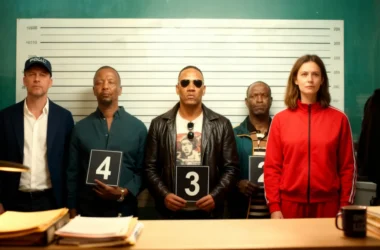
Season 2 of “Beef” follows two couples working at a country club for the ultrawealthy. Their financial insecurity drives the plot, pushing them to take desperate, extreme measures. Their misery isn’t random—it’s the direct result of grotesque inequality. Still, the club is their lifeline for survival. The setting becomes a miniature version of our wider political and economic systems, showing how entangled people can be in the very structures that exploit them.
Since its release on April 16, the Netflix show has been a fixture in the platform’s Top 10, sparking fresh conversations about late capitalism—the current era defined by rampant consumerism and deepening inequality, cemented during the globalization boom of the late 20th century. This season leans into exposing the most toxic myth at the heart of it all: the idea that the system is “natural.”
Nature vs. Construct: Capitalism’s Myth
While some viewers may view this season as a step down from the first, it remains undeniably watchable—like seeing a disaster unfold in slow motion. You may want to look away, but you can’t. Even as you judge the characters’ actions, their struggles and temptations might feel disturbingly familiar.
That’s the show’s power. “Beef” forces viewers to confront the uncomfortable possibility of seeing themselves in these characters, challenging assumptions about personal morality and social systems.
Social Darwinists argue that capitalism mimics the natural world and natural selection. By labeling a human-made system ‘natural,' it becomes harder to question—almost as if it's inevitable. The series counters this by illustrating that our systems aren’t organic forces, but choices that can be changed.
Multiple characters get their say about capitalism. The poorest see its ugly, exploitative side, while the richest claim it's just nature taking its course.
The Worker’s Outcry and the Boss’s Justification
In Episode 1, Ashley (Cailee Spaeny), an unskilled worker lacking a high school degree or health insurance, learns she needs surgery for an ovarian cyst. When she turns to her fiancé, Austin (Charles Melton)—a jock with limited insight but undeniable charm—he launches into an awkward but earnest speech:
“Late-stage capitalism—it’s all about fighting it, right? … The system is designed to make you feel despair. Like, the disparity is systemic, you know what I mean? … None of this is your fault, OK? The people in charge have made it impossible for us. Sometimes I can get down about it, but then I remember that we work at a f—ing country club, where everyone grabbed the bag before we could; of course we feel this way.”
He wraps up by calling for a global redistribution of wealth.
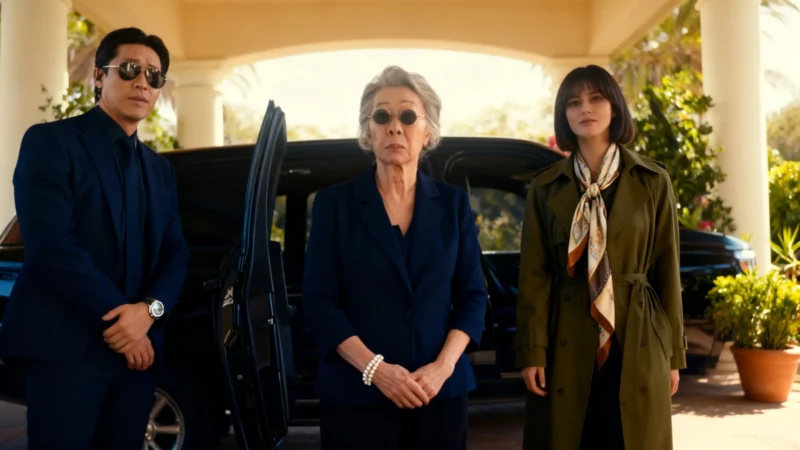
Meanwhile, billionaire Chairwoman Park (Youn Yuh-jung) — who owns the club and exerts control over nearly everyone around her, even law enforcement — serves up a very different worldview in the finale:
“My second husband always said, ‘Love is putting other person over yourself.' But as soon as you are born, you cry for mommy’s milk. You do not care about her. You only care about yourself. Maybe you put others over self a few times, but only when it is easy. The universe is not designed for this. Thank god we survived billions of years from tiny cell to bacteria to monkey because we only care about self. That is why capitalism works. It is a system of nature. System of the self. Love lives in this system. All relationships exist in this system. They’re all the same, another way to serve the self.”
But Park ignores something essential: real ecosystems tend toward balance. Extreme imbalances, like massive wealth disparities, are usually corrected by nature, not encouraged. She gets it backwards—capitalism doesn’t honor natural self-preservation; it pushes people into self-interest, even when it’s destructive.
Prisoner’s Dilemma and the Ant Analogy
In Episode 6, general manager Josh (Oscar Isaac), after a psychedelic experience, offers his own take on capitalism to Austin. He warns that relentless survival mode can leave you spiritually and emotionally bankrupt, with little room for deeper connection to yourself or others.
Later, when all four main characters are caught up in Chairwoman Park’s manipulative, violent world, they face a classic prisoner’s dilemma—they’re forced to choose between self-preservation and the collective good. Josh ultimately breaks the pattern, sacrificing himself to save his partner Lindsay (Carey Mulligan) and, indirectly, the younger couple as well. His actions prove that self-sacrifice for others is entirely possible, directly challenging Park’s bleak worldview.
Ants become a motif in this season. At first glance, their hierarchical colonies might seem to support Park’s take. But unlike human behavior under capitalism, ants will sacrifice themselves for the colony—young, sick ants even signal to others to remove them for the greater good. It’s a clear contrast to unlimited self-interest.
Are Hyperindividualism and Inequality Sustainable?
Ultimately, the show suggests that late capitalism’s obsession with hyperindividualism and wild inequality actually threatens our collective survival. It aligns the show’s plot twists with real threats like climate disaster and rising hate, pointing out that these are symptoms of a system that’s anything but natural.
Just like in life, the main characters’ relentless focus on gaining or keeping wealth leads to ethical compromises—and sometimes much worse. At its core, Beef argues that late capitalism is not “natural”—and that our most basic impulse, the drive to love and care for each other, is lost in a system that puts self-interest first.