



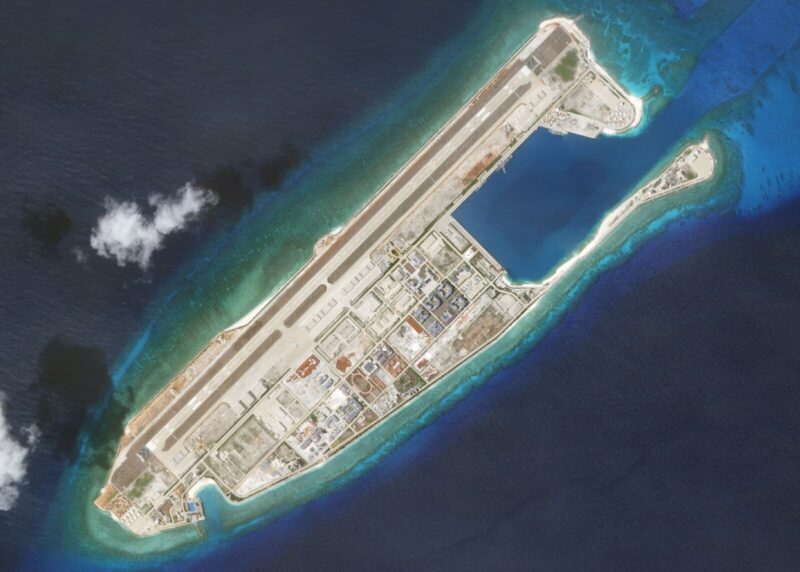
Picture millions of tons of sand, islands appearing almost overnight, and political rivals gritting their teeth: for over a decade, China’s artificial island-building in Southeast Asia has captivated, astonished, and alarmed onlookers around the globe. Is this the boldest—and most hotly contested—ocean transformation ever witnessed?
How China's artificial islands sprang from the sea
It all began in late 2013, when China kicked off an unprecedented operation: pouring endless quantities of sand into the South China Sea. The campaign focused on the Nansha and Xisha archipelagos—better known to the rest of the world as the Spratly and Paracel Islands. Between December 2013 and June 2015, China completed the first major phase of its ambitious land reclamation project. The results were staggering: according to the U.S.-China Economic and Security Review Commission, in less than 20 months, over 4.6 square miles (12 square kilometers) of brand-new, man-made land appeared—seventeen times more territory than all the other coastal countries had managed to create in the area over the past 40 years combined. And no, that's not a typo. Seventeen times!
From sandbanks to strategic showpieces
Since 2015, Beijing hasn’t paused for breath. The focus swiftly shifted from piling up sand to building up the islands: strategic infrastructure sprang up, including airstrips, hangars, military ports, and radar installations. Satellite images—and the magic of Google Earth’s archive feature—expose a constant hum of construction. Anyone curious enough can scroll between “before” and “after” shots and gawk at how quickly these features have transformed into concrete bastions.
The method itself is rather straightforward, even if the scale is mind-boggling. Chinese crews first dig up the coral seabed, then suck up sediments from shallow waters. This material is steadily layered and held in place with disks and retaining walls. Giant rollers and excavators then squash everything down for stability. At last, surfacing begins: paving, building roads, and laying out runways for both transport and combat aircraft. A true logistical flex—one not easily ignored.
Timelapse videos from satellites quite literally show islands rising from nothing: a visual that’s both mesmerizing and just a little bit unsettling.
The peaceful narrative and the stark reactions
China’s official line is one of peaceful intent. The islands, Beijing claims, support maritime rescue, fishing, scientific research, safer navigation (thanks to radars), and the collection of meteorological data. Oh, and if it came to it, national defense. Of course.
But the neighbors aren’t swallowing that. Vietnam, Taiwan, Japan, and the Philippines all see China’s expansion as an uninvited bid to impose sovereignty over disputed waters. Japan’s Ministry of Defense has been particularly blunt: these constructions, it argues, allow China to maintain a permanent and offensive presence across the entire southern part of the country.
Recent reports from the Center for Strategic and International Studies (CSIS) in 2025 back up these suspicions, stressing that Beijing’s near-permanent logistics capability in the region entirely depends on these projects begun a decade ago. Western analysts have identified fighter-jet-ready runways, deep ports for warships, underground facilities, and even missile launch ramps.
And it’s not just China in the “island arms race” anymore. Since 2013, Vietnam has also begun pouring sand into the strait, turning Southeast Asia into a real geostrategic pressure cooker.
Ecological toll: Coral casualties and murky waters
Yet behind the geopolitical calculations lies a harsh reality: these islands are ecological disasters in the making. Somewhere between 4.6 and 7 square miles (12–18 km²) of coral reefs—some of the best preserved in the region—have been destroyed. Worse, the clouds of sediment stirred up during land reclamation affect areas well beyond the immediate work zones. They disrupt ocean currents and the cycles by which sediment is deposited, putting the surrounding ecosystem in peril.
Even Chinese scientific studies admit:
Marine life is wiped out in the affected areas, and the impacts extend across the entire ecosystem.
The Chinese Oceanic Administration responds with a partial denial, claiming that all projects have been strictly evaluated and do not harm the coral. They instead point fingers at global suspects: ocean acidification and climate change.
One thing is clear: as new islands rise from the waves, so do anxieties, rivalries, and plenty of questions about the future of the South China Sea—a region now as crowded with controversy as it is with freshly made land.