




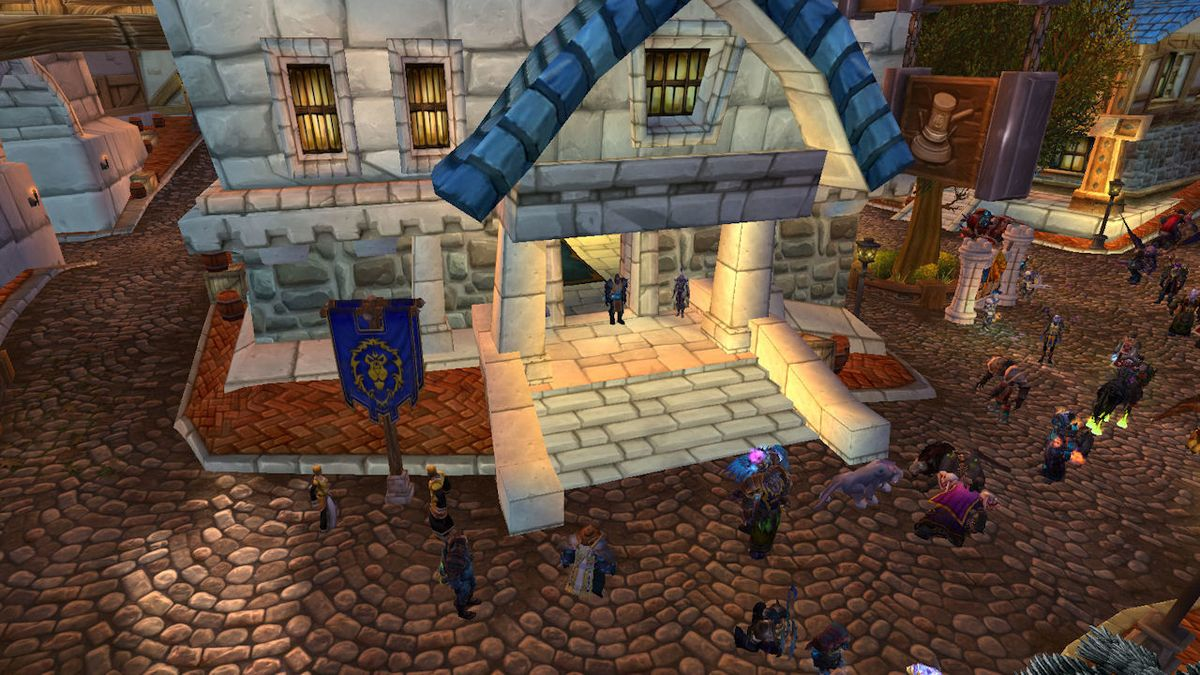
The Auction House (AH) has always been more than a convenience in World of Warcraft, we all know that it is the backbone of Azeroth’s economy. For some players, AH is where gold is made effortlessly; for others who are not familiar with it, it’s a constant headache. Maybe you’ve listed items only to see them undercut within minutes. Maybe you’ve spent hours farming mats, sold them too cheap, and regretted it later. Or maybe you’ve watched prices swing wildly and wondered how anyone keeps track of it all.
If that sounds familiar, you’re not alone. The Auction House can be intimidating. But here’s the good news: with the right knowledge, you don’t need millions in capital or hours of cancel-scanning to succeed. This blog is written to give you the strategies, context, and practical tips to turn the AH into your gold-making source.
Why should you care about the Auction House in 2025? Because it’s one of the few systems in WoW that rewards knowledge and timing over brute force farming. A new player who understands supply and demand can out-earn a veteran farmer who spends twice the time grinding. And once you learn how to leverage it, the Auction House can fund everything from epic mounts to raid consumables, even your subscription, if you’re buying with WoW Gold.
Getting Started: Notes for New Players
If you’re just starting your journey, don’t expect to jump straight into market domination. Like any real economy, you need capital to make capital. And in WoW, that first pile of gold usually comes from farming.
Farming may not be glamorous, but it teaches important lessons. Spend a few hours gathering herbs or ores and you’ll start noticing patterns: why herbs sell higher on raid reset days, why skins are scarce at odd hours, or why mats flood the market during weekends. Farming introduces you to the rhythm of supply and demand, and more importantly, it drives home a crucial truth: nothing is free. Even mats you gather with your own time carry value, because time itself is money.
There are different approaches depending on what you enjoy:
- Current content farms like 2×4 hyperspawn groups can generate mountains of mats quickly.
- Raid trash farms for Bind-on-Equip epics give you a shot at rare, high-value drops.
- Old expansions are a goldmine for transmog pieces, rare pets, and even raw gold from raid clears.
Farming isn’t meant to be your long-term gold strategy, but it’s the foundation you’ll build on. Once you’ve saved a few thousand gold, you’ll be ready to step into the Auction House as a trader.
The Auction House Economy Explained
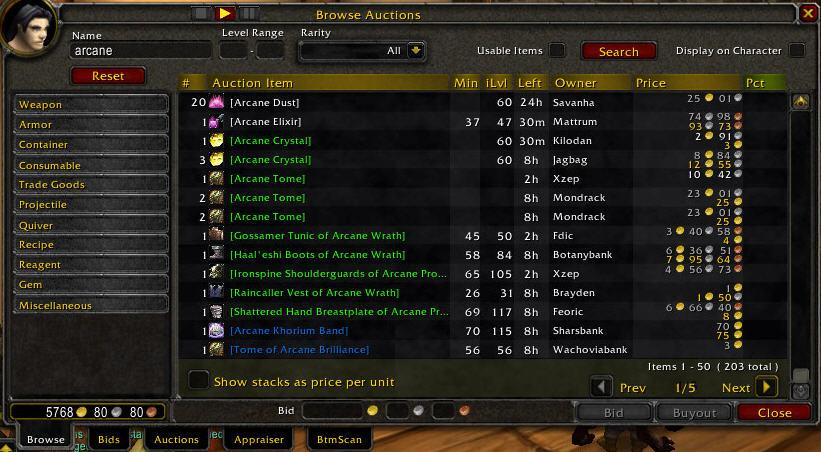
WoWInterface
The AH is entirely player-driven, which means it behaves just like a real-world marketplace. Supply and demand are constantly shifting. For example:
- Raid consumables like flasks and food spike in price early in the week when raiders stock up.
- Expansion launches cause massive demand for leveling gear and crafting mats.
- Holiday events push the prices of themed items, toys, and pets through the roof.
Patch cycles also shake up the market. A single buff to alchemy can make herbs skyrocket overnight, while a nerf to popular gear can crash its resale value. Smart traders anticipate these changes by reading patch notes and following community discussions. If you know alchemy is getting a buff, stockpile herbs before everyone else catches on. If a piece of gear is getting nerfed, unload it before the value plummets.
Server size and structure matter, too. On high-population realms, competition drives prices down but volume is high. On smaller realms, prices are often higher due to scarcity, but items move slower. Cross-realm or connected AH systems increase supply, which makes markets more competitive but also more stable. Understanding your realm’s dynamics is key to deciding where you can carve out a niche.
Core Strategies for Profitable Trading
Once you have capital and a feel for the market, the Auction House becomes a playground for gold-making.
Flipping (Buy Low, Sell High). The oldest strategy in the book, but still one of the most effective. Use addons like TradeSkillMaster (TSM) or Auctioneer to spot undervalued items, buy them up, and relist at a fair market price. Sniping is an advanced version of this — being ready to grab items the instant they’re posted far below value. It requires vigilance, but the payoff can be massive.
Market Control. If you have deep pockets, you can buy out an entire market, like a rare herb or crafting mat, and relist at your price. This works best in markets with limited supply, but it’s not without risk. Competitors may undercut, or farmers may flood the market once they see higher prices.
Timing Sales. Knowing when to list items is as important as knowing what to sell. Raid mats sell best on reset days, while leveling items fly off the shelves during expansion launches. Posting on weekends or evenings often gives you more visibility simply because more players are online.
Bulk vs. Individual Selling. Sometimes it’s more profitable to sell mats in bulk stacks, appealing to crafters who want convenience. Other times, selling individually earns more because casual buyers only need small amounts. Experiment with both approaches to see what works on your realm.
Direct Deals. Don’t underestimate trade chat. Negotiating directly with buyers or sellers can help you move items faster and sometimes at better rates than the AH itself. Serious traders keep one eye on the trade channel for opportunities.
Tips for Making Good Gold

Blizzard Watch
The best way to make consistent gold is to combine methods and stay flexible. Some players focus entirely on farming to build capital, while others invest in long-term flips or craft high-demand gear and consumables. Persistence is just as important as strategy, you should spend time each week scanning the Auction House with TSM or checking price trends on the Undermine Journal. Don’t be afraid to experiment with new markets, even if they seem niche. Many traders have been surprised at how profitable “odd” items like outdated cooking mats or quirky transmog pieces can be. And above all, remember that there are dozens of ways to hit gold cap. Your job is to find the method that suits your server, your time, and your playstyle.
The Role of Addons and Tools
Without addons, competing on the AH can be quite challenging. TradeSkillMaster (TSM) is the gold standard, letting you automate posting, track historical prices, and manage inventory with precision. Auctioneer provides solid pricing data and helps you spot deals. And for retail players, Oribos Exchange shows server-wide commodity trends.
Other tools like the Undermine Journal can give you a bird’s-eye view of markets, helping you decide where to invest your time and gold. Savvy traders dedicate a little time each week to checking these resources, tracking what’s hot, and deciding whether to hold, sell, or buy.
Pitfalls and Lessons Learned
Even the best traders make mistakes. New players often undercut too aggressively, losing potential profit for the sake of a quick sale. Over-listing floods the market and invites undercuts. Some forget to account for deposit fees, which can eat into profits when relisting expensive items too often.
The most costly mistake, though, is panic selling. If prices dip temporarily, don’t dump your stock in a rush. Many markets stabilize after a few days. Learning when to hold and when to sell is part of the game.
Losses are inevitable, everyone has moments where they buy into the wrong market or hold an item too long. The key is to accept them, learn, and move on. Treat every mistake as tuition in the school of Azeroth’s economy.
Finding Your Playstyle
Not everyone has the time or patience to cancel-scan and undercut around the clock. And that’s fine. Some players enjoy farming, some love flipping, others prefer crafting. You can even diversify with an “alt army” by parking multiple characters across professions or rare spawn timers to give yourself access to more markets.
The important thing is to find a method you enjoy. Whatever your goal, the Auction House offers a way to reach it if you put in the time to learn.

