




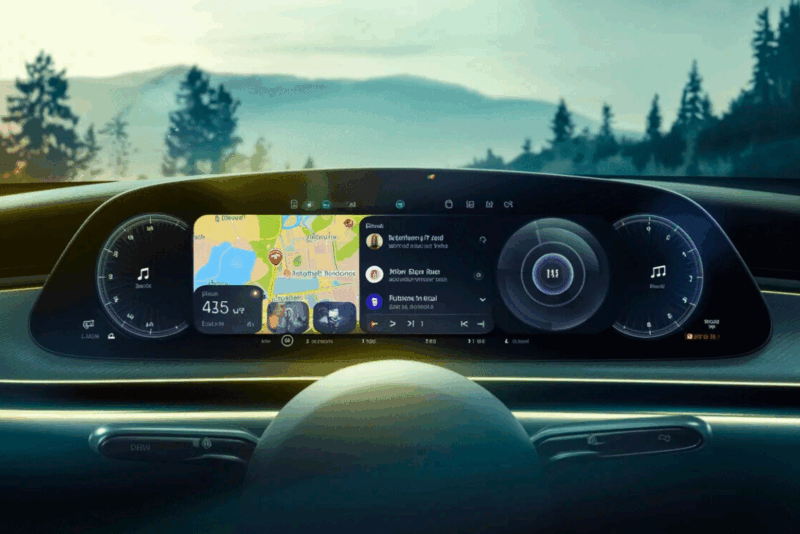
For years, Android Auto has been praised for bringing the best of your smartphone into your car. But one detail has consistently frustrated drivers: the absence of a light theme. Until now, users had to make do with a dark interface, which, while stylish at night, often made it difficult to read in bright sunlight. With version 14.7, Android Auto finally introduces a light mode — a small change that could have a significant impact on everyday driving.
A brighter interface for better visibility
The new light theme is designed to improve screen readability, especially during daytime driving. Dark menus may look sleek, but under direct sunlight, they can become harder to read, causing unnecessary distraction. By offering a brighter alternative, Android Auto is making it easier for drivers to navigate menus and apps at a glance.
Research has shown that screen visibility directly affects road safety. If drivers spend extra time squinting at an interface, their attention is pulled away from the road. With a clearer display, Android Auto helps minimise distractions and could make in-car technology more accessible, particularly for people with visual impairments.
Responding to user expectations
This update isn’t just about style — it’s also a sign that Google is listening to its users. Drivers have long requested a more customisable interface, one that adapts to different conditions rather than sticking rigidly to a dark mode. The light theme answers that call, positioning Android Auto as a system that evolves with real-world feedback.
It also plays into a broader industry trend: consumers now expect personalisation in their in-car tech. From dashboard layouts to infotainment settings, flexibility is becoming a key factor when choosing between platforms like Android Auto and Apple CarPlay.
Competition and challenges ahead
Of course, one new feature won’t silence the competition. Apple CarPlay remains a strong rival, and both systems are racing to expand beyond cosmetic updates. To stay ahead, Android Auto will need to keep adding practical features such as smarter navigation tools, deeper app integration, and enhanced connectivity options.
Another challenge is data security. As infotainment systems become more advanced, they also handle more sensitive information — from contacts and messages to location history. Protecting this data is essential if Android Auto wants to maintain user trust.
Looking to the future
The addition of a light theme may seem minor, but it points toward bigger possibilities. As artificial intelligence becomes more embedded in everyday tech, Android Auto could evolve into a highly personalised driving assistant, adapting to habits and preferences automatically.
And with autonomous driving technology slowly advancing, the role of in-car interfaces will only grow. When cars take over more of the driving, infotainment systems will become central to how we spend our time on the road. Android Auto’s ability to adapt now could shape how it thrives in that future.
In short, the new light theme is more than just a visual refresh — it’s a move towards a safer, more user-friendly, and more adaptable Android Auto. A brighter screen today could well be the first step towards a smarter driving experience tomorrow.


Wish we could control volume from our cell phones. Would be a great help, especially from the back seat when we have a child with us…