
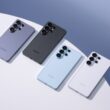
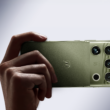



Google’s Pixel 9a and Samsung’s Galaxy S24 FE target the same kind of buyer. That is, someone who wants a flagship-level experience without paying flagship-level prices. The Pixel taps deep into Google’s software strengths and intelligent features, while the S24 FE brings premium hardware and Samsung’s ecosystem perks down to a more accessible level. There's a $51 difference between them, and the big question is whether it actually buys or strips down more. Let's find out.
Specs overview: Pixel 9a Vs Galaxy S24 FE
| Images: |  |  |
|---|---|---|
| Components | Google Pixel 9a | Samsung Galaxy S24 FE |
| Display | 6.3″ P-OLED, 2424 x 1080, 120Hz, 2700 nits peak | 6.7″ Dynamic AMOLED 2X, 2340 x 1080, 120Hz, 1900 nits peak |
| Processor | Google Tensor G4 | Exynos 2400e |
| RAM & Storage | 8GB RAM; 128GB, 256GB (UFS 3.1) | 8GB RAM; 128GB, 256GB, 512GB (UFS 4.0) |
| Main Camera | 48MP wide + 13MP ultrawide | 50MP wide + 8MP telephoto (3x zoom) + 12MP ultrawide |
| Front Camera | 13MP, 4K video, 10-bit HDR | 10MP, 4K video |
| Battery | 5100mAh, 23W wired, 7.5W wireless | 4700mAh, 25W wired, 15W wireless, reverse wireless |
| Software | Android 15, 7 years updates | Android 14, One UI 6.1, 7 years updates |
| Build & Extras | Gorilla Glass 3 front, IP68, aluminum frame, Circle to Search | Gorilla Glass Victus+, IP68, DeX mode, stereo speakers |
| Price | From $499 | From $550 |
Design
Google and Samsung may be rivals in the Android world, but if there’s one thing they quietly agree on, it’s that their cameras are among the most reliable in the business. The newly announced Pixel 9a introduced refinements that made a big impact on its appearance. Google moved away from the bold, bulging camera bar that defined earlier A-series models and opted for a flatter rear design instead.

The new look is a blended pill-shaped camera island tucked neatly in the corner. The matte back is made of plastic and still carries the classic “G” logo centered. At the front is the Gorilla Glass 3 display with a punch-hole selfie camera surrounded by uniform black bezels.

On the other hand, the Galaxy S24 FE has three large camera rings protruding individually from the back panel. The matte finish on the back comes from the Gorilla Victus+ glass. The same material is what Samsung used for the display, which also carries a punch-hole camera. Both phones have an aluminum frame.
When you hold the Galaxy S24 FE, it immediately feels bigger in every direction. It’s taller, wider, and heavier than the Pixel 9a. The phone is 162mm tall and 77.3mm wide, so it fills more of your hand and stretches further across your grip. The Pixel 9a is 154.7mm tall and 73.3mm wide and much easier to handle one-handed. You can reach across the screen with your thumb without shifting your grip. However, it is still thicker at 8.9mm, while the Galaxy is slimmer at 8.0mm.
Also, the Galaxy S24 FE weighs 213 grams and is heavier than most phones. Anything over 190g is usually leaning into the hefty side. Pixel 9a is right below that number at 186 grams. Both phones are IP68 rated and should last fine through spills, splashes, and even full submersion at a depth of up to 1.5 meters for about 30 minutes.
Related: Galaxy S24 FE and Pixel 9 Comparison
Display
The Pixel 9a is unapologetically plastic by design. The back is plastic and even the P-OLED display reflects the same plastic-first approach. While technically still a high-quality OLED panel, the “P” in its 6.3-inch P-OLED display stands for “Plastic” substrate, which means that the layer beneath the actual display isn’t glass but flexible plastic.

That doesn’t make the screen itself feel soft or bendy, since it’s topped with Gorilla Glass. But it does contribute to a thinner and lighter build overall. The resolution is 1080 x 2424 pixels with a tall 20:9 aspect ratio and a sharp ~422 pixels per inch (ppi). It also has HDR support and a 120Hz refresh rate with 1800 nits in high brightness mode and a peak of 2700 nits.
Meanwhile, Samsung is sparing no loss in quality with the Galaxy S24 FE display. Even though it’s part of the brand’s more affordable “Fan Edition” lineup, the screen itself is anything but budget. It's at 6.7 inches and is a Dynamic AMOLED 2X panel. It's the same display technology the brand uses in its premium S-series flagships, which has deep blacks and great contrast.

It supports HDR10+ and a 120Hz refresh rate. It also has 1900 nits brightness, though it has a slightly lower pixel density (~385 ppi) than the Pixel 9a. The resolution is 1080 x 2340 with a 19.5:9 aspect ratio. Samsung also wrapped it in Corning Gorilla Glass Victus+.
Performance
The Pixel 9a runs on the Google Tensor G4, the exact same chip that powers the Pixel 9 flagship models. The chip is built on a four-nanometer process and designed as an in-house solution by Google itself to prioritize AI-driven features. The CPU is made up of eight cores, where one high-performance Cortex-X4 core is clocked at 3.1GHz, followed by three Cortex-A720 performance cores, and four efficient Cortex-A520 cores. In addition, it uses the Mali-G715 MP7 GPU.
Samsung also took the in-house route with the Galaxy S24 FE and equipped it with the more powerful Exynos 2400e. It's a variant of their Exynos 2400 chip used in the flagship S24 and S24+ models. It's built on Samsung’s four-nanometer Extreme Ultraviolet Lithography process with a 10-core CPU layout like the standard 2400.

There is one ultra-powerful Cortex-X4 core running at 3.1GHz, two Cortex-A720 performance cores, three more A720s at a slightly lower frequency, and four Cortex-A520 efficiency cores. The significant difference is in tuning, where the 2400e is slightly underclocked and thermally optimized compared to the standard 2400. It may not push as hard under sustained workloads, but it runs cooler and draws less power. It also comes with the Xclipse 940 GPU, based on AMD RDNA 3 architecture.
Related: Galaxy S24 FE and Pixel 9 Comparison
Memory and battery
The Pixel 9a doesn’t include a microSD card slot, but it comes with two solid internal storage options of 128GB or 256GB, both paired with 8GB of RAM. That’s plenty of space and memory for most users, along with the UFS 3.1 storage that provides fast read and write speeds.
The phone is also powered by a large 5100mAh battery, and should get some optimisation from Google's software and the efficiency of the Tensor G4 chip. It supports 23W wired charging with USB Power Delivery 3.0, and 7.5W wireless charging.
Glorious as its battery specs may seem, the Pixel 9a adds a quiet background feature that was originally intended to preserve battery health, but ended up revolting a few users once they found out how it works. Through software updates, Google can now gradually reduce the phone’s maximum charging capacity as the battery ages.
The idea makes sense on paper, where Google wants to limit how much stress your battery takes on over time, and you get longer-lasting hardware. But it caught many people off guard, especially since it wasn’t advertised and there's no way to turn it off. Maybe they will introduce a control for it in future updates, but for now, it's something that you should consider deeply before buying the phone.
But enough about the Pixel. The Galaxy S24 FE offers three internal storage options: 128GB, 256GB, and 512GB, all of which come with 8GB of RAM. There's also no microSD card slot. The battery is a 4700mAh cell. It's smaller than what’s in the Pixel 9a, but still sufficient. It supports 25W wired charging, and Samsung claims you’ll get 50% in just 30 minutes with the correct charger.
You also get 15W wireless charging, which is faster than the Pixel 9a’s, and reverse wireless charging support. You'll be able to share your battery with your earbuds, smartwatch, and other smaller devices.
Cameras
The Pixel 9a comes with a dual rear camera system that leans heavily on Google’s software. The primary sensor is a 48MP wide lens with a bright f/1.7 aperture, optical image stabilization (OIS), and dual-pixel phase detection autofocus that locks quickly onto subjects. Google’s Tensor G4 chip and AI processing also assist it in clarity and contrast.

Following it is a 13MP ultrawide lens with a 120˚ field of view. You can shoot 4K resolution videos at 30 or 60fps, and up to 240fps in 1080p slow-mo, with gyro-based electronic image stabilization and OIS. The selfie cam is 13MP and ultrawide too, with a 20mm lens. It supports HDR and panorama selfies, and can also record 4K video at 30fps.
On the other hand, the Galaxy S24 FE has one of the most well-rounded camera setups you’ll find in a phone that’s not technically a flagship. The main camera is a 50MP wide sensor stabilized with OIS, with an 8MP telephoto lens accompanying it to provide 3x optical zoom.

There’s also a 12MP ultrawide with a wide 123° field of view. More impressively, it can shoot 8K resolution videos at 30fps, and 4K at 60fps. On the front is a 10MP selfie camera with 4K recording at both 30fps and 60fps, as well as gyro-based EIS.
Related: Galaxy S23 FE and S24 FE Comparison
Software and features
The S24 FE ships with Android 14, layered with Samsung's custom One UI 6.1 software. One UI is designed to give you more features than the stock Android version, hence it's heavier. It ties in perfectly with Galaxy Buds, SmartThings, Samsung DeX, and even your Windows PC. More recently, Samsung has introduced its own Galaxy AI. Circle to Search, an improved Bixby, and many of the smart tools teased on the original S24 series are present on the FE phone.
Samsung has promised seven years of OS and security updates, so that’s Android 14 through Android 21. It puts the FE phone on equal footing with Google in terms of long-term support, and it’s one of the most substantial commitments in the industry today. Plus, Samsung's recent track record shows that they will deliver on it.

Meanwhile, the Pixel 9a ships with Android 15 and runs as Google intended with no extra skin and bloatware. It’s faster to update, and unlike previous “a” series devices, the 9a is powered by the Tensor G4 chip that's built by Google specifically for their AI-first features.
Gemini and Google Assistant are tightly woven into Android 15 and will constantly evolve on Pixel first. Google also promises seven years of Android and security updates, and unlike some other OEMs, Pixels always get day-one Android releases.
Aside from these differences, the Pixel 9a is one version ahead of the Galaxy S24 FE. The Pixel phone will get updates until Android 21, if that's what Google eventually decides to call it. The Galaxy S24 FE will stop at Android 20.
The verdict
You should get the Galaxy S24 FE if you can afford to stretch your budget. It’s the complete phone because of its better build, stronger display, and more capable cameras. It feels like a proper flagship with fewer compromises than the Pixel 9a, even though it may be a step ahead in software version and gets cleaner updates. Google’s edge in AI and updates doesn’t make up for the fact that the Pixel 9a just isn’t as well-rounded as Samsung’s offering. But if $499 is your absolute ceiling, then the Pixel 9a is the best phone you can buy at that price.

