



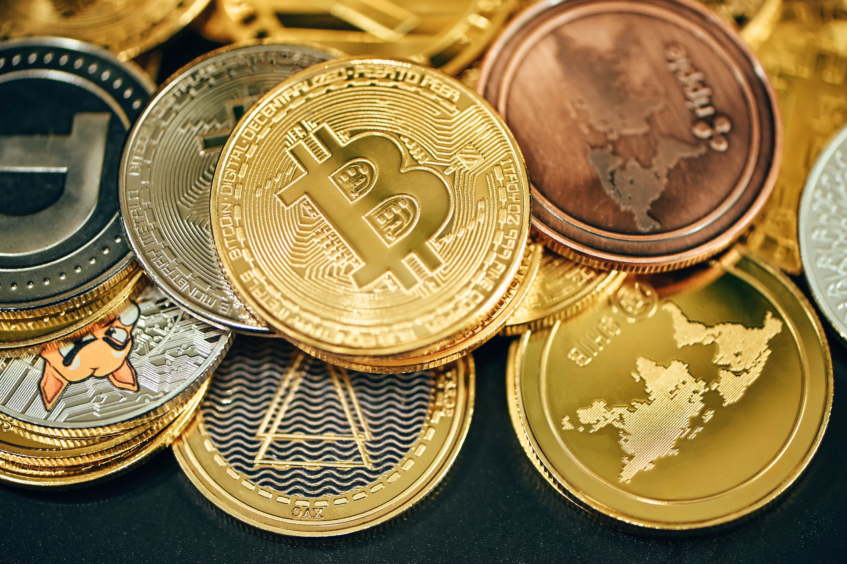
Bitcoin adoption is growing every day. And this rate was accelerated by the COVID-19 pandemic and other worldwide events. Any user who wants to purchase Bitcoin is surely waiting for the best moment to make the most out of their investment. To find the right time to buy crypto, monitoring news is important. Sociopolitical, financial, and economic factors, even the state of the energy markets, play a big role in the development and adoption of cryptoassets.
The Evolution of Bitcoin Payments
Bitcoin was created amid the global financial crisis of 2008 onwards. In its early days, the coin was infamously used for illegal transactions, in the Silk Road black market. The market was shut down in 2013, and the BTC was seized by the FBI. But, even before that, there’s history of using Bitcoin as a payment method. In May 2010, Laszlo Hanyecz paid for two pizzas using Bitcoin, around a year after its launch. The growing acceptance of Bitcoin has also spurred numerous crypto business ideas, ranging from payment solutions to NFT marketplaces. Over time, Bitcoin adoption as a payment method has only increased and is currently accepted by thousands of merchants worldwide for online and offline purchases.
5 Global Events Are Reshaping Bitcoin Buying
The growing adoption rates occur because Bitcoin offers a reliable, secure, and inexpensive way of making payments. Its deflationary model also makes it attractive as a hedge against inflation and financial uncertainty. That’s why, beyond its fundamental features, a series of real-life events have contributed (and continue to do so) to increased adoption rates of Bitcoin and cryptos overall.
1. U.S.-China Trade War
The US and China are two major economies worldwide. They’re responsible for the development of various industries, as well as manufacturing and export. And as such, there’s always been a degree of competition, but also interdependence. Since 2018, the two states have been immersed in an ongoing trade war, when then-President Donald Trump imposed a set of tariffs against China’s imports. This conflict continued during the presidency of Joe Biden, and it’s not likely to end during the incoming second term of Trump. The president-elect already announced higher tariffs as soon as his period starts. These measures pursue a lower dependence on imports while favoring local industries. However, it causes economic isolation, while worldwide trends are pushing toward cooperation and globalization. Bitcoin, in contrast, represents this openness and decentralization.
2. Global Energy Crisis
Energy markets are always dependent on the political context. Instability in the Middle East, for example, leads to fluctuations in the price of oil. The COVID-19 pandemic also affected oil and gas prices, since demand lowered due to lockdowns. As different countries reactivated their industries again, demand rose, but decreased supply took a while to catch up. The pandemic also had a side effect of increasing inflation in most economies around the world, and both factors coupled. In this context, Europe and the US imposed sanctions against Russia, one of the world’s largest producers of oil and gas.
Bitcoin is perhaps the major Proof-of-Work (PoW) blockchain. It requires the use of resource-intensive devices to generate new coins. If energy prices go up, miners can decide to shut down their operations, as profitability diminishes. This, in turn, can alter Bitcoin supply and market availability.
3. Russia-Ukraine War
Russia has been in conflict with Ukraine since early 2014. However, the conflict escalated in 2022, when Russia attempted to invade Ukraine, starting an ongoing armed conflict in these countries. The US and Europe imposed the mentioned sanctions as a response and European neighboring countries have faced an increase in immigration rates. As was said earlier, this conflict escalates in the context of pandemic-caused inflation and lower energy production. However, the very presence of the conflict generates financial instability and a lack of trust in government-issued coins. That leads to a larger adoption of decentralized alternatives like Bitcoin, especially considering its pseudonymous nature.
4. G20 Decisions
The G20 is a group of major economies that aim to find ways for cooperation and joint efforts to solve world problems. During its latest forums, cryptocurrencies have been a topic of discussion. The consensus is that governments need to establish and enforce a standard regulatory framework to allow blockchain solutions to develop in a secure environment. However, standards are still not implemented by most governments. Another issue arises from the decentralized nature of cryptocurrencies, as operations originating in other jurisdictions cannot be regulated. Despite the success of these attempts, something worthy of note from these meetings is the general acceptance of blockchain technology. Discussions no longer revolve around prohibition, but rather controlled integration.
5. The Collapse of Major Financial Institutions
The context is already clear. There’s a generalized inflation issue in most countries. In this sense, it’s no surprise that a financial crisis takes place in the US. In 2023, a number of banks declared bankruptcy. Silvergate Bank, Silicon Valley Bank, and First Republic Bank. The cause of this can be traced back to the interest rate hike announced by the Federal Reserve, as a way to undermine inflation. This, in turn, brings back one of the core values of Bitcoin: BTC holders actually own their money.
Economic Events Influencing Bitcoin Purchases Today
All these factors lead to one conclusion: economic instability drives Bitcoin adoption. As adoption grows, regulators have no other choice but to accept it and try to integrate it into its financial systems. The issues we highlight here are not coming to an end soon. And it’s evident that, during 2024, crypto adoption didn’t slow down. Against inflation, financial insecurity, and economic turbulence, Bitcoin is a hedge and a store of value for buyers worldwide.
Why Now Is the Best Time to Buy Bitcoin with a Credit Card?
Cards are one of the most used financial instruments. They’re available and accepted everywhere, fast, and easy to use. In the current landscape, buying Bitcoin with a credit card presents a great opportunity, because the factors driving its adoption are still going strong.

