




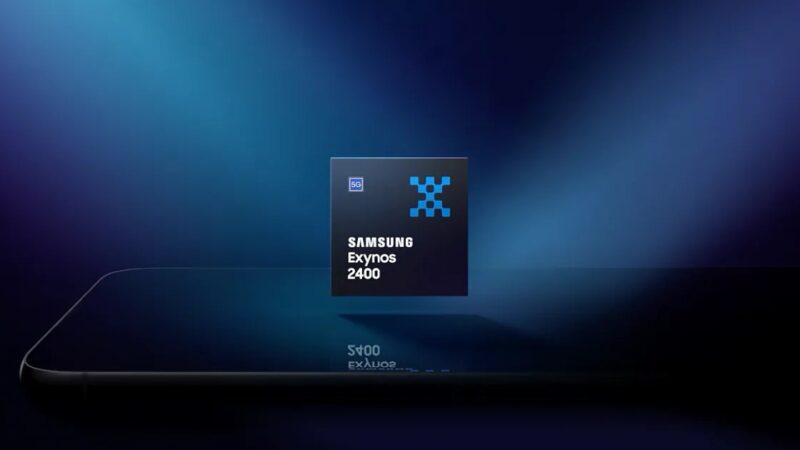
We all know how Qualcomm’s Snapdragon processors were the default standard for Samsung flagships in the United States for more than a decade, with Exynos variants usually only available for Europe and Asia. But Samsung has already been taking active steps to use more Exynos processors for its smartphones, a decision we knew was already in the works for more than a year at this point.
Overspending Bonanza

The latest report stated that Samsung is positioning itself to use more Exynos chipsets on higher-end products. To put things into context, the company’s 2023 business report indicated that Samsung's Device Experience (DX) division (responsible for Galaxy phones and other consumer tech) spent a whopping $8.87 billion on mobile processors last year. This staggering sum represents a 3.1% increase from the previous year, following significant jumps in spending from $7.63 billion in 2021 to $11.38 billion in 2022.
The culprit? A sharp 30% spike in the prices of mobile CPUs compared to 2022, as Samsung openly acknowledged in its disclosure in the same report.
Which then translated to Samsung's heavy reliance on Snapdragon and MediaTek CPUs for its U.S. Galaxy smartphones. While the company did use its in-house Exynos processors for flagships, the variants using them were typically shipped outside the U.S. Even then, models such as the Galaxy S22 series suffered from general usage issues, leading Samsung to exclusively adopt Snapdragon SoCs for the Galaxy S23 lineup in 2023, further exacerbating procurement costs.
Exynos Comeback

Looking at the financial statistics alone, Samsung already had a reason to literally hold onto its chips. In fact, as early as mid-2023, rumors already brewed that Samsung was exploring a return to Exynos chipsets for flagships in some regions, including Europe.
The murmurs then grew louder, when Samsung confirmed during its Q1 earnings call that Exynos was “seeking to re-enter (the domain of) flagship smartphones.” Specifically, it was Hyeokman Kwon, Vice President of Samsung's DS Division, who made this statement, fueling speculation that the rumored Exynos 2400 would make its debut in the next Galaxy flagship.
Lo and behold, we now know after the release of the Galaxy S24 series last January that the SoC would indeed be used again after a brief flagship hiatus. Most of the expected issues seem to be addressed now as well, although it isn’t exactly quite on par with the Snapdragon 8 Gen 3 in terms of raw synthetic benchmark performance.
All Good So Far

With the increased adoption of Exynos SoCs to save costs, the mid-to-low-end market also becomes fair game, where MediaTek SoCs previously reigned supreme. The Galaxy A25 (released last December 2023) is already packing the Exynos 1280.
Of course, this major move isn't without its challenges. But, the Exynos 2400 has been promising thus far, so there’s that.


