

It's likely that you haven't been in a situation where you urgently require rescue, but you're out of the range of a cellular network. Most people haven't — until they are. We've seen it happen in movies time and time again, and it'd be helpful if there were a feature to get you help as long as your smartphone is on.
This feature exists and uses satellites to connect you instead of cell towers, and the iPhone 14 and iPhone 15 series are the only devices with such a feature deployed and active, as far as I know. Fortunately, Google Pixel smartphones look set to join those life-saving ranks.
Pixels Will Get An SOS Feature To Help You Wherever You Are

If you're someone who very frequently goes road-tripping, backpacking, or traveling the world, you've probably dealt with a few instances where you had no cellular connectivity. However, you always got back safe, which is the good part. But what if you found yourself stranded and in need of help, but you couldn't get in touch with emergency services because you were out of range?
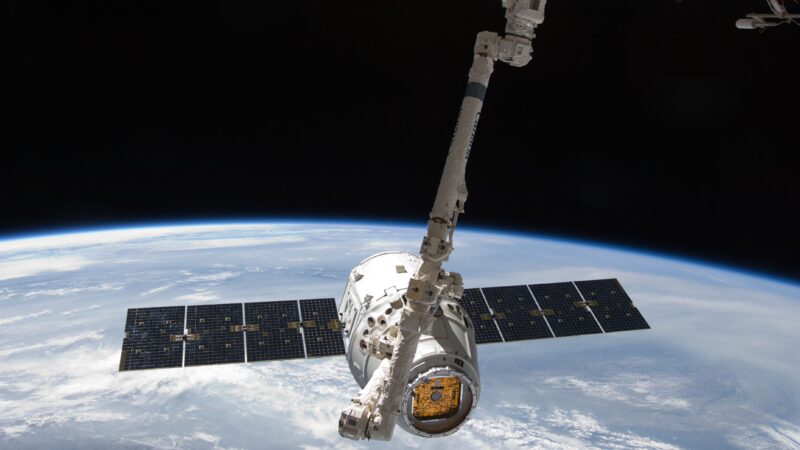
That's where the upcoming Satellite SOS feature on Google Pixel phones comes in. This feature will let you reach emergency services by connecting directly through satellites orbiting around our planet, instead of needing to be within proximity of a cell tower.

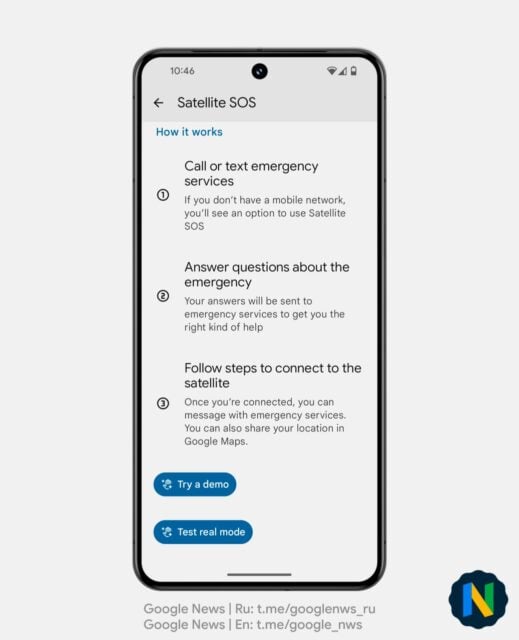
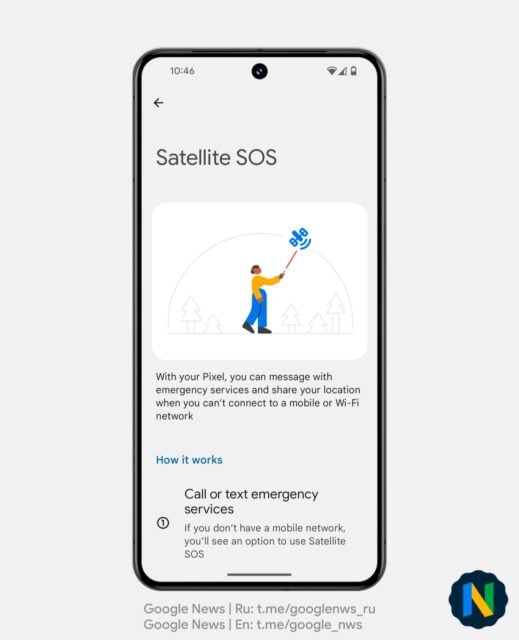
We know that this feature is coming thanks to the latest update to the Adaptive Connectivity Services app on Android, spotted by the Google News English channel on Telegram. When you go to Settings, then Safety & Emergency, you'll see Satellite SOS right above the Crash Detection feature.
The page will tell you more about the feature, choose which information of yours will be shared with rescue services the moment you activate the feature, and a link to insurance for search and rescue expenses you may incur if you happen to use the SOS. However, it can't be enabled just yet.
The Last Two Generations Of iPhones Have Saved Lives With This Feature

The Satellite SOS feature is a new technology for smartphones, but that doesn't mean Pixel is the first one to do it. It isn't much of a surprise that the only smartphone to currently have a feature like this deployed and functional is Apple, and they call it Emergency SOS. You can find this on the devices in the iPhone 14 and 15 lineups.
Having been out for more than two years means that we can take a look at the functionality that this SOS option provides in real-world scenarios because it has truly saved lives before.
Have you heard about the story where a man in Alaska was stranded in the snow out of cellular range, but was able to get rescued because of that feature? Or the numerous people whom it was able to help during the Hawaii wildfires? It's easy to see it isn't a gimmick and it can be a guardian angel in the worst conditions.
Will Satellite SOS Be Coming To Other Android Phones Soon?

There's no indication that this feature will be coming to other Android phones anytime soon, as I assume they need specialized hardware to make things work, so it is up to manufacturers to include the hardware. I doubt Google will hesitate to share the software if smartphone makers are interested.
There was talk of a Snapdragon Satellite feature that was supposed to eventually be made standard in Snapdragon chips, but unfortunately, the development of that tech was eventually terminated. That's a good thing though, because Qualcomm was developing a proprietary system but will now use the industry standard technology, as MediaTek is also doing.