


When Oranges Met Science: An Unlikely Deal
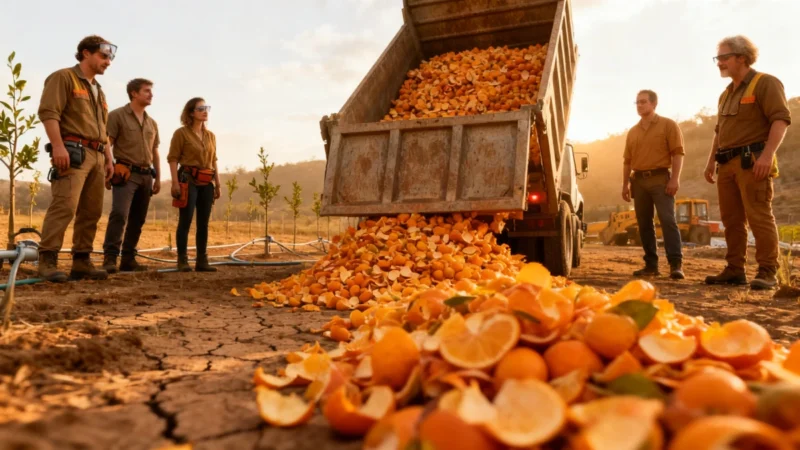
The story begins in 1997, at Costa Rica’s Guanacaste Conservation Area. That year, ecologists Daniel Janzen and Winnie Hallwachs negotiated an unusual agreement with Del Oro, a local fruit juice company. The plan: Del Oro would donate some of its land to the national park. In return, the company could deposit peels and pulp from its juiced oranges on several acres of what was then a degraded, barren pasture—ground so exhausted it seemed unable to recover on its own.
Over the course of a single year, about 1,000 trucks dropped roughly 13,200 US tons (12,000 metric tons) of citrus waste onto around 7.4 acres (three hectares) of almost sterile soil.
From Legal Challenge to Abandonment
Things nearly ended before they began. TicoFruit, a rival juice company, objected to the dumping, claiming it was polluting the nearby national park. The dispute escalated to Costa Rica’s Supreme Court, which ruled in TicoFruit’s favor. The project was halted, and the site abandoned. For the next fifteen years, the patch stood as a prime example of what not to do with industrial waste.
A Forest Emerges Where None Was Expected
Then, in 2013, researcher Timothy Treuer visited to see what remained of the so-called “desert.” He was stunned by what he found. The area had changed so much that the yellow sign marking the site was gone—overwhelmed by a dense, lush forest. Where there had once been only rocks, dry grass, and barren ground, a thick jungle now stood, so tangle-filled that reaching the old marker would have required hacking through vines and brush with a machete.
Why Did This Happen? Scientists Search for Answers
Treuer’s discovery prompted further scientific analysis. The changes were real—and dramatic. Tests revealed the soil was now rich in nutrients. The tree canopy had filled in, and biodiversity had increased markedly. Tree biomass had grown by about 176 percent compared to a nearby plot that hadn’t received any peels. Within just six months in the late 1990s, the orange waste had broken down into a dark, fertile humus, unlocking the ground’s ecological potential.
Researchers admit they are still figuring out precisely how this occurred so quickly. They believe the sudden input of orange peel residue enriched the depleted soil and suppressed invasive grasses that hindered tree seedlings. This unexpected combination sped up natural recovery—what would normally take decades happened in a fraction of the time.
Today, the case is cited internationally as a striking example of how carefully managed agricultural waste can restore devastated environments. The project provided a valuable use for tens of thousands of tons of organic byproducts, created a new carbon sink, increased biodiversity, and jumpstarted a near-dead ecosystem—all without the massive costs of standard reforestation efforts.
Still, scientists warn that this isn’t a green light to toss any agricultural waste into the wild. Success depends on rigorously designed, well-monitored protocols that turn industrial leftovers into genuine environmental opportunities—instead of repeating the environmental concerns that nearly stopped this story in its tracks.