


The Journalist Who Became a Guardian
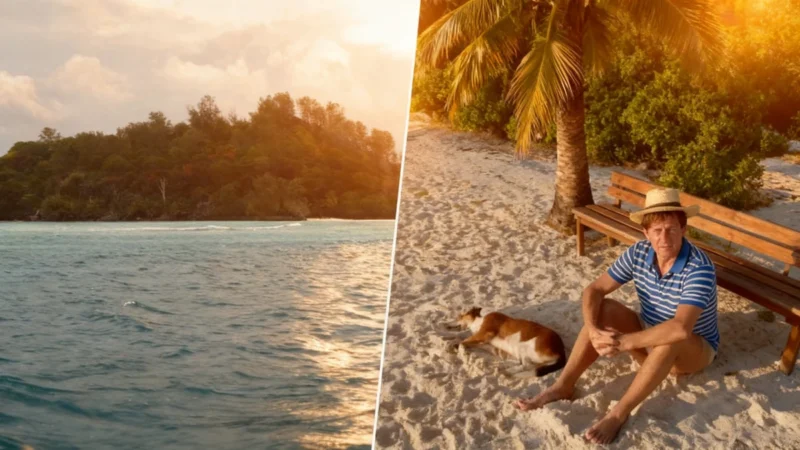
Grimshaw’s early biography offered no hints that he’d end up as caretaker of an island paradise. He began in regional British news, including a stint at the Batley News, before moving to Africa to work for major outlets like the East African Standard. At 37, vacationing in the Seychelles, he made a life-changing choice to purchase this 22-acre island and make it the work of his lifetime.
To fund his dream, Grimshaw kept working as a journalist until 1973 before settling full-time on Moyenne. Back then, the Seychelles were just emerging as a destination for affluent tourists. Moyenne itself, abandoned for 50 years except for an occasional fishing family, was choked with dense brush and overrun by rats—prime territory for real estate developers, if Grimshaw hadn’t stepped in.
Bringing Back the Wild
Restoring an entire ecosystem is harder than building a luxury resort. With help from 19-year-old local René Antoine Lafortune, Grimshaw began a lifelong task: transforming the island’s tangled thicket into a thriving forest. As Grimshaw described in his documentary A Grain of Sand, when he arrived, the silence was oppressive. There were hardly any birds. The undergrowth was so thick you could barely make your way through, and only weeds and rats seemed to thrive.
To change that, the two men planted more than 16,000 trees by hand—including mahoganies and native palms that had disappeared from the island. Their years of manual labor brought wildlife back; over time, the oppressive silence gave way to the songs of more than 200 species of birds, drawn by the return of fruit and safe places to nest.
Haven for Giants
One of Grimshaw’s greatest achievements was reintroducing the Aldabra giant tortoise. When he arrived, not a single one lived on the island. Today, there are more than 120, each closely monitored. To welcome visitors without harming nature, Grimshaw hand-cut nearly three miles of trails—the work done with only a pick and shovel.
Turning Down Millions for a Natural Legacy
In the 1980s, Grimshaw’s commitment faced its biggest challenge. According to the BBC, a Saudi prince reportedly offered up to $50 million for the island. Grimshaw’s answer was firm: the island was not for sale. Without heirs and growing older, he worked to secure its future. By 2009, Grimshaw had convinced the Seychelles government to declare Moyenne a National Park. Brendon Grimshaw died in 2012, leaving behind what remains the world’s smallest national park—a green jewel, protected from the fate of becoming a developer’s playground.