


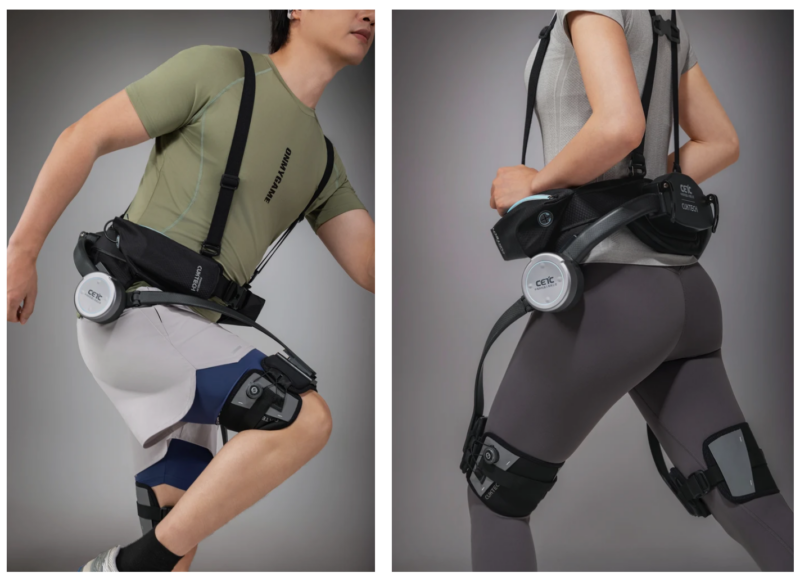
CUKTECH has spent a decade building power banks under its ZMI heritage, more than 30 million sold worldwide. At IFA Berlin, the company used that charging expertise to launch its first product that has nothing to do with charging a phone: a wearable hip exoskeleton.
What's new
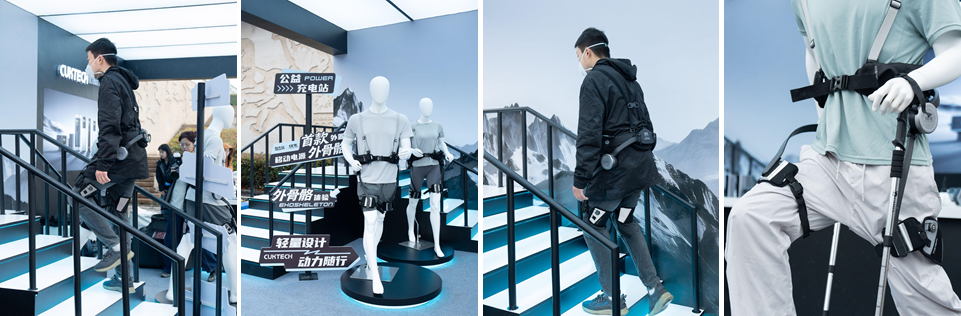
The CUKTECH Power Exoskeleton Kit is a lightweight lower-limb exoskeleton built to assist movement across hiking trails, stairs, and everyday terrain, and it runs on CUKTECH's own portable power banks rather than a dedicated battery, letting users pick a capacity suited to their trip and swap power sources on the go. A multimodal sensor system with motion-intention recognition detects what the wearer's legs are doing in real time and delivers assistance accordingly, up to 34 N·m of torque and 35% movement assistance at speeds up to 18 km/h.
Alongside its wearable robotics debut, CUKTECH is also showed its latest charging lineup at IFA: the CUKTECH 30 Charging Station Ultra, the CUKTECH 10 Ultra Power Charger, and a new CUKTECH 10 Desktop Charging Station.
Why it matters
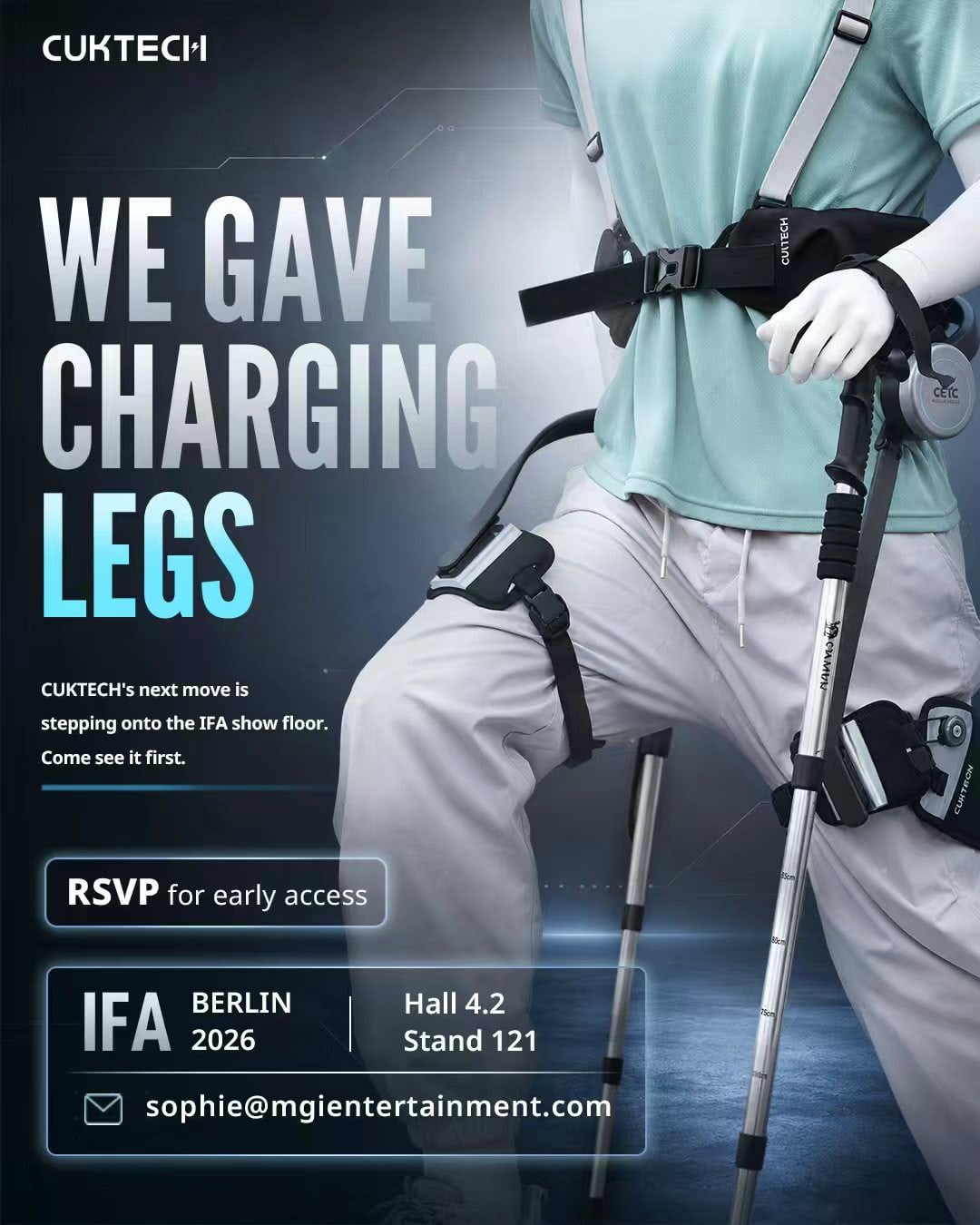
This is CUKTECH extending its power engineering into an entirely new hardware category rather than iterating on chargers, and wearable exoskeletons remain a genuinely unproven consumer category. The power bank-driven design is the more interesting engineering choice here, it means the exoskeleton isn't locked to a single proprietary battery, but it's also an open question whether that adds bulk or complexity a purpose-built battery wouldn't.
Key details
- Maximum torque: 34 N·m, up to 35% movement assistance, supports speeds up to 18 km/h
- Weight: 2.5 kg, carbon-fibre frame, quick-release buckle, foldable for storage and transport
- Powered by CUKTECH's own portable power banks (capacity selectable, swappable)
- Multimodal sensor system with real-time lower-limb motion-intention recognition
- Pricing and availability not yet announced
Takeaway
An exoskeleton powered by swappable power banks is a genuinely different pitch from the fixed-battery designs most mobility wearables use, and it fits CUKTECH's existing strength. Whether that translates to a device people actually want to wear on a hike is the question a hands-on would need to answer, pricing and availability aren't out yet either.