



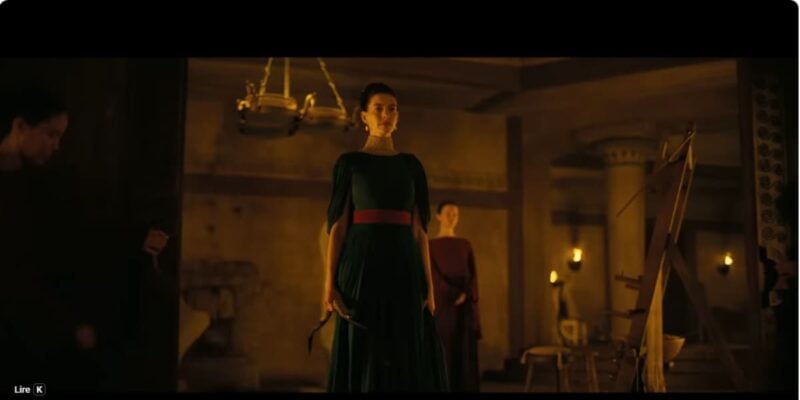
It isn’t just a fashion faux pas—it’s a controversy that’s lit up social media: Zendaya recently drew backlash over a striking accessory at the London premiere of “The Odyssey.” But why did her earrings spark such strong reactions online?
The Golden Earrings Stirring Debate
On July 5, 2026, at the London premiere of Christopher Nolan’s “The Odyssey” (Universal Pictures), Zendaya wore a long white Jacquemus gown, Louboutin heels, and a pair of gold earrings. These weren’t standard statement pieces. According to critics, the earrings were crafted from two ancient Ziwiyeh discs dating to the first millennium BCE, originating from Iran. In the context of tense US-Iran relations and a continuing history of Middle Eastern antiquities being looted, many critics online have called out the look for being not just in poor taste but, as some put it, orientalist.
Critics Sound Off on Cultural Appropriation
“It’s in poor taste,”
commented Dr_Archaeology, an archaeologist and content creator, in an Instagram video seen by more than 1.9 million people within 48 hours. Known for her headline-making fashion choices with stylist Law Roach, Zendaya often coordinates promotional outfits with her films’ themes. For “The Odyssey,” in which she portrays Athena, Zendaya chose gold discs decorated with sunray motifs. Such designs are common in Assyrian artifacts and refer to the goddess Ishtar, revered in Mesopotamian tradition as the deity of love and war. The source notes similar motifs on a Babylonian gold pendant dated to 1800–1600 BCE, which is part of The Metropolitan Museum of Art’s collection in New York.
Where Did the Earrings Come From?
The earrings were provided by jeweler Glenn Spiro, who remounted the ancient discs with diamonds and yellow gold, reportedly taking care not to damage the artifacts. They are part of Spiro’s “Materials of The Old World” collection, which incorporates real archaeological pieces from the Middle East, North Africa, and West Africa into contemporary jewelry. However, the precise origins of these items remain murky. According to Dr_Archaeology’s Instagram video, the artifacts were acquired by Spiro’s son through “undisclosed means.” She suggested,
“These jewels were probably looted in Iran.”
This uncertainty—combined with the geopolitical context—has fueled the controversy, especially given the legacy of artifact looting from conflict regions. The sight of Hollywood stars wearing jewelry sourced from ancient royal courts, or from countries with a complex colonial or wartime history, unsettles many observers.
Reproductions Versus Original Antiquities
“Let’s be honest, the point of these earrings isn’t to showcase ancient art but to fetishize the past—to turn it into a commodity for the elite, circulated illegally and immorally,”
said Dr_Archaeology in her video, questioning why replicas weren’t used in place of real antiquities. For many, seeing ancient Middle Eastern artifacts on the red carpet feels wrong—especially since their histories often involve colonial seizure and trafficking, cutting them off from their original cultural context.
Hollywood’s Repeated Controversies
This isn’t an isolated incident. In January 2026, actress Margot Robbie also faced criticism after wearing the Taj Mahal Diamond at the Los Angeles premiere of “Hurlevent.” The Cartier-owned necklace, valued at $8 million, is considered by some to be a relic looted during colonial times. The jewel—originally thought to have been a 17th-century gift from Mughal emperor Jahangir to his wife Nur Jahan—wound up as a luxury red carpet accessory far from its origins. As Dr_Archaeology put it,
“Let’s not encourage this kind of fetishism—you know it fuels the black market for antiquities, which hurts cultural groups and local communities.”
What began as an eye-catching fashion choice for Zendaya has turned into a wider debate over history, cultural sensitivity, and celebrity influence. Her earrings are now at the center of a conversation about where style meets ethics—and what stories our adornments really tell.